

For much of the past decade, Melbourne and Sydney have encountered very different experiences with regards to dwelling construction. While Melbourne managed to increase its share of capital city construction to a record 45% in August 2010, Sydney’s share slumped to a low of just 17% (see next chart).
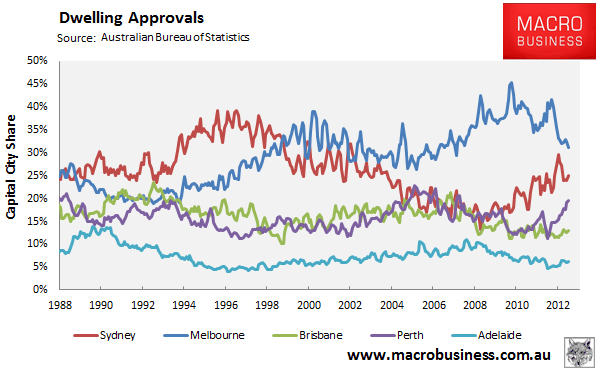
The situation is gradualy changing, however, with Melbourne construction falling back to earth and Sydney’s recovering strongly, albeit from a very low base. Much of Sydney’s nascent recovery is taking place in the apartment market, whereas the detached house segment has experienced minimal uplift and remains highly depressed (see next chart).
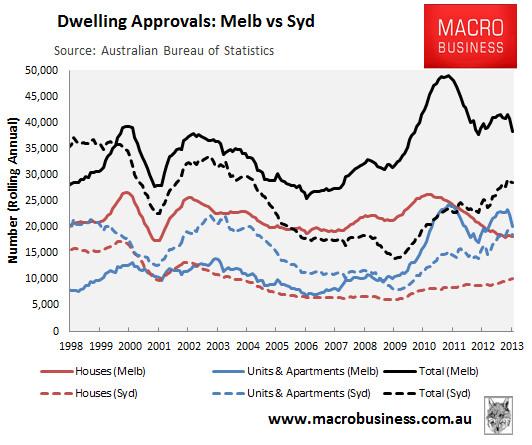
In fact, as shown above, Sydney apartment construction is shortly set to overtake Melbourne’s for the first time since late-2008. According to Sam Nathan, Charter Keck Cramer’s director of residential projects:
Sydney’s outlook is improving as the reforms are made to the planning system and the city’s economic future looks more buoyant than Melbourne’s… Sydney is now getting back to the levels (of supply) last seen a decade ago”…
“We’ve had a long period of under-delivery in Sydney. We now appear to be coming out the other side of that.”
“In Sydney vacancy rates are still meaningfully lower than in Melbourne. Rent growth is better and Sydney as a city has a better outlook over the short to medium term.”
Melbourne, on the other hand, is facing apartment indigestion:
“It will take some time for the market to digest this level of supply and that will be expressed in changes in the rental market and potentially later in the resale market.”
The New South Wales Government should be commended for being the first to shift the first home owners’ grant to new dwellings, as well as undertaking reforms to simplify planning regulations and providing increased investment in urban infrastructure. Hopefully, Sydney’s dwelling construction recovery will strengthen further to the point that it takes the heat out of both prices and rents, whilst also supporting jobs in the post mining economy.
