Cross-posted from Kate Mackenzie at FTAlphaville.
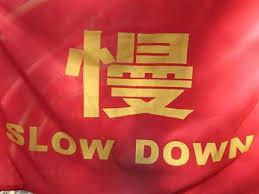
A couple of weeks ago we asked some questions about what a further slowdown in Chinese growth might mean, and at what point it becomes a ‘crisis’. There’s a little bit of semantics and a vast amount of moving parts in answering this, but the point is that although the underlying picture of China’s economy looks extremely vulnerable, there are many ways in which a crisis might not erupt in quite the way — or at quite the speed — that some commentators seem to be expecting.
With that extremely broad-brush intro to a very complicated and murky subject done, we’ll point out a couple of people who, unlike us, are actual China experts and have provided some interesting perspective in the past few days.
First is Minxin Pei, a professor at Claremont McKenna College and an expert in governance and reform in China. Writing in The Diplomat, Pei takes aim at the popular idea that China’s government will not tolerate growth below x per cent (take your pick at the level) because of fears of social unrest.
Pei has a couple of reasons for this. One is that a lot of China’s recent growth hasn’t been labour-intensive, anyway. True, it’s been more capital intensive for some time and this has meant growth hasn’t greatly boosted employment (this was pointed out at least as early as 2007 by IMF’s Jahangir Aziz and Steven Dunaway, h/t Willem Buiter). What few seemed to see coming was China’s labour force demographic peak being reached early — which is Pei’s other reason.
Between the lack of focus on boosting employment through the past few years of growth, and the demography-induced constraints on China’s labour force size, not to mention rising wages, Pei doesn’t rate the growth/employment/social upheaval idea very highly.
So what might China’s leaders be really worried about, if not unemployment? Pei believes they are stressed by the risk of excess credit injection:
Since 2008, Beijing has maintained growth with a massive injection of credit, much of it invested in speculative real estate, excessive industrial capacity, and infrastructure with dubious financial viability. Continuing this disastrous policy would imperil the political future of new Chinese leaders, particularly Xi Jinping and Li Keqiang, who will be up for reappointment in 2017.
That, he says, is why slower growth has been tolerated of late. As for the point at which they might stop tolerating slower growth; he says, “Chinese leaders themselves probably do not know the magic number that will force a decisive response”.
That might not necessarily be the immediate fear of social unrest. Pei points out, as we did, that the Chinese authorities’ capacity to stifle dissent needs to be remembered.
Here, however, we should point to an interesting story by one of our Beijing-based colleagues, Kathrin Hille, about the changing nature of protests and and what it might mean for China.
China’s 100,000-plus riots each year have typically been isolated protests at local corruption and injustice; but that may be changing. Individual stories are sometimes gaining widespread coverage through social media; and NGOs have been able to operate under slightly looser restrictions. There are signs of middle class dissatisfaction and organisation – for example, property owners’ associations are becoming more common (see this Bloomberg report from late 2011 for an example of property owners’ anger at falling prices).
As for what else the leaders really do fear, Pei argues there are two key things:
What Chinese top leaders really fear is the impact of a slowing economy on elite unity. In China’s investment-driven economy, slow growth means less investment, which in turn means fewer spoils to be divided among the ruling elites. Local officials with less money to build projects will lose corruption income and opportunities to burnish their record and advance their careers. Their anger and frustrations will be concentrated on the top leadership, which will be heavily lobbied to loosen credit and rekindle growth.
But above all, it’s a cascade of defaults they want to avoid:
If there is one economic factor that truly worries top Chinese leaders, it is the systemic fallout from economic slowdown. More specifically, in a highly leveraged economy, as China is today, a significant deceleration could quickly lead to cascading financial defaults. Deeply indebted real estate developers, local governments, and state-owned enterprises will not pay their creditors (both banks and suppliers), thus triggering chain default. This could throw the entire economy into turmoil. We saw a little preview of this during the credit squeeze in June.
This is hard to argue with, although we pondered early in July (after reading something by Michael Pettis on information suppression around SARS) that the Chinese government has more options to suppress information and thereby delay such a cascade than some other governments who’ve experienced their own financial crises. Pettis is also looking into whether such suppression might actually result in a bigger reaction, once news does spread of an event that had been previously hidden.
Speaking of Pettis, he wrote in the FT about his ideas that slowing growth doesn’t have to mean mass social upheaval; he believes a rebalancing could see more of GDP directed towards household income, which has historically missed out on a fair share of growth:
China’s GDP, in other words, does not need to grow at 7 per cent or even 6 per cent a year in order to maintain social stability. This is a myth that should be discarded. What matters for social stability is that ordinary Chinese continue to improve their lives at the rate to which they are accustomed, and that the Chinese economy is restructured in a way that allows it to tackle its credit bubble.
If household income can grow annually at 6-7 per cent, income will double in 10 to 12 years, in line with the target proposed by Premier Li Keqiang in March during the National People’s Congress. What is more, if China can do this while the economy is weaned off its addiction to credit, it will be an extraordinary achievement, even if it implies, as it must, that GDP grows far more slowly that the growth rates to which we have become accustomed.
As he notes, however, it won’t be easy.