Michael Pettis’ wrote in his exclusive newsletter yesterday:
Growth rates over the next decade cannot exceed 3-4%. There are a lot more growth forecast downgrades to follow. There is still a lot of resistance to this idea.
The latest default bull argument supporting higher levels of growth than I believe possible is the urbanization argument.
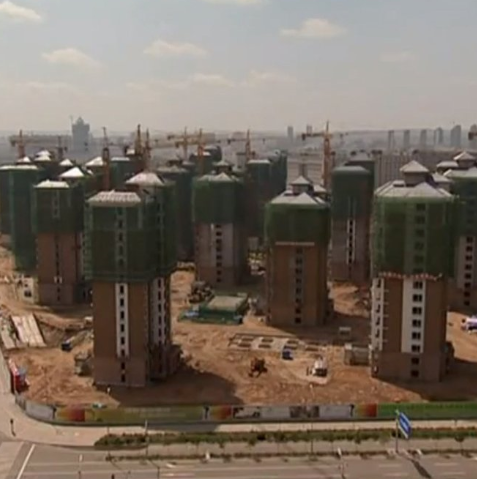
China, which is already highly urbanized for such a poor country, is determined to urbanize further, and Beijing plans to move hundreds of millions more people out of the countryside and into the city. Moving so many people off their farms and into new cities should create a surge in demand for housing and infrastructure, so much so, that urbanization has become the new reason to predict that Chinese growth rates have already bottomed out and will soon begin to surge again.
With so much future demand for apartments, roads, hospitals, schools, subway systems, and so on, after all, how could China not possibly grow by 7% or 8% a year for many, many more years?
Like so many of the earlier bull arguments, however, this new belief that urbanization is the answer to China’s growth slowdown is based on at least one fallacy. The first and obvious reason is that urbanization is not an act of God, and therefore indifferent to earthly conditions. Urbanization itself responds to growth. Countries do not grow because they urbanize, in other words, they urbanize because they are growing and there are more good, productive jobs in the cities than in the countryside. In that sense urbanization is not a growth machine. It is simply a pro-cyclical process that accommodates growth when growth is rising and reduces it when it falls.
…The second, more important, reason is a little more complex and has to do with the source of urbanization. Let me explain by using an example. Let us assume the state government of Illinois decides to raze Chicago to the ground and build an identical new city a few miles away. Would Illinois and the US become richer?
It depends. If the new Chicago were exactly the same as the old Chicago, and the workers in the new Chicago produced just as much as the workers in the old Chicago did before it was razed to the ground, then Illinois and the US would become poorer by “re-urbanizing”. There might be the temporary illusion of wealth created by all the new building, but remember that this new building would have to be paid for by taxes, and the resulting reduction in household income over the repayment period would also cause a reduction in household consumption during that period that reduced jobs and productive expenditures elsewhere.
…But let us suppose that working and living conditions in the old Chicago were so bad, and unemployment so high, that the creation of the new Chicago required very few productive new workers (most of the workers were previously unemployed and so producing nothing) and caused a surge in productivity at a very low real cost as the facilities in the new Chicago greatly outclassed the facilities in the old Chicago, allowing workers to be many times more productive. If the higher output generated by Chicagoans in the new Chicago were greater than the cost of building the new city, then Illinois and the US would indeed be richer.
Yet, I’m sure you ask, wouldn’t building more stuff, even if it depletes Chinese wealth, boost Australian wealth? In the short term perhaps but not for long. If China continues to pursue debt-charged investment led growth that ignores productivity losses then as its standard of living erodes so too will its production of other commodity intensive goods in manufacturing. It becomes an act of internecine economic displacement that culminates, moreover, in financial crisis and a growth collapse. We surely do not want China to go that way.
Yet that is what many Western analysts continue to push for. The latest is HSBC, one of the more bullish China prognosticators:
Premier Li Keqiang on 10 July stated that China will ensure that the economy will operate within a reasonable range, avoiding GDP growth from sliding below the minimum rate required to maintain labour market stability (which HSBC believes is around 7%) and prevent inflation from exceeding the “upper limit”. He believes that stabilizing growth can create favorable conditions for the implementation of structural reforms which can boost long-term growth potential. He called for coordinated policies to strike the balance between stabilising growth and pursuing structural adjustments.
Likely policy fine-tuning tools:
On the fiscal front:
a) Beijing can speed up fiscal spending with RMB960bn in fiscal revenue in the first five months of this year (vs. a budget deficit of RMB1200bn);
b) More importantly, as the State Council’s calls for “making full use of outstanding fiscal funding”, Beijing should spend its accumulated fiscal deposits of over RMB3.5trn (as of May 2013), or around 7% of China’s GDP, on targeted areas such as shanty town renovation, public housing, education, medicare and some infrastructure projects;
c) Shifting government spending from administrative expenditure to education, healthcare and other social welfare areas;
d) Increase the size of local government bond issuance to provide funding for public housing and other infrastructure projects.On the monetary front:
a) In terms of quantity, the current pace of credit growth (M2 around 16% and loan around 15%) is already accommodative enough to support 7.5% GDP growth. So there is no need to accelerate. But a meaningful slowdown is also unlikely, in our view.
b) In terms of interest rate, there is room for a modest rate cut. As PPI has stayed firmly in contractionary territory, falling for the sixteenth consecutive month (the longest period of negative readings since 2001-2002), this means a higher real interest rate (now close to 9% for one-year lending rate if use one year nominal lending rate (6%) minus PPI to calculate the real interest rate) in comparison to the current real growth rate (likely around 7-7.5%) and the historical average of real interest rate (around 4.8%). As enterprises face mounting challenges of slowing orders and rising inventories, higher real interest rates have struck another blow. With the inflation outlook benign and headline CPI well below the PBoC’s 3.5% annual target, there is room for the central bank to cut interest rates by 25bp in the coming months, likely accompanied by widening of interest rate floating band. This will help reduce funding costs and boost business confidence.
Bottom line: Beijing can and will strike a balance between maintaining growth stability in the short-term while implementing structural reforms to support sustainable growth. With inflation well below the PBoC’s 3.5% annual target, we expect some moderate fiscal and monetary measures to put a floor to China’s slowdown. Our growth forecast is 7.4% for both 2013 and 2014.
Some of these make sense. The soft infrastructure proposals have the potential to release China’s private sector savings as spending and help significantly in boosting the rebalancing of expenditure towards households. But there are real flaws in some of the other ideas.
Beijing can’t spend its so-called savings. They are invested in US Treasuries and aren’t actually savings at all. They are the outcome of running a currency peg and by definition have domestic liabilities held against them. That’s not to say the Chinese have no remaining fiscal firepower, they quite obviously do, but it will involve more debt-accumulation which is was is trying to be avoided.
On the fiscal side, cutting interest rates is simply more financial repression, suppressing household spending in the name of expanding uneconomic infrastructure lending.
In effect, HSBC is arguing that a hard landing can be avoided so long as rebalancing is avoided too.
I am not as bearish as Pettis on the growth outcome for China largely because I still see great scope for productivity gains in the nation no matter where demand is coming from. But I do not think rebalancing can happen without more pain than these kinds of Western frames of reference argue.