

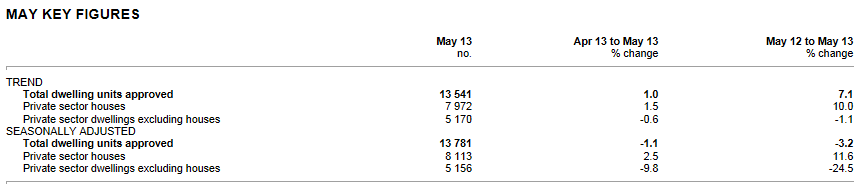
The Australian Bureau of Statistics (ABS) has released dwelling approvals data for the month of May. At the national level, the number of dwelling approvals fell by a seasonally adjusted -1.1% to 13,781. The overall fall was driven by a large decline in the volatile unit & apartments segment, which fell by -9.8% over the month. By contrast, house approvals rose by 2.5% Consensus was for a total fall in approvals of 1.0% over the month.
In the year to May 2013, dwelling approvals fell by a seasonally-adjusted -3.2%, again driven by a big fall in unit & apartment approvals (-24.5%), partly offset by a 11.6% increase in detached house approvals:
A chart showing the time series of seasonally-adjusted dwelling approvals at the national level is provided below, split-out by detached houses and units & apartments:
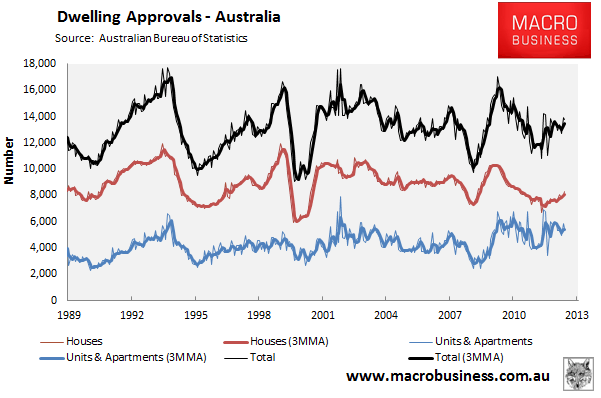
As you can see, dwelling approvals nationally continue to trend up after bottoming in late-2011. This recovery has been driven by a pick-up in unit & apartment approvals, although they remain volatile. House approvals are also recovering, but remain very weak overall.
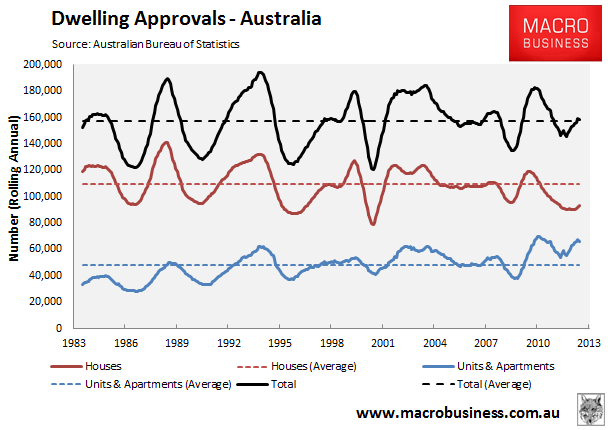
In annual terms, dwelling approvals are running marginally above their long-term average levels, as shown by the below chart, with weakness in detached house approvals mostly offset by strength in unit & apartment approvals. However, approvals remain highly depressed overall in population-adjusted terms, given that Australia’s population has grown by around 45% over the past 30-years.
The below chart shows the time-series of approvals at the state level:
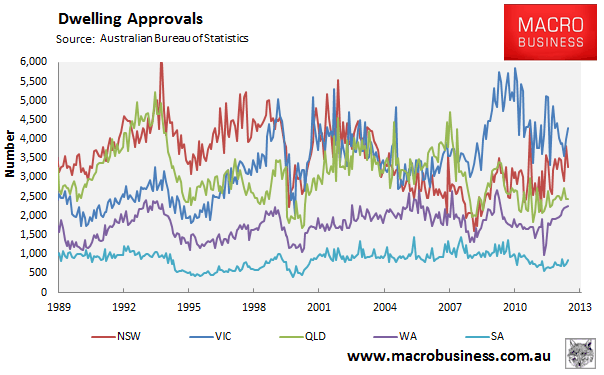
This month’s decline in approvals was driven primarily by New South Wales, where approvals fell by 15% over the month, mostly on the back of reduced units & apartments (down 30%). By contrast, approvals rose 7% in Victoria, with both detached houses and units & apartments rising by similar proportions.
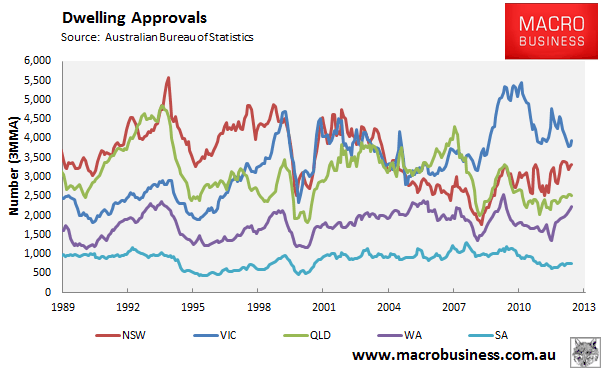
And the same data is shown below on a 3-month moving average basis, in order to smooth volatility. As you can see, dwelling approvals are in a short-term uptrend in New South Wales, Queensland and Western Australia, whereas they are trending down in Victoria and are going sideways in South Australia:
unconventionaleconomist@hotmail.com
