The world’s leading economic commentator, Martin Wolf at the FT, has today addressed the growing risk of a Chinese hard landing and, although there is nothing new in the piece, it offers a succinct and clear assessment:
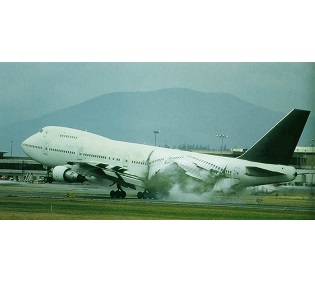
In a recent note, David Levy of the Jerome Levy Forecasting Center [argues [that] China is like a jumbo jet: “In recent years, a couple of engines have not been working well, and the pilot is now loath to keep straining the remaining good engines. He is allowing the plane to slow down, but if it slows too much, it will fall below stall speed and drop out of the sky.”
Wolf then examines what needs to happen to land the jumbo safely:
…First, investment in inventories must fall sharply, since its level depends on the growth of an economy, not on the level of activity. Think about it: in a stagnant economy, inventory accumulation would normally be zero. Again, other things equal, an economy growing at 6 per cent would need 60 per cent of the investment in inventories of one growing at 10 per cent. The immediate impact of this adjustment would be a sharp decline in investment in inventories, before their growth resumed at 6 per cent a year, from the now lower level.
Second, investment in fixed capital must also fall sharply. Investment might have to fall by 40 per cent: all other things equal, in China that would imply a 20 per cent decline in GDP, which would evidently entail a deep (and unexpected) recession.
…Third, an investment-induced reduction in demand and activity is also likely to have a large downward impact on profits. That would impair corporate solvency and lower investment still further. Finally, a decline in the rate of economic growth, particularly one preceded by a very large credit boom, might have unexpectedly grim effects on the state of balance sheets.
If that’s not enough to worry about, Wolf offers the antidote to the oft-repeated Australian rationale that less growth in a bigger economy is still more commodities:
…One must not think of such an adjustment as proportional. On the contrary, the economy that would emerge might have consumption at, say, 65 per cent of GDP and investment at just 35 per cent. So consumption would have to grow substantially faster than GDP, while investment would grow far more slowly.
And he concludes:
…The new Chinese government is, in effect, now engaged in the task of redesigning the jumbo jet, as it comes into land, with half of the engines working poorly. The market is most unlikely to deliver such a huge change smoothly. The sole reason I find to trust the landing will work as hoped is that the authorities have handled so many arduous tasks in the past. But it is going to be very tricky. In order to sustain demand, the government might find itself compelled to do some things – run very large fiscal deficits, for example, – that its new leaders neither want nor now expect. At least, forewarned is forearmed.
I really recommend signing up and reading the entire article.