

Following on from my earlier post on the income squeeze taking place in the US, the Bureau of Economic Analysis (BEA) last night released its third and final estimate of first quarter GDP, which was revised down heavily from 2.4% annualised growth in the second estimate to only 1.8%. The disappointing result followed annualised growth of only 0.4% in the December quarter (see next chart).
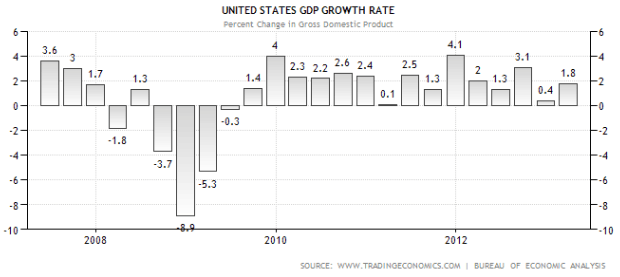
Economists had expected no change to first quarter GDP, and such sharp revisions are rare in a third estimate.
According to CNBC, the disappointing result was driven by a slump in consumer spending:
The biggest source of the downward revision came from consumer spending. Government economists had estimated that consumer services consumption (excluding housing and utilities) would grow by 2.5 percent, instead it grew at just 0.7 percent.
That’s stall speed for consumers. Far worse, in fact, than the 2.4 percent growth seen in the fourth quarter.
There were also downward revisions to nonresidential structures investment, equipment and software spending, and the change in inventories. Government spending shrunk by slightly less than expected, so the sequester spending cuts weren’t as big of a deal as some predicted. Residential investment was up by far more than expected, 14.0 percent.
The main culprit behind the consumer pullback seems to be what Fed Chairman Ben Bernanke calls “fiscal headwinds.” Specifically, the end of the payroll tax holiday left less money in the hands of consumers to spend. We taxed ourselves out of growth.
“The lower consumption estimate provides some indication that the impact from fiscal austerity may have been more than previously thought, and that the economy started the year on weaker footing than previous estimated,” TD Securities analyst Millan Mulraine wrote in a note.
Economists are now tipping that US GDP growth will be just 1.6% to 1.8% this year, well below the long-run average of around 3% and not enough to drive significant improvements in the labour market.
One upshot is that the weak result has delayed the prospect of the Federal Reserve tapering its quantitative easing program, which has seen financial markets lift.
unconventionaleconomist@hotmail.com
