At some point in the not too distant future, it will be time to buy mining companies again. When the Australian dollar falls, they are natural beneficiaries, so that will be one very important trigger. There will also be a lot of consolidation so that will be another possible turning point.
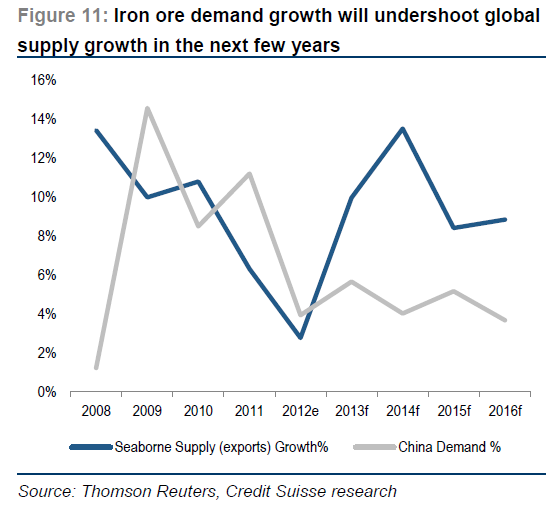
I’ve reported before on the cheapness of the sector but argued that more downside was in prospect. The correction in bulk commodity prices that drives Australian mining profits still has a long way to run on Chinese rebalancing and greater supply. These factors still outweigh the looming upsides in my view.
Support for the argument today comes from one the better commodity analyst banks in the world, Credit Suisse, which sees similar dynamics in play:
We agree with the bearish stance on commodities held by Ric Deverell, the head of the CS Commodities Research team. We are cautious, given that:
Elevated prices have triggered a significant capex response, leading to excess supply in many instances;
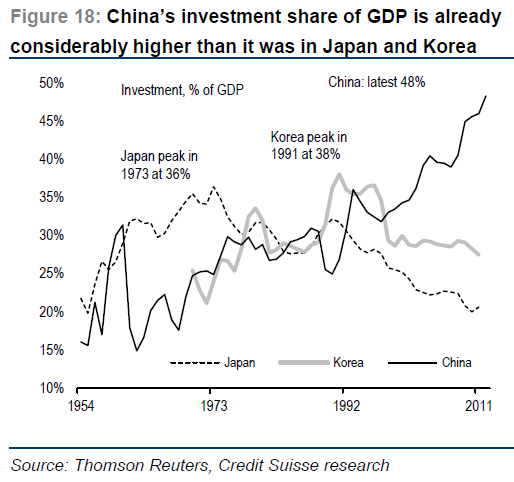
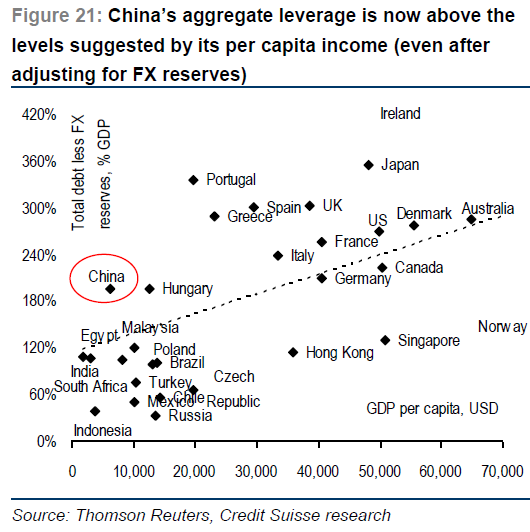
Chinese risks are high: the investment-share of GDP, at 48%, must fall, total debt is now 230% of GDP and quantitative tightening has started;
Global macro momentum is slowing (we think until mid-year);
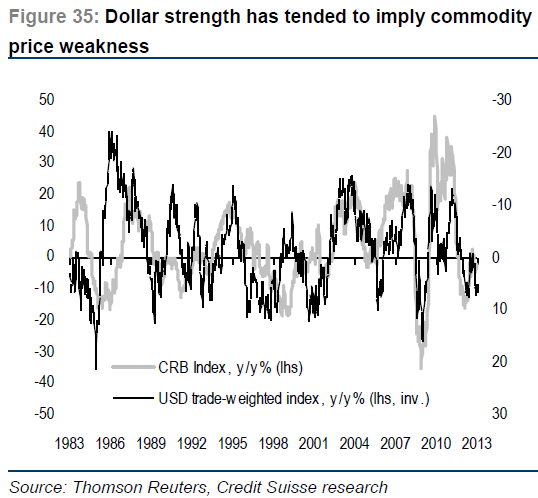
We believe the dollar trade-weighted index has the potential to continue strengthening (typically bad for commodities);
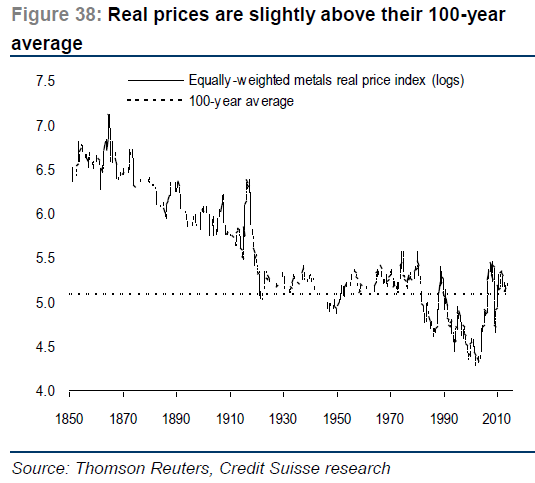
Commodity prices are still high relative to their long-run averages (in real terms) and producers’ break-even (especially for iron ore and oil); and
Equities are a better inflation hedge than commodities, in our view.
We remain underweight the resource sectors, which suffer from poor capital discipline, sub-market FCF yields, still optimistic positioning and in nearly all instances spot prices are below consensus (implying downgrade risks).
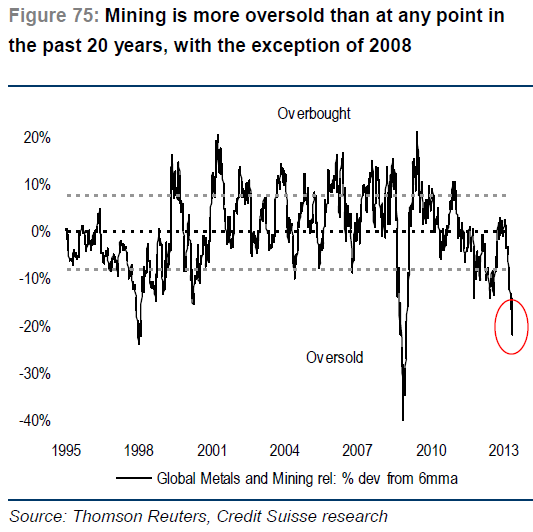
Mining is the most sensitive sector to ISM and China infrastructure spending; yet, P/E relatives are only middling. When the sector has been this oversold, it has typically still underperformed over the next three months.
Big-cap oil tends to outperform only when equities are falling, credit spreads are rising or the oil price is spiking, none of which is likely. The sector is not cheap on relative P/Es after adjusting for under-depreciation.
However, we reverse our preference among the resource sectors – and now prefer energy to mining (the oil price looks more resilient than industrial commodities prices and valuations more attractive).
Advertisement
There is a short banks, long miners trade coming. Just not quite yet…
David Llewellyn-Smith is Chief Strategist at the MB Fund and MB Super. David is the founding publisher and editor of MacroBusiness and was the founding publisher and global economy editor of The Diplomat, the Asia Pacific's leading geo-politics and economics portal.
He is also a former gold trader and economic commentator at The Sydney Morning Herald, The Age, the ABC and Business Spectator. He is the co-author of The Great Crash of 2008 with Ross Garnaut and was the editor of the second Garnaut Climate Change Review.