

We have seen, in recent years, the cross-pollination of useful ideas from different disciplines. Discoveries in quantum physics may have huge implications for biology, such as the understanding of photosynthesis or bird migratory patterns. Advances in telecommunications technology are giving hope that communities in Africa can leapfrog multiple stages of industrial development to participate in the modern economy. Famously, psychology is having a profound effect on the understanding of financial markets.
It was a particularly profound insight, however, that Australian zoologist Lord Robert May delivered to the readers of the Financial Times on Friday. Observing the difference between the complex ecosystems of coral reefs or rainforests, and the simple, monocultural landscapes of environments such as the highly-stressed marshes between New Jersey and Manhattan. The Oxford-based professor and former chief scientist to the British government wrote that whether in ecology or economics, simple systems can thrive anywhere but complex systems can only thrive where there’s stability and predictability. Whether via the introduction of the cane toad to Queensland, or collaterialised debt obligations to the US mortgage market, it doesn’t take much to destroy the balance where there are many interdependent factors to consider.
It’s been a niggling thought for some time now that in personal investment the same logic could apply. Thanks to the mutually-reinforcing processes of globalisation, virtualisation and financialisation – where through a kind of mutant butterfly effect via derivatives and multiple-party securitisation, the budget of a small country in southeast Europe can impact the value of your two-bedroom flat in southeast Melbourne – we undoubtedly live in complex, and by implication, systemically vulnerable times.
And also like a highly evolved tropical rainforest, our financial ecosystem and investment landscape is wrapped in mystery too: the dense foliage of increasingly impenetrable financial statements is obscured by the dark canopy of increasingly entwined and complicated financial regulations; rather than providing a machete to clear the undergrowth, much of the data only serves to confuse. Whether from statistics about Chinese growth, or projections in yesterday’s mid-year economic and fiscal outlook, what figure really matters and what numbers do you believe?
But rather than respond to the complexity in kind, perhaps we need to invest in the financial equivalent of the serrated tussock, something that doesn’t need much to survive and is difficult to kill once it takes root. The flight to safety in cash and bonds is understandable in this regard. Similarly, the growth in index funds reflects an understandable desire among retail investors to be exposed to the market without dealing with its complexity.
Yet in all environments, whether simple or complex, there is always the risk that a virus could wipe out the most resilient genus, or that an introduced predator can leave a once-dominant species extinct. For cash and bonds, a lower interest rate, or lower dollar, could have catastrophic consequences; for a highly concentrated or simple portfolio, correlation risk can quickly invalidate the most robust hedging strategy. As they say, if you put all your eggs in one basket, you can expect all to get smashed.
Nevertheless, simple portfolios can work if investors are prepared to manage and monitor them in non-simple ways. Whereas the adage goes that time in the market matters more than timing the market, these days timing is everything. In harsh environments, after all, there’s only the quick and the dead.
Fundamental analysis still matters in security selection, just as a considered understanding of economics still matters in asset allocation and portfolio management, but in times of uncertainty and potential volatility, liquidity and technical analysis can be just as important.
With a background in business, rather than price charts, I was always sceptical of people who claimed to be able to beat the market through quantitative indicators or fancy trading algorithms, but since joining Macro Investor I have seen how these tools can not only protect investments, but enhance returns.
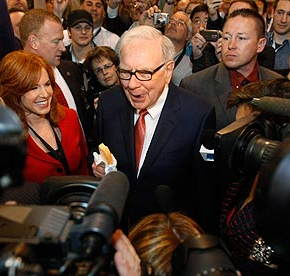
We are often told that successful investors like Warren Buffett will find a good company and hold it forever, but lately Berkshire Hathaway has become increasingly reliant on short-term investments, not to mention derivatives and trading, to maintain performance. As America’s quarterly corporate earnings season continues to disappoint, and as fears over the US fiscal cliff remain projected in boardroom presentations, as Europe wrestles with its demons, as the GFC creeps into Asia, buy-and-hold investing looks increasingly like the fallen idol of a bygone empire, festooned with weeds.
There are a lot of complex ideas being floated right now, whether to do with the nature of money – some say it is based on passions, some say it’s debt, and others rules – or the system of economics we should pursue if globalisation, market democracy or social equality are indeed endangered. All of these ideas require a degree of long-term thinking, which appears to be absent, whether due to the shortening media and political attention cycle, or the inherent complexity of all of the above.
Yet while our investment thinking should always be long-term and our analysis should be long-range, our investing needs are by definition shorter-term in such periods. Ultimately, governments and regulators will need to design new laws or incentives to change this, otherwise the key role of the market – the efficient allocation of capital to business – will disappear into the law of the jungle.
In the meantime, however, being nimble and using every sense available to you is the best approach to survival. For long-term survival it’s time to go short-term.
Michael Feller is an investment strategist at Macro Investor, Australia’s leading independent stock report. Macro Investor provides stock tips, daily trade ideas and technical analysis. A free 21-day trial is available. This is an oped running in the Fairfax press today.