

Missed this on Tuesday, when the ABS released the overseas short-term arrivals and departures figures for August, which showed another record number of departures over the year, again led by the bogan hot spot of Bali.
Although short-term visitor arrivals increased by 3.7% in August, whereas short-term resident departures fell by -0.2%, the number of residents departing hit an all-time high on an annual basis.
In the 12 months to August 2012, the annual number of departures increased by 6.5% relative to the corresponding period of the prior year, whereas arrivals rose by only 3.3%.
Taking a longer-term view, the ratio of annual tourism arrivals to departures remains at 25-year lows: 74.9% in August, which is unchanged from July (see below chart).
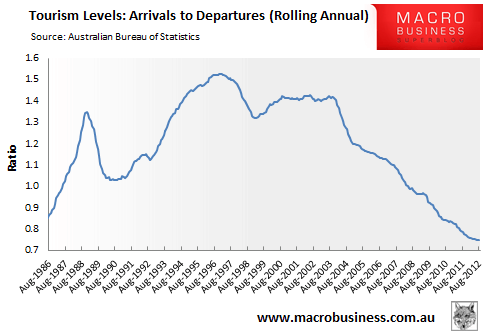
And as suggested above, the fall in the ratio of arrivals to departures has been caused predominantly by an exodus of Australians choosing to travel abroad rather than domestically:
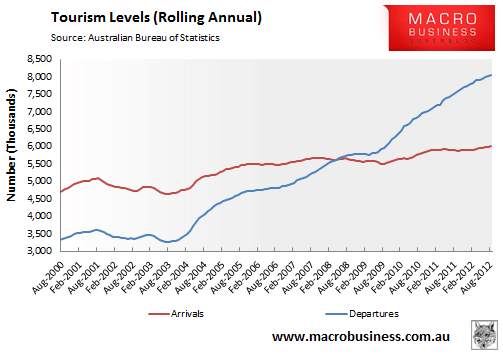
In the year to August 2012, a record 8.034 million Australians holidayed overseas – more than double the level of 10 years ago (3.361 million). This compares to only 6.016 m tourist arrivals over the same period (4.734 million 10 years ago).
South East Asia (particularly Indonesia and Thailand) remains Australia’s favourite holiday destination, receiving 210,600 visitors in August, or 31% of Australia’s total departures over the month, which is down slightly on the June record 219,200 visitors to South East Asia. This was followed by Oceania (21%), the Americas (13%), North East Asia (10%) and North West Europe (10%):
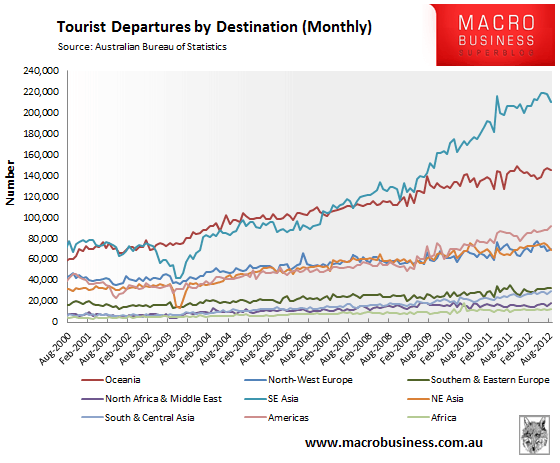
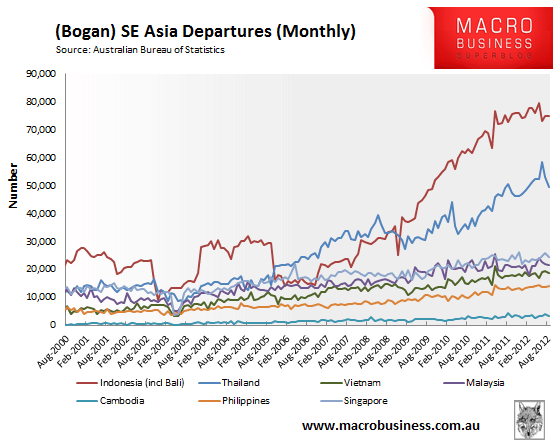
After hitting a record high in June, the Aussie bogan’s lust for Bali and Thailand has waned of late, with departures to both destinations falling by -7,400 (-6%) over the past two months. Departures to both destinations, however, are up 1% over the year.
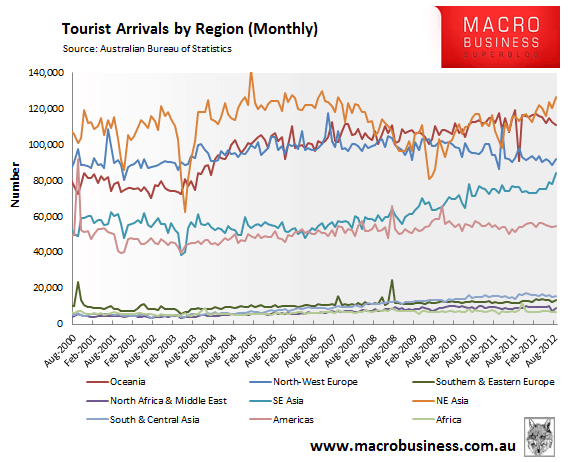
By contrast, the most foreign visitors to Australia came from North East Asia and Oceania (mostly New Zealand), which accounted for 25% and 22% of arrivals in August 2012. This was followed by North Western Europeans (17%) and South East Asians (16%):
With the Aussie dollar still refusing to follow commodity prices lower, the pain for Australia’s tourism industry is set to continue.
Twitter: Leith van Onselen. Leith is the Chief Economist of Macro Investor, Australia’s independent investment newsletter covering trades, stocks, property and yield. Click for a free 21 day trial.
