

The Australian Bureau of Statistics (ABS) has just released the Average Weekly Earnings (AWE) data for the May quarter. A breakdown of the key changes is below:
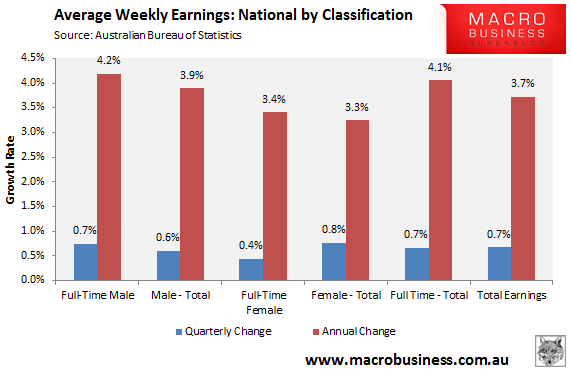
According to the ABS, on a seasonally-adjusted basis, national total AWE increased by 0.7% in the May quarter, to be 3.7% higher year-on-year. This was the slowest annual growth rate in total AWE since the August quarter of 2008.
A time series of annual average wages is shown below. According to the ABS, the average Australian earned $54,980 per annum as at May 2012, with the average full-time worker earning $73,585:
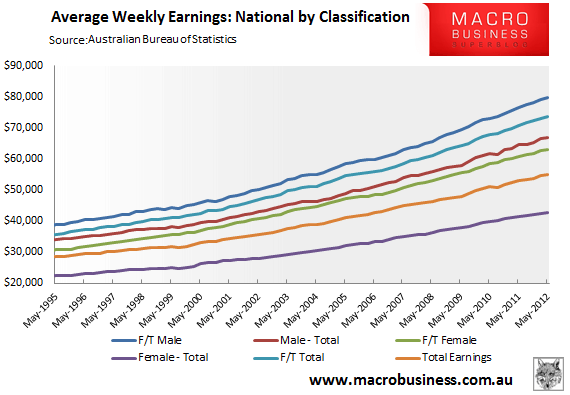
You can see from the above chart that males earn significantly more on average than females. As at May 2012, full-time male earners earned 27% more on average than females full-time workers, whereas total male average earnings were 56% higher.
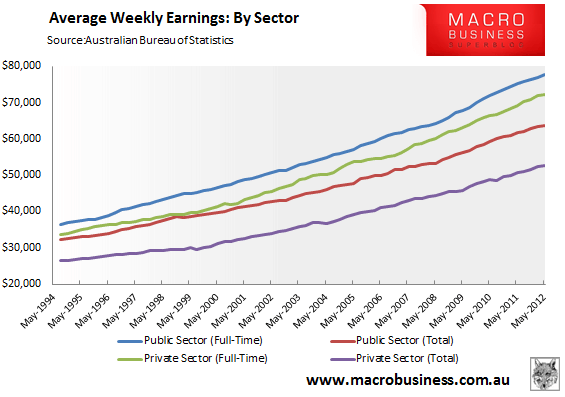
The disparity between the private and public sectors is also striking, with public sector workers earning on average 21% more than private sector workers, and public sector full-time workers earning 7.5% more:
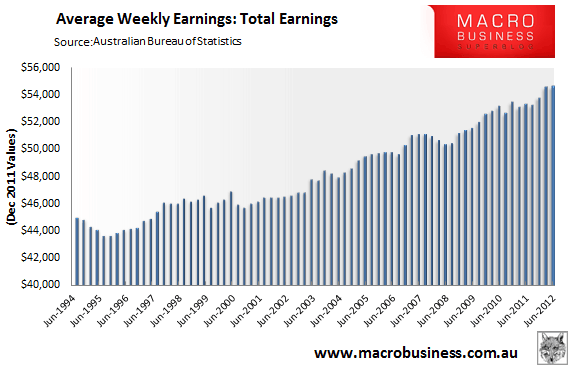
In real (inflation-adjusted) terms, you can see that total average annual earnings were essentially flat in the May quarter (+0.1%) after receiving a nice 1.4% boost in the February quarter of 2012:
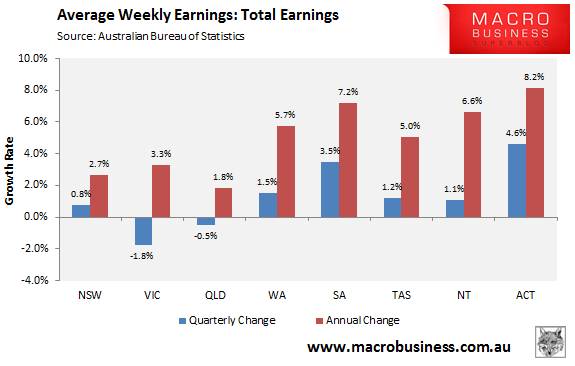
At the state level, wages growth has been mixed, with the ACT (+4.6%), South Australia (+3.5%) and Western Australia (+1.5%) recording strong growth over the quarter and Victoria (-1.8%) and Queensland (-0.5%) recording negative growth.
Over the year, however, the ACT (+8.2%), South Australia (+7.2%) and the Northern Territory (+6.6%) were the standout performers, whereas Queensland (+1.8%) and New South Wales (+2.7%) and were lagards:
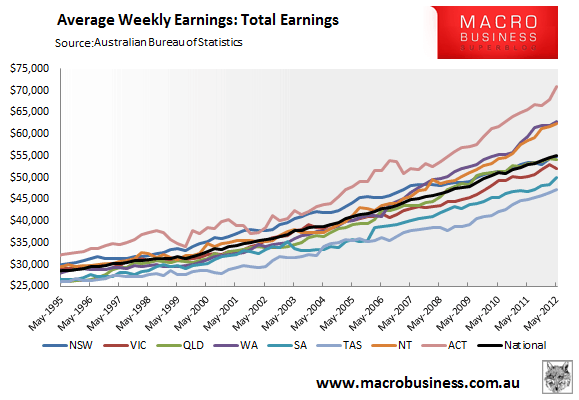
In dollar terms, workers in the ACT, Western Australia, and Northern Territory get paid the most on average, whereas those in Tasmania, South Australia, and Victoria are paid the least:
Overall, this release adds to the swag of recent data showing inflationary pressures moderating across the economy, leaving room for the RBA to lower interest rates if/when it sees fit.
Twitter: Leith van Onselen. Leith is the Chief Economist of Macro Investor, Australia’s independent investment newsletter covering trades, stocks, property and yield. Click for a free 21 day trial.
