
Toward the start of each month, Cotality makes revisions to its housing price index, adjusting it for the developments not previously captured in its data.
As the charts below of past revisions in relatively recent months indicate, when housing prices are falling significantly, the downward revisions can be sizable.
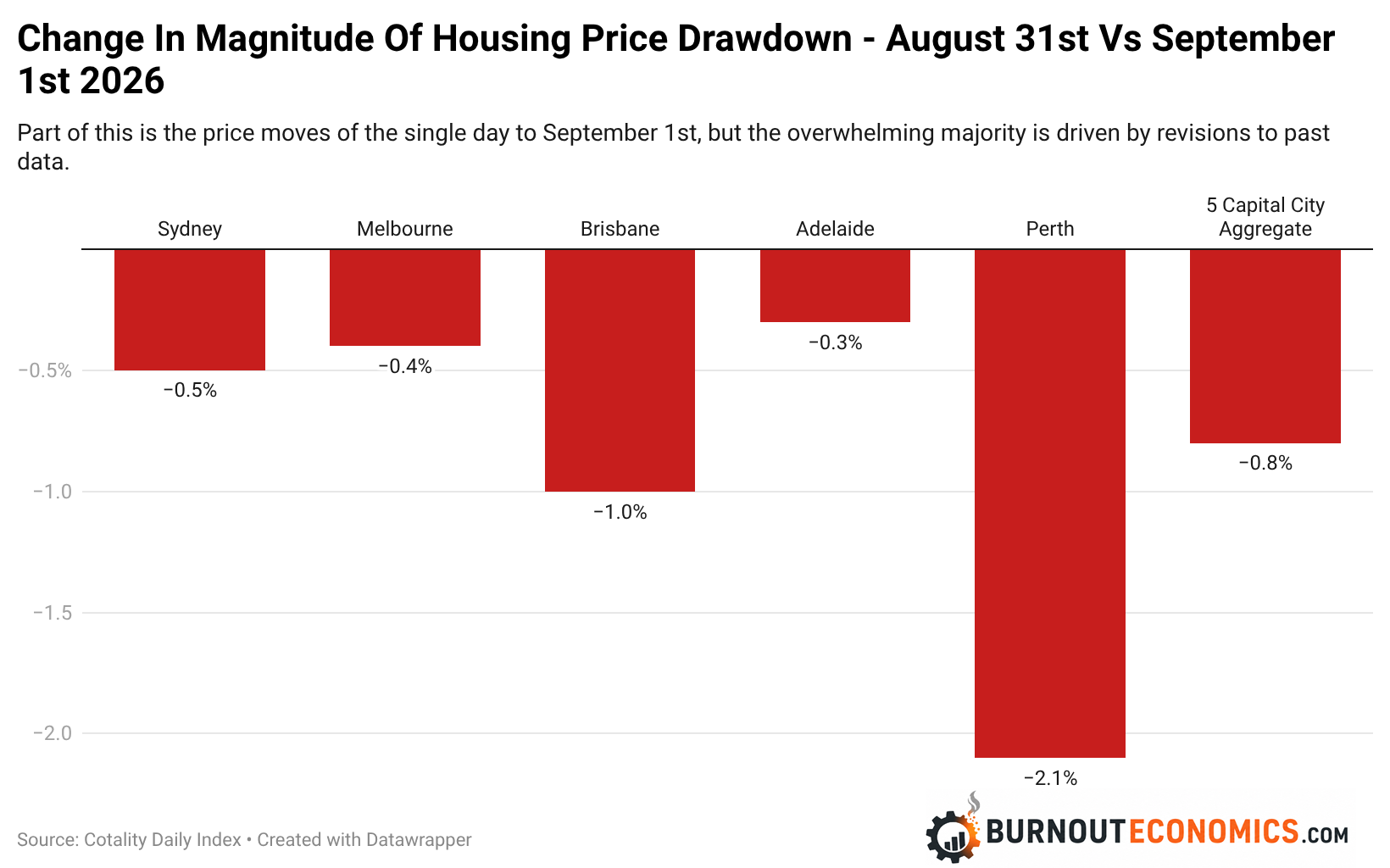
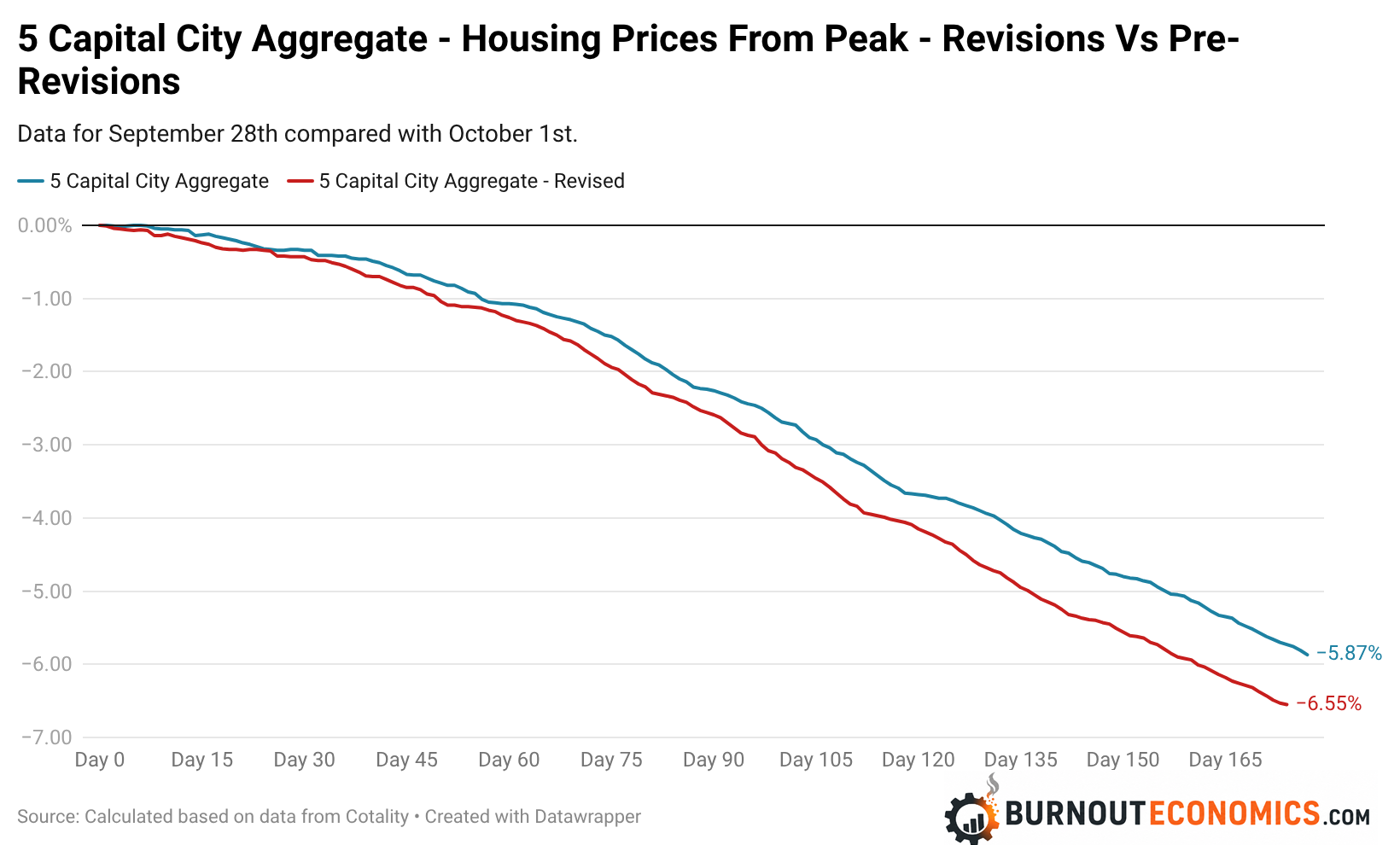
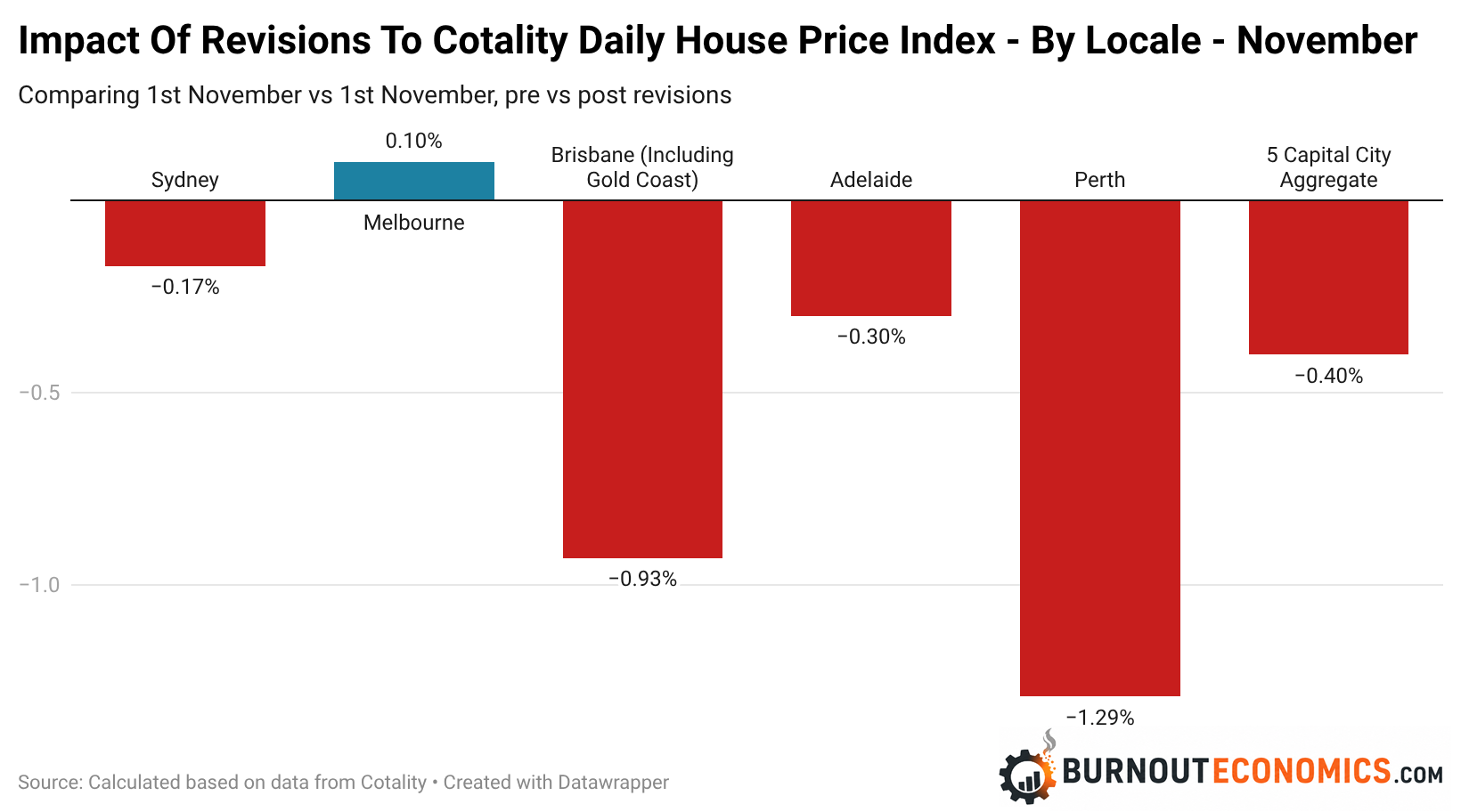
In this, the latest revisions which came at the start of November are no different, taking the nation one step closer to the largest capital city housing price falls (five capital city aggregate in at least 40 years.
The largest revisions were seen in Perth, where falls were revised to be 1.29% larger, followed by Brisbane where prices were adjusted 0.93% lower.
At the other end of the spectrum, Melbourne was revised 0.1% higher and Sydney was revised 0.17% lower.
Following the revisions, Perth has the fastest-dropping prices in the country, down 9.10%, followed by Brisbane down 8.01%.
Not too long ago Sydney was by far the worst-performing capital, but revisions to past data have seen it drop to third in the national housing price fall stakes.
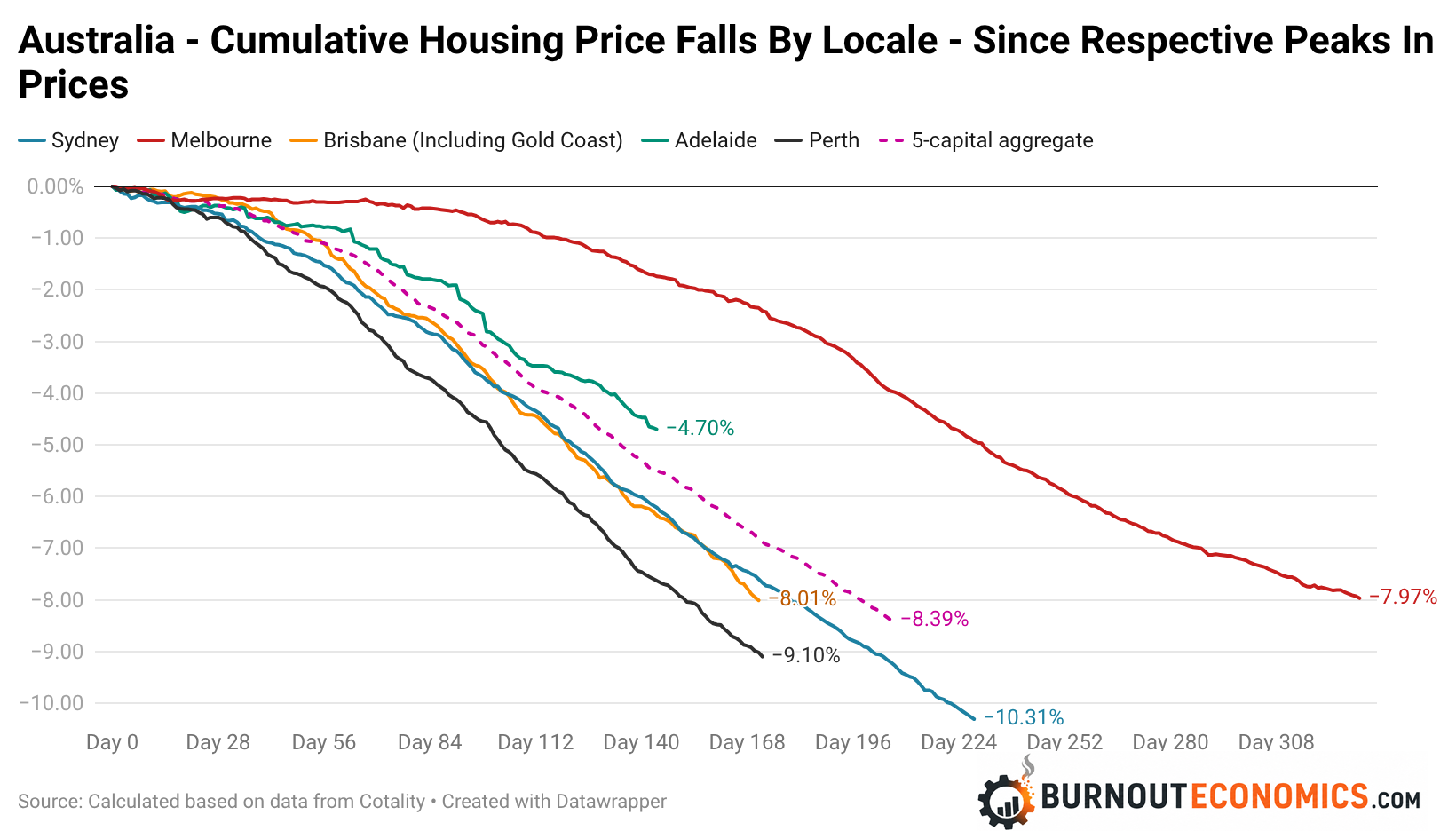
With prices at a five-capital-city aggregate level now down 8.39%, the market is nearing the largest price falls in at least 40 years.
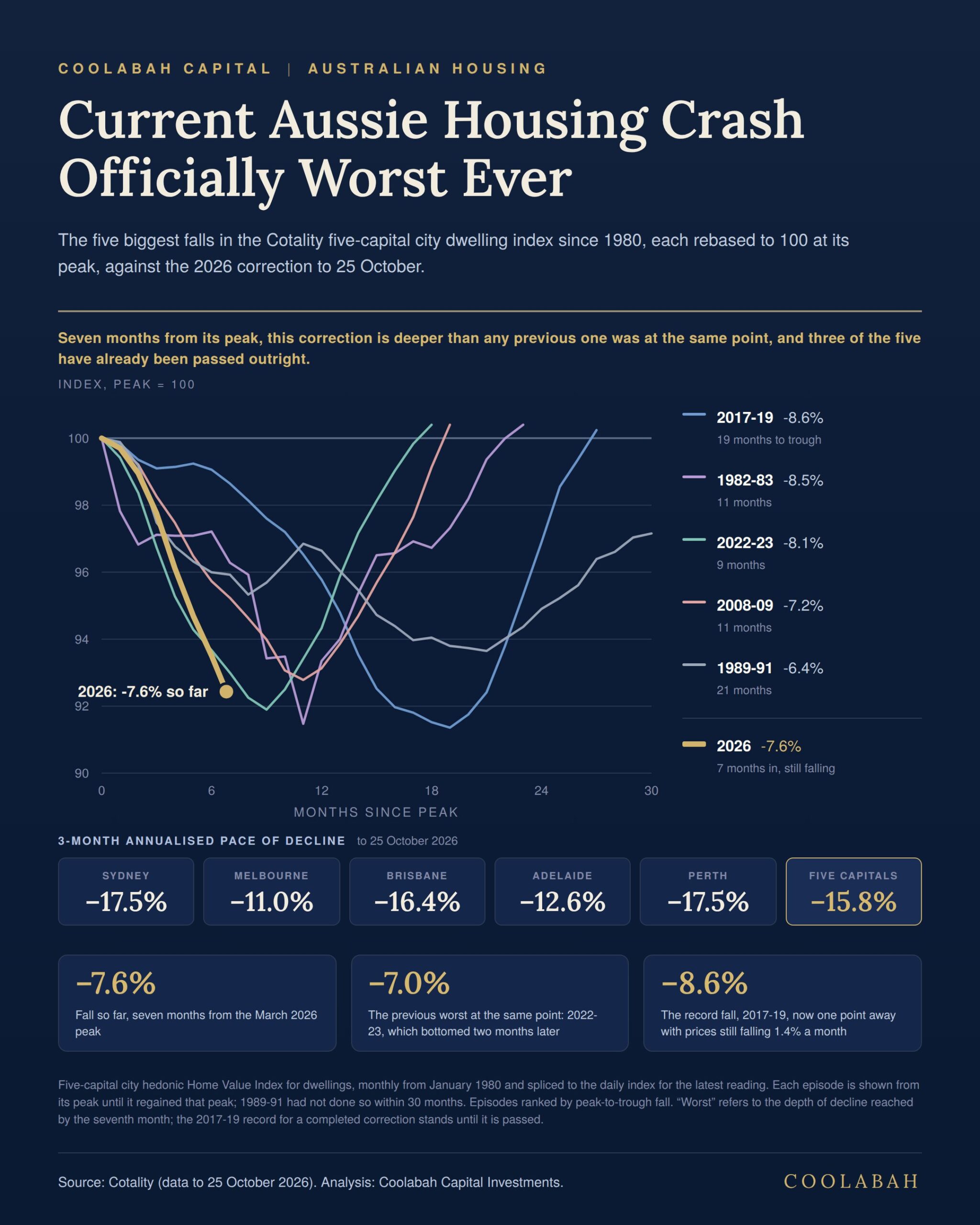
As the chart below from Coolabah Capital’s Christopher Joye illustrates, the largest price fall prior to the current cycle at a five-capital-city level was 8.6% between 2017 and 2019.
The Takeaway
With the market now less than 0.3 percentage points away from the largest falls in more than 40 years, we are only a little over a week away from prices hitting this point if they continue to fall at a similar rate.
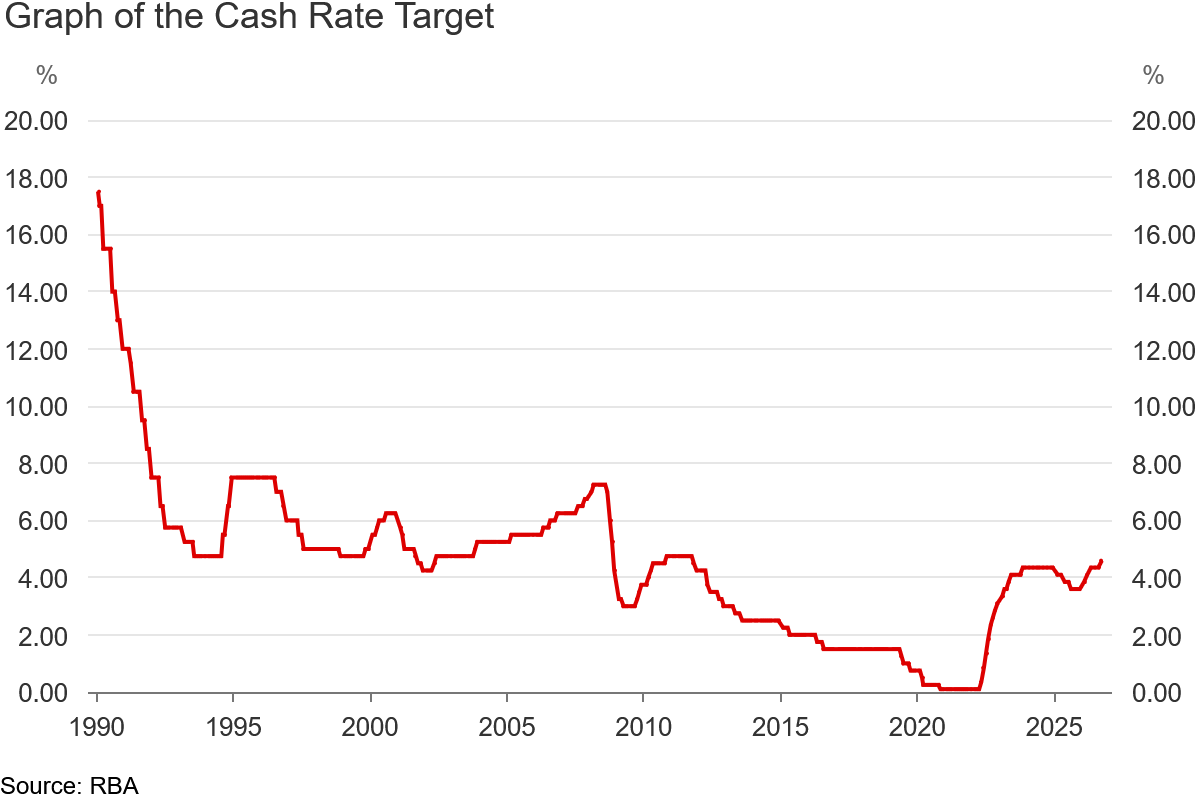
Meanwhile, interest rates are set to rise as early as later today and potentially hit the highest level since 2008 if recent market pricing ends up being realised.
Over the decades, Australians have become accustomed to housing prices bouncing back relatively swiftly after price falls, as illustrated nicely by the chart above from Coolabah Capital.
These bounces have generally been driven by a positive external catalyst for home prices, whether it be the RBA cutting interest rates, government intervention to boost demand for homes, or a rental crisis that pushes more people to buy.
In 2026, these sorts of interventions are nowhere to be seen; quite the opposite, in fact.
Instead, rates are set to keep rising, investor demand for existing properties is tanking, and migration is set to fall in the new year.
Ultimately, a positive catalyst to boost the market’s fortunes appears to be elusive, and without it, prices may continue to fall much further than even the mainstream downside scenarios would suggest.
