
Commercial property developers turn to self-storage assets for resilient yields

Institutional investors and commercial developers are increasingly allocating capital toward specialised storage developments to secure reliable cash flows.
Shifting capital yields and persistent economic uncertainty continue to press commercial property developers across conventional office and retail sectors. When traditional tenant commitments waver, you need reliable alternatives that safeguard revenue while preserving long-term asset value.
Self-storage facilities offer a dependable operational framework with steady occupancy and disciplined expense management. By allocating capital toward this resilient niche, your development pipeline gains defensive cash flows capable of weathering wider market swings.

Why Are Investors Moving Toward Specialised Storage?
Traditional commercial leases carry prolonged exposure to business restructuring and shifting corporate footprints. Self-storage counters this volatility because user demand links directly to routine life transitions, downsizing, and residential movements.
Operating numbers reflect this stability across challenging economic cycles. Published findings from Cushman & Wakefield indicate that sustained investor interest stems from predictable cash generation and modest ongoing capital expenditures. These disciplined cost profiles help your team maintain healthy operating margins without funding complex interior tenant improvements.
Monthly lease models give operators swift pricing autonomy to reset rental rates alongside inflation. When broader markets experience valuation compression, your storage assets preserve revenue integrity through dynamic rate management.
How Do Modern Facilities Maximise Rentable Space?
Effective floor planning converts raw building envelopes into dense networks of high-yielding storage lockers. Partnering with specialised Storage construction services allows your team to engineer customised unit mixes that capture premium rental rates. Every square meter of your layout directly dictates your eventual net operating income.
Market data demonstrates the financial wisdom of precise design execution. Broad market research from CBRE points out that disciplined storage assets continue to achieve attractive risk-adjusted returns supported by steady occupancy numbers[cite: 1]. You can capture these gains by pairing smart unit sizing with optimal traffic circulation.
Automated access systems eliminate the operational overhead of on-site staffing while elevating customer satisfaction. Smart keyless locks and automated security gates streamline daily customer visits and lower your continuous management overhead.
What Makes Multi-Level Retrofits Structurally Feasible?
Vacant retail warehouses and underutilised industrial shells present exceptional conversion possibilities for urban developers. Repurposing these existing footprints reduces zoning friction, curtails delivery timelines, and sidesteps escalating ground-up site development fees.
National industry outlooks reinforce the strategic value of adaptive redevelopment. Sector insights compiled by the Urban Land Institute identify storage assets among the top performers for investment prospects because of non-cyclical demand and efficient space utilisation. Integrating multi-story mezzanines turns redundant vertical clearance into substantial revenue-generating volume.
Structural feasibility requires detailed assessments of existing slab weight capacities and column spans. Evaluating load-bearing thresholds early allows your engineering team to install lightweight steel partitioning systems without costly foundation retrofits.
How Can You Accelerate Long-Term Investment Returns?
Balancing unit mixes against local customer demographics protects your development against extended vacancy periods. Incorporating a measured share of climate-controlled units commands noticeable rate premiums from business clients storing sensitive inventory.
Self-service digital onboarding drives immediate leasing velocity while compressing customer acquisition costs. Modern tenants prefer managing their accounts through mobile applications, which cuts down administrative friction for your facility management staff.
Careful capital planning matches phased construction timelines directly to localised leasing absorption rates. Staging your fit-out phases helps preserve upfront equity reserves while generating immediate cash receipts from completed building zones.
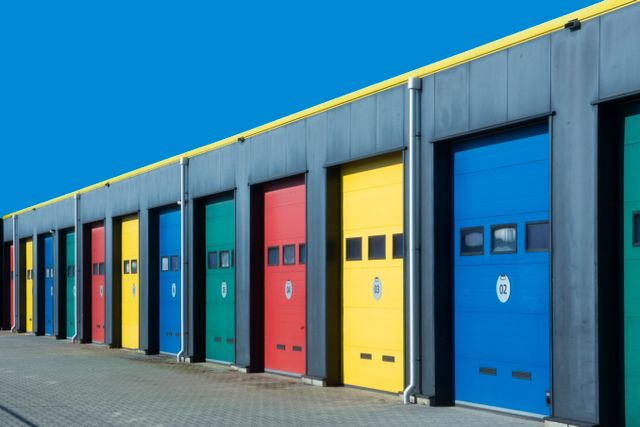
Transitioning into specialised self-storage assets equips your development portfolio with dependable yield against volatile market backdrops. Disciplined unit planning and automated site operations transform raw square meters into reliable, defensive income streams.
Prioritising intelligent space design and streamlined structural execution positions your commercial projects for sustained financial performance. Your development team can build durable community infrastructure that secures capital while outperforming traditional commercial property sectors.