
As housing price falls continue to spread to more and more markets across the nation, it often feels like not a week goes by without a major bank or prominent analyst revising expected price falls upward.
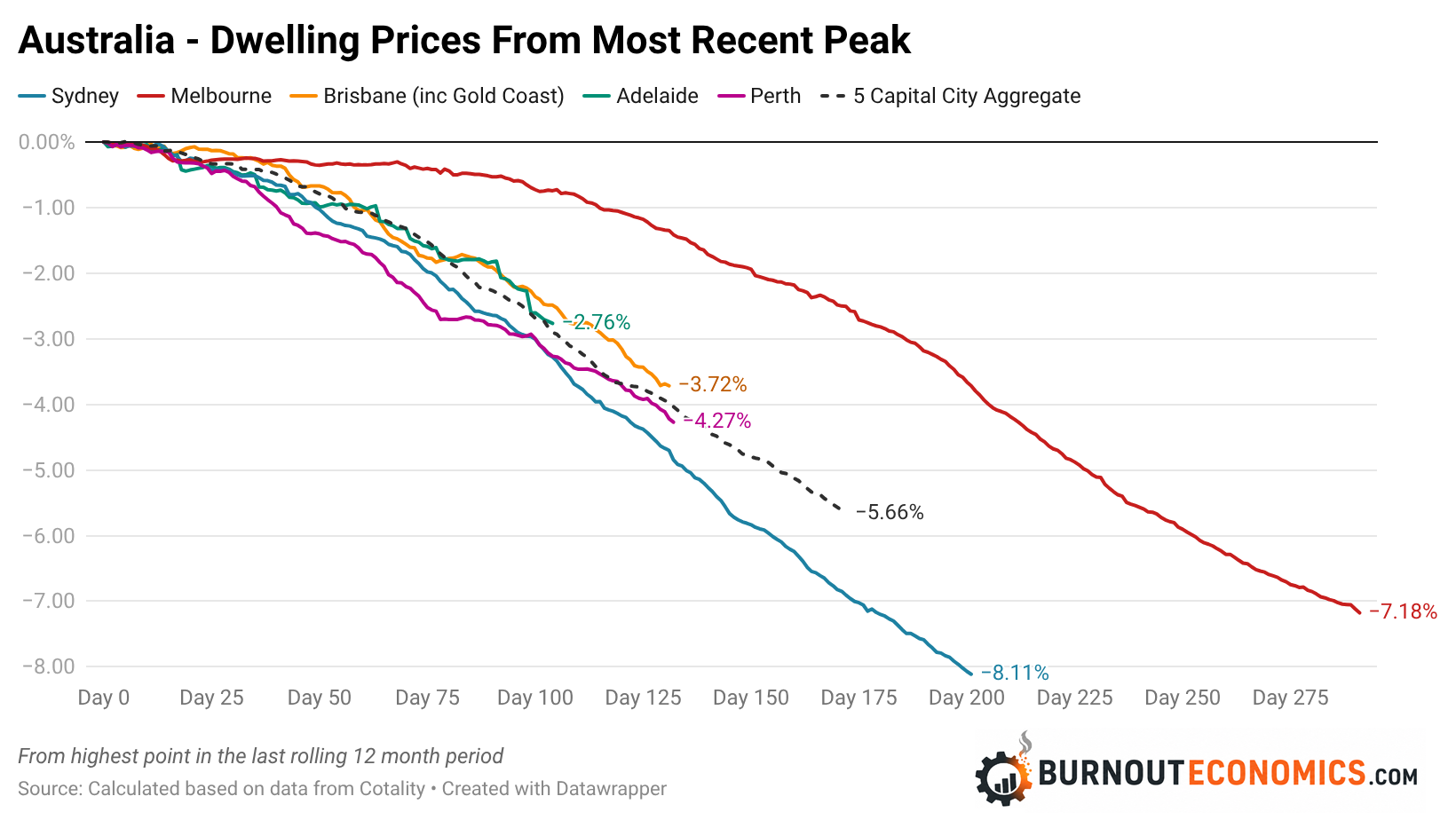
As of the latest data from Cotality, capital city housing prices (5 largest capitals) have dropped by 5.7%, with the largest falls so far being seen in Sydney, which is down 8.1%, and Melbourne, which is down by 7.2%.
At the other end of the spectrum, the best performers among the major capitals are Adelaide, down 2.8%, and Brisbane, down 3.7%.
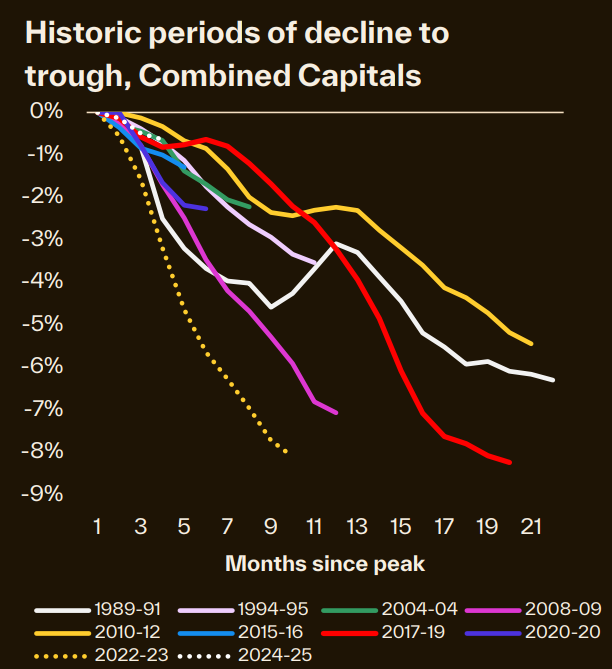
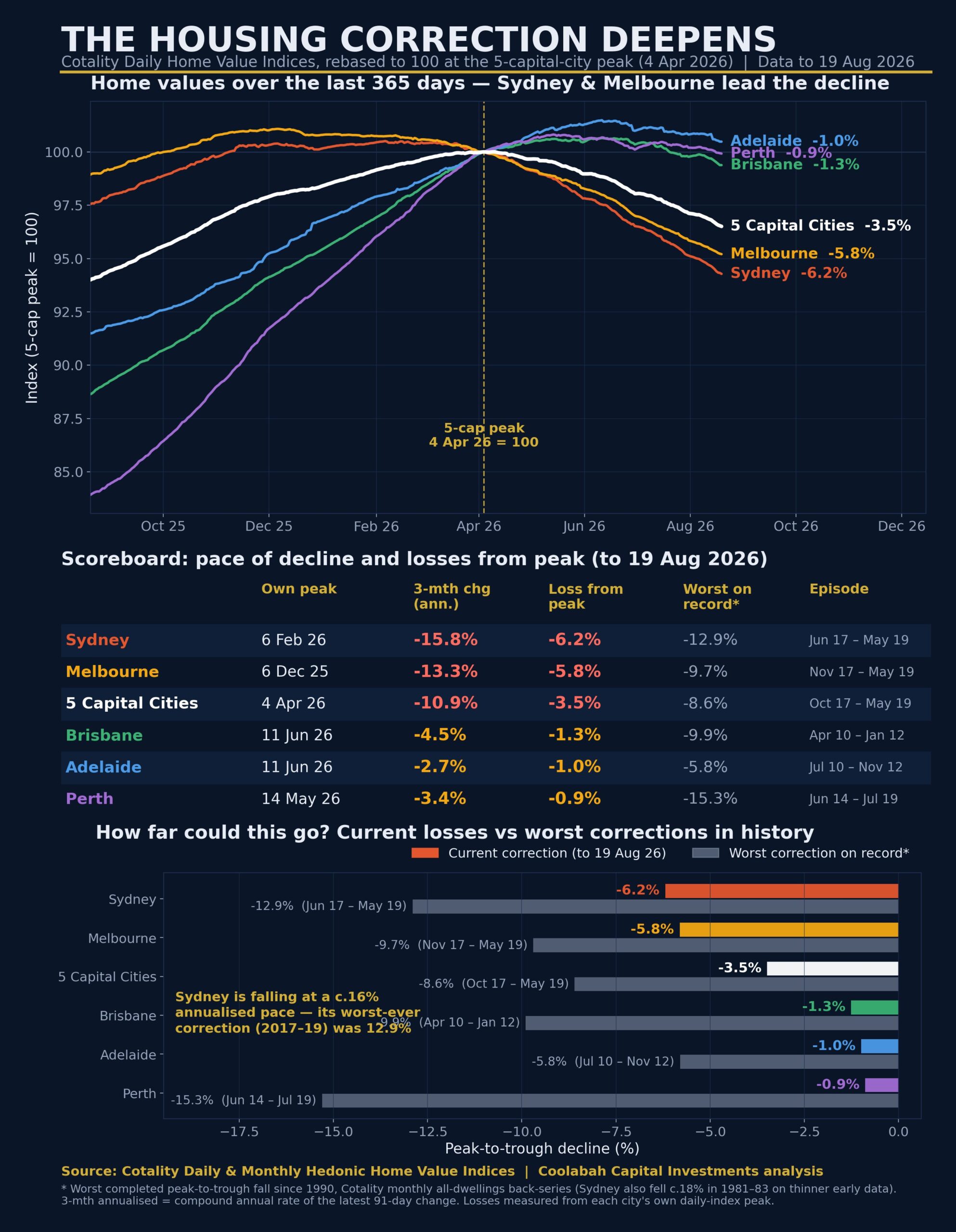
Based on the last 36 years of data, which comes to us via an analysis by Coolabah Capital Portfolio Manager Christopher Joye, the largest fall in prices at a five-capital-city level is 8.6%, which occurred between October 2017 and May 2019.
With the Cotality Daily Index down by 5.7% at a five-capital-city level, we are almost two-thirds of the way to the largest housing price falls in four decades.
Source: Cotality
If the current rate of price falls were to continue at a five-capital-city level, then a new record for the last 40 years would be set by Christmas.
But as the graph of price falls so far indicates, differences between markets can be significant.
Joye’s analysis found cycles in which price falls in specific capital cities were larger than the performance of capital city markets in aggregate.
For Sydney, its largest price correction played out between June 2017 and May 2019, with dwelling prices falling by 12.9%.
For the next most populous capital, Melbourne, its largest price-fall cycle was between November 2017 and May 2019, with prices falling by 9.7%.
Brisbane’s poorest performance since 1990 occurred between April 2010 and June 2012, with prices down 9.9%.
Meanwhile, in the best-performing capital on this metric, Adelaide’s largest price fall in a previously assessed cycle was 5.8%, between July 2010 and November 2012.
The current holder of the crown for major capital city price falls is Perth, which experienced its market dropping by 15.3% between June 2014 and July 2019.
Source: Christopher Joye
The Takeaway
Amidst speculation that there could be as many as three further 0.25% rate rises from the Reserve Bank and a high degree of uncertainty on the duration and severity of the crisis in the Middle East on global energy supplies, it’s easy to see that there is further downside for the nation’s property market on the road ahead.
To what degree remains a matter of debate and will likely remain so until the market eventually bounces back, whenever that may be.
More concrete is that the nation’s housing market faces an unprecedented (and I’m not fond of using that word unless it’s entirely appropriate) series of headwinds that are not only putting downward pressure on housing prices, but also limiting policymakers’ options to intervene and support the market.
For better or worse, that’s often what it has come down to: policymakers choosing to support the market as housing prices fell.
This is supported by the dates contained in Joye’s analysis.
The two largest capitals, Sydney and Melbourne, both came out of their steepest falls in the last 36 years a month after the 2019 election. This ensured a very property investor-friendly government in Canberra, and the RBA cut interest rates at its next meeting.
Perth saw a similar catalyst get it out of its doldrums, with price falls ceasing two months after the 2019 election and only a month after the RBA began cutting rates.
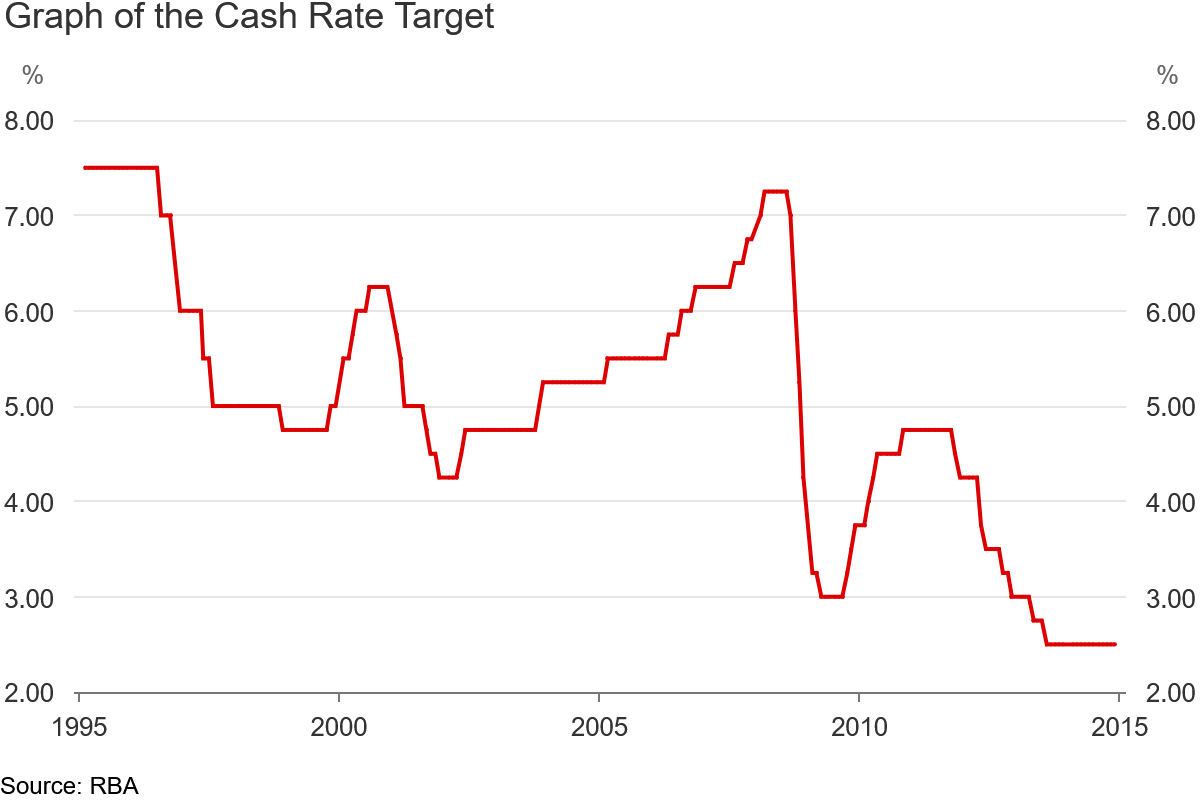
Rounding out the five largest capitals, Brisbane and Adelaide saw prices bottom out during the RBA’s November 2011 to August 2013 rate-cut cycle, which saw the cash rate reduced dramatically (4.75% to 2.5%), to what was then the lowest cash rate on record.
This brings us to the four most dangerous words in the English language.
“This time is different.”
And for now it is different.
The RBA has its hands tied by a major inflation issue; the Albanese government has kneecapped investor demand for existing property and is trying to launch a support program on a budget into what could become a protracted global energy or economic crisis, which is, at best, problematic.
While there is no doubt that policymakers will eventually support the market, the line will arguably be drawn much further down the price-fall path than at any other time in the last 40 years.
