The problem with the anti-renewable energy argument is that it is a weaving, bobbing, amorphous line of thinking that changes when you try to pin it down. I’ve tried to do all in one arguments, but I think that is playing into the problem. If there are 10 arguments that I need to debunk, it gets confusing. So, I’m just going to pick one this time.
The economic argument
Today, Trump is pushing the misconception that the switch to renewables is a lefty, woke crusade. And honest, god-loving capitalists like the Chinese who don’t have woke constraints are rapidly investing in coal and laughing at the cucked Westerners with their solar panels and wind farms.
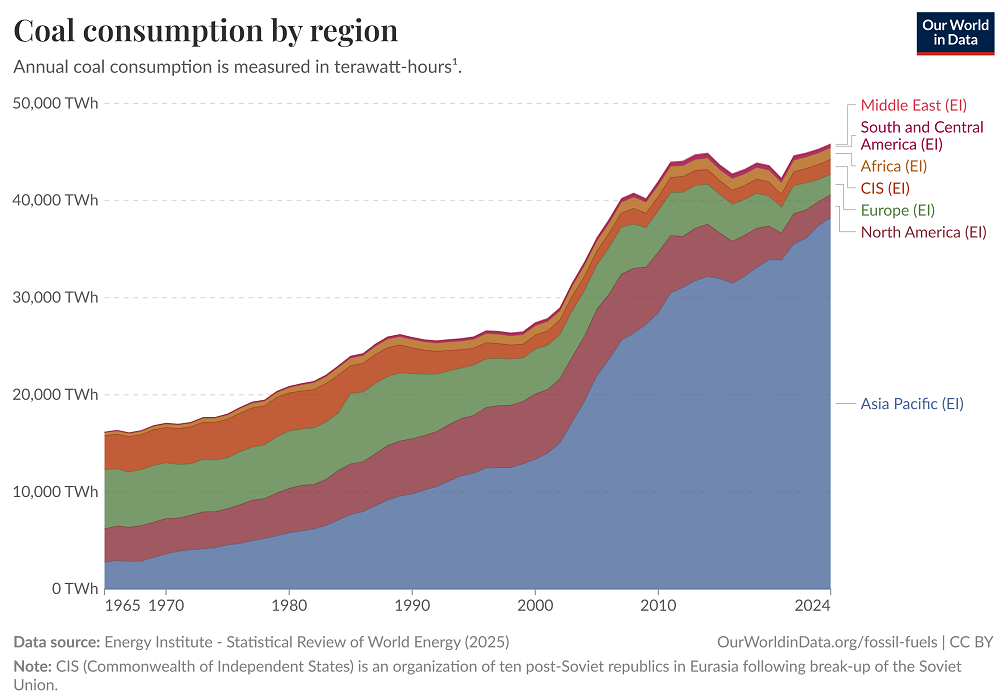
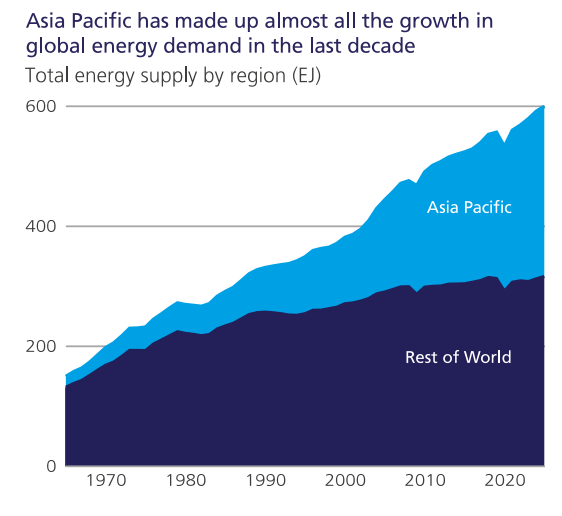
Asia is also by far the world’s largest coal consumer, accounting for more than 80% of global consumption, which continues to grow:
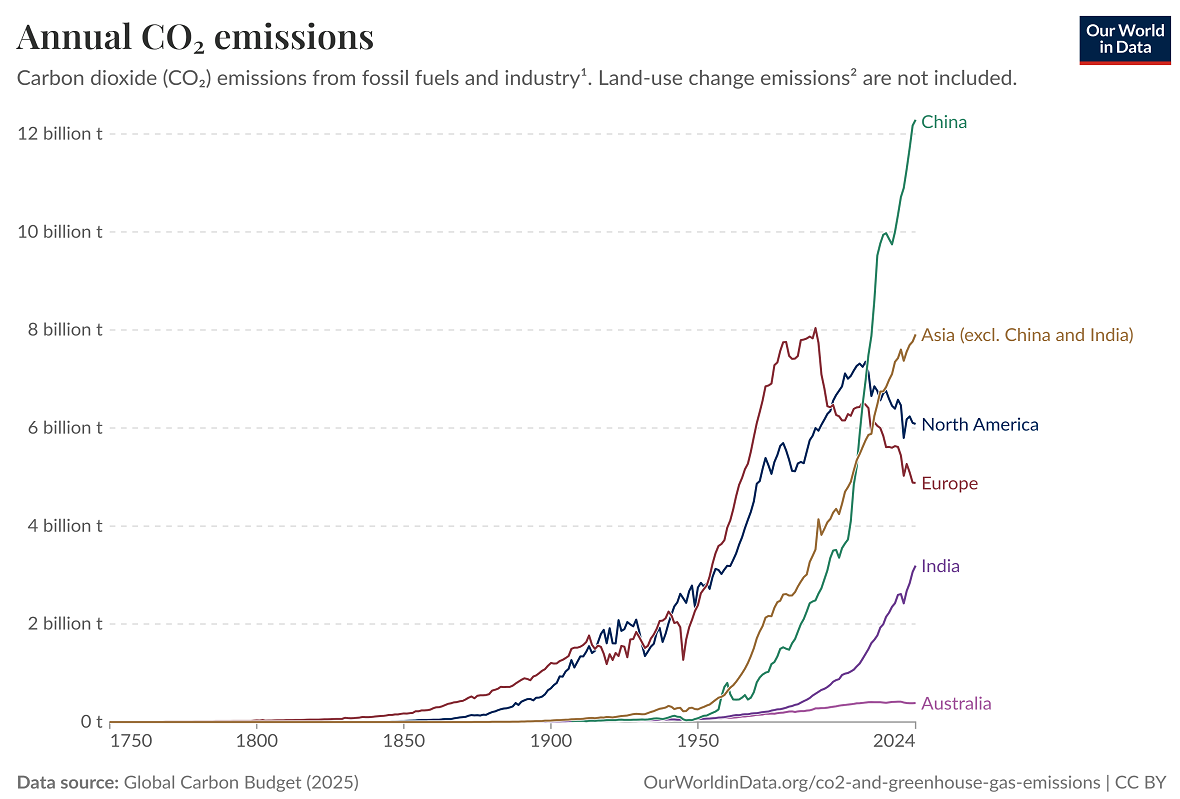
Asia also accounts for 60% of the world’s carbon emissions (versus Australia’s 1%), and it has driven all growth in the world’s carbon emissions this century (see China, India, and the rest of Asia below).
In my view, it doesn’t make sense for Australia to shut down its coal generation when we are busy selling coal to Asia to burn instead, with Asia doubling down on its use.
Advertisement
The rear-view mirror
Sounds and looks compelling. There are two huge issues with that argument:
Solar, battery and wind costs have fallen 99% over the time scales shown. What made sense to build in 1980 does not make sense in 2026.
Power takes time to build. Asking what China invested in 10 years ago is not the same as asking what they are investing in now.
Leith is asking “are wind and solar really cheaper” and then pointing at China from 20 years ago to support his argument.
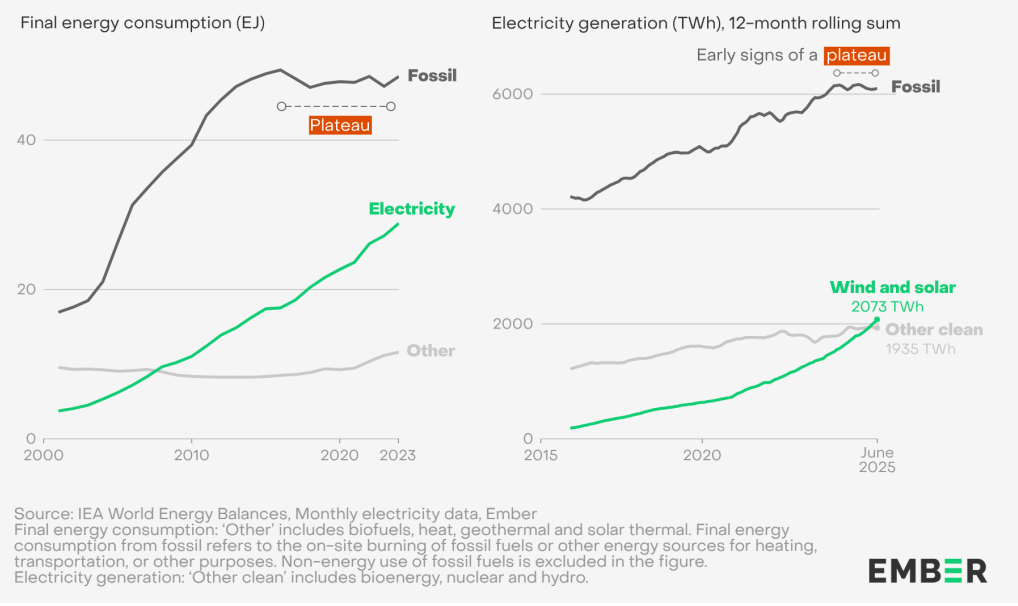
The problem is that if you point at China today, you get a completely different answer. China reduced the amount of energy generated from coal in 2025 while adding more solar than the entire UK grid:
Also, even with incredibly rapid electrification of the Chinese economy, fossil fuel generation has stalled:
Advertisement
The Economic Argument Upshot
There are economic arguments for keeping existing plants open.
There are economic arguments for building any form of power where you do not need to add new transmission.
There are economic arguments for building fossil fuel generation capacity for grid stability or due to regional constraints/opportunities.
There are energy security arguments for building more expensive fossil fuel generation
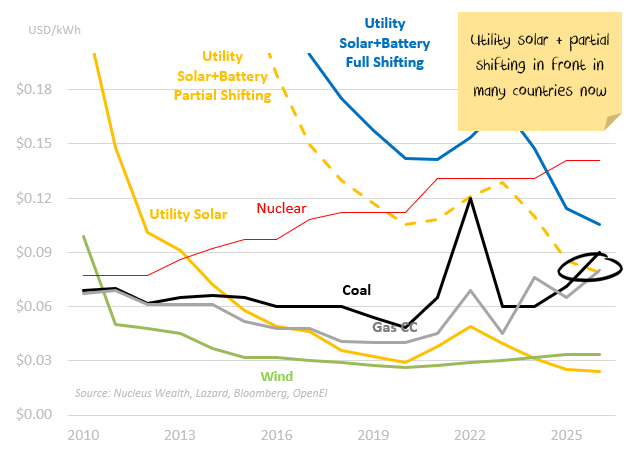
But, do not conflate any of those arguments with there being an economic argument against renewables in 2026. Solar and battery costs are on a technology curve, and prices are falling year after year. Coal is on a scarcity curve, and prices are rising year after year. In most locations, we are past parity. And renewable costs continue to fall:
Advertisement
And definitely don’t claim that China is in any way proof that coal is cheaper. China is telling you exactly the opposite.