
In Australia’s history, the pub was long a place of community, mateship and a refuge from the challenges outside.
For a century it was a place where Australians unwound, socialised or even found love.
But in the modern age, the cost of a beer, let alone a more expensive drink, is increasingly prohibitive, leading many Australians to increasingly stay at home.
The estimated cost of a beer varies, from around $13 a pint at Pubwatch.com.au to a recent estimate put together based on Melbourne beer costs, which puts its closer to $15 a pint.
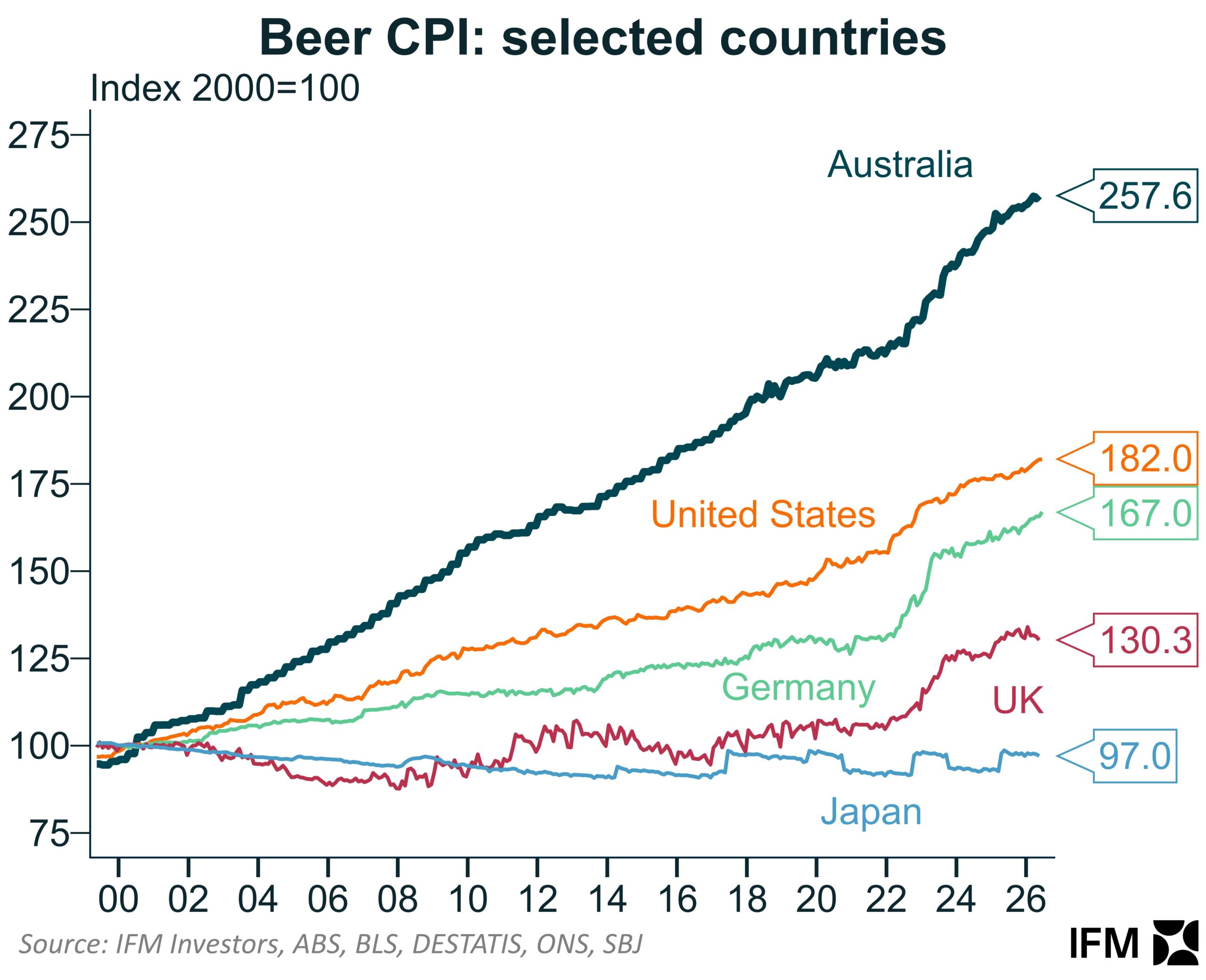
A recent chart from IFM Investors Chief Economist Alex Joiner reveals that Australia is somewhat unique in this regard.
Since 2000, the cost of a beer as measured by the CPI has risen by 157.6%, far more than the United States (82.0%), Germany (67.0%), Britain (30.3%) or Japan (-3.0%).
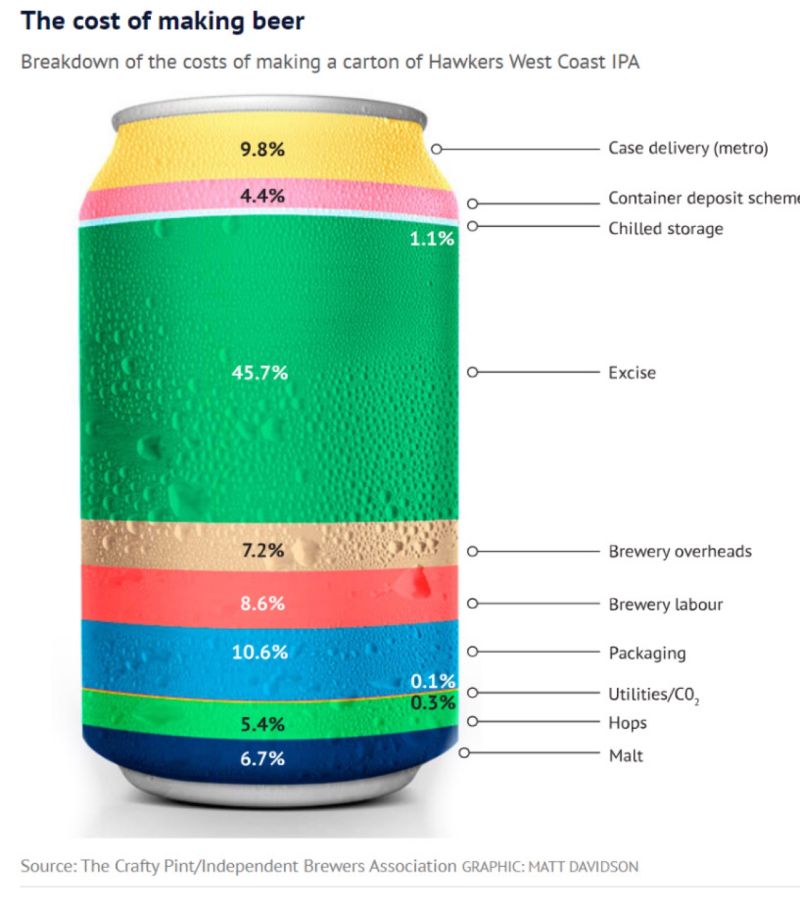
Part of this is the cost of excise tax on beer, with the Brewers Association of Australia stating that around 90 cents of the cost of a pint comes from excise tax or just under $1 if you factor in the impact of the GST on the excise tax.
A 2024 infographic from the Sydney Morning Herald sums up nicely how the cost of excise tax on beer impacts the cost of a can from the bottle shop.
Despite the perception of younger demographics spending frivolously, the data suggests that if it is happening (which it isn’t), it’s not happening down the pub as it did in previous generations.
Alex Joiner later posted a tweet to accompany his graph on the cost of beer as measured by the CPI:
“I think there is something lost if it becomes too expensive for younger people in particular to go out and have a few beers with their mates.”
That really captures the situation in Australia in 2026.
With rents more expensive than at any time since Cotality’s current records began and the burden of purchasing more or less in the same boat, younger people, or indeed non-homeowners more broadly, increasingly face a choice: have a life more in keeping with decades past or continue to sacrifice their living standards in the name of paying rent or saving money for a home.
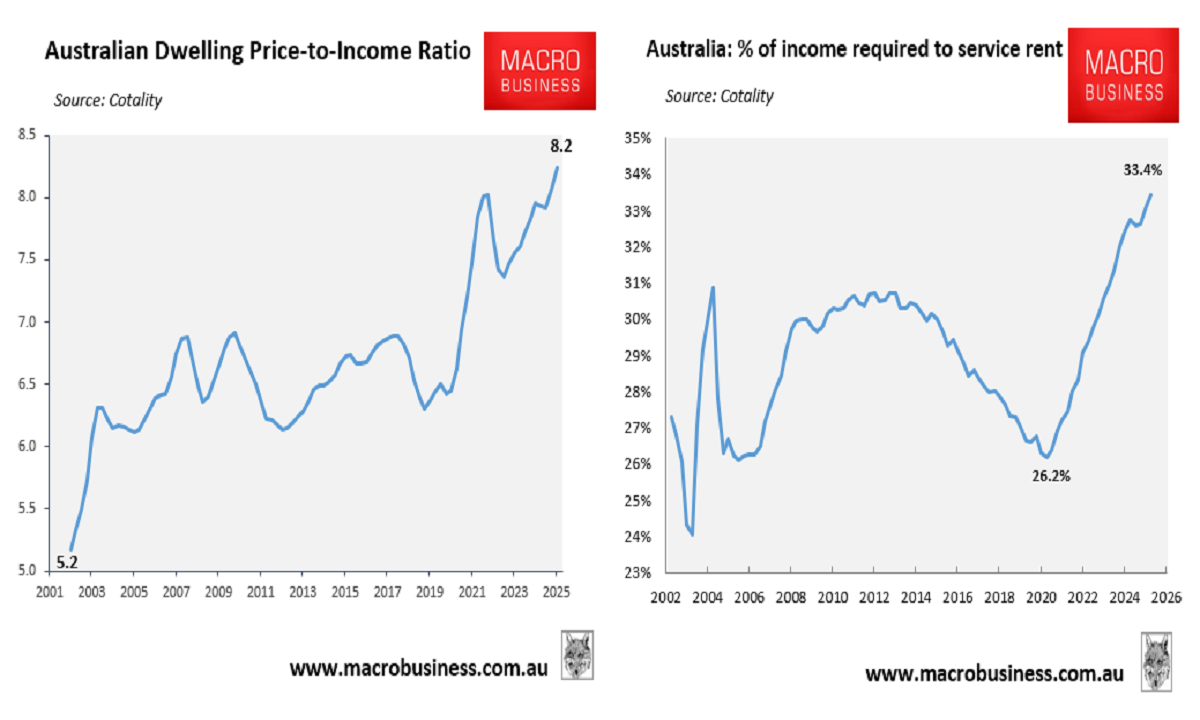
Often, the big question is whether a household can afford its housing costs.
But there is arguably another much deeper question: can they afford their housing costs and still be able to spend freely enough for the economy to continue to grow?
On the latter, the answer is clearly no, with the spending of under 45s outside their housing costs lower in 2022 than it was in 2004 in real terms.
Ultimately, the rise of the $15 pint is emblematic of a country with a multitude of problems, from flatlining productivity growth preventing a sustained rise in living standards to governments increasingly growing their share of the pie through greater levels of taxation.
Sadly, there is little sign of this trend changing any time soon.
