
When the final sunrise dawned on the last day of the second millennium, Australia was riding high, living standards were rising strongly, mortgage rates had been cut by almost two-thirds from their peak, and the median home nationally was affordable for the median-earning household.
It was a time of ambition and hope, where better days were always just over the horizon, where the Great Australian Dream could be a reality if someone was willing to work hard enough for it.
But as the chart below reveals, this period was not to last forever.
By the time the tail end of positives from the mining boom came around in mid-2012, the engine of living standards growth was out of gas, stuck in low gear and unable to drive things forward at anything beyond a snail’s pace.
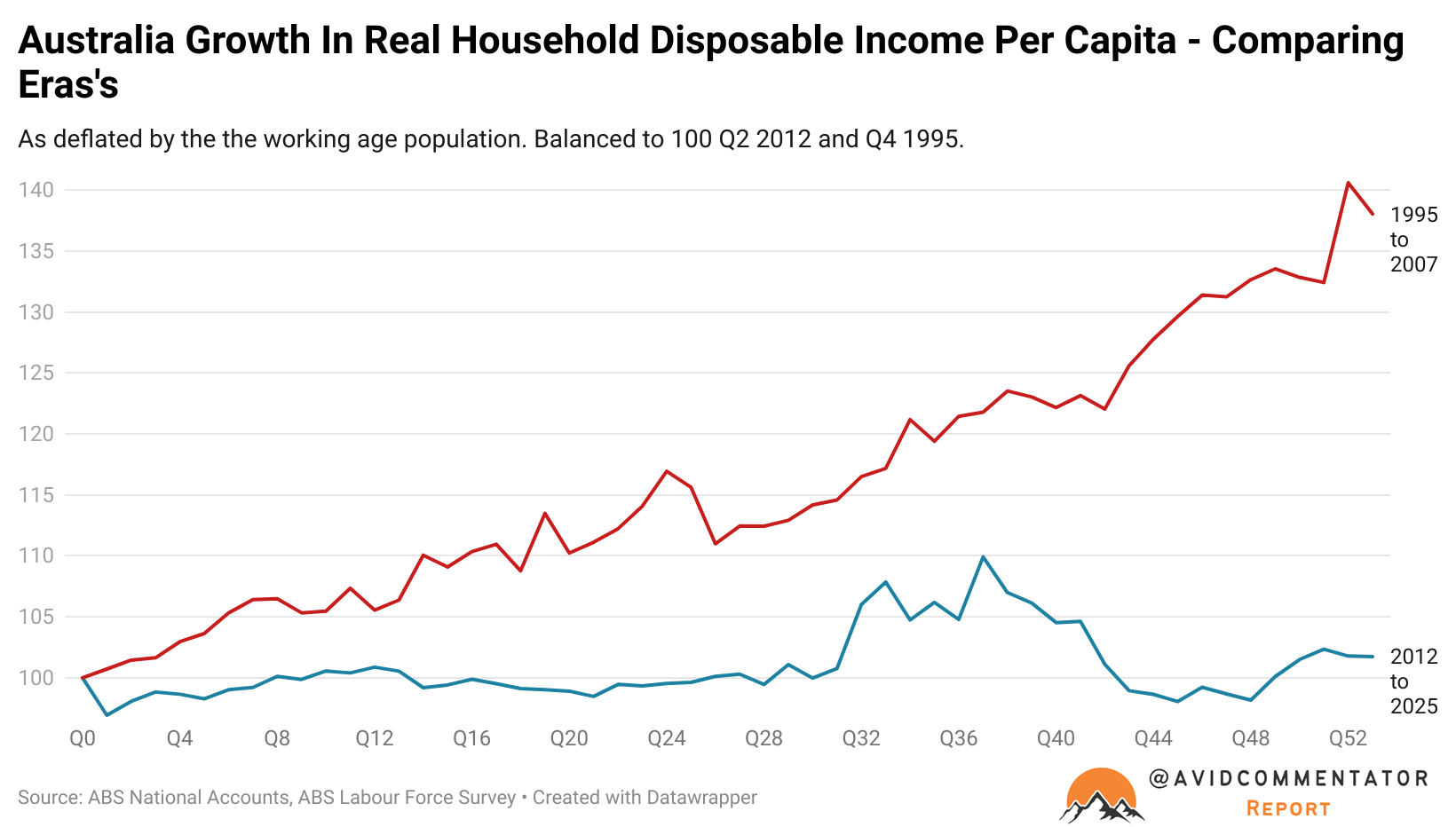
From living standards growth, to real household consumption per capita, to housing affordability, it’s all gone wrong for Australia over varying timelines, starting in the year 2000.
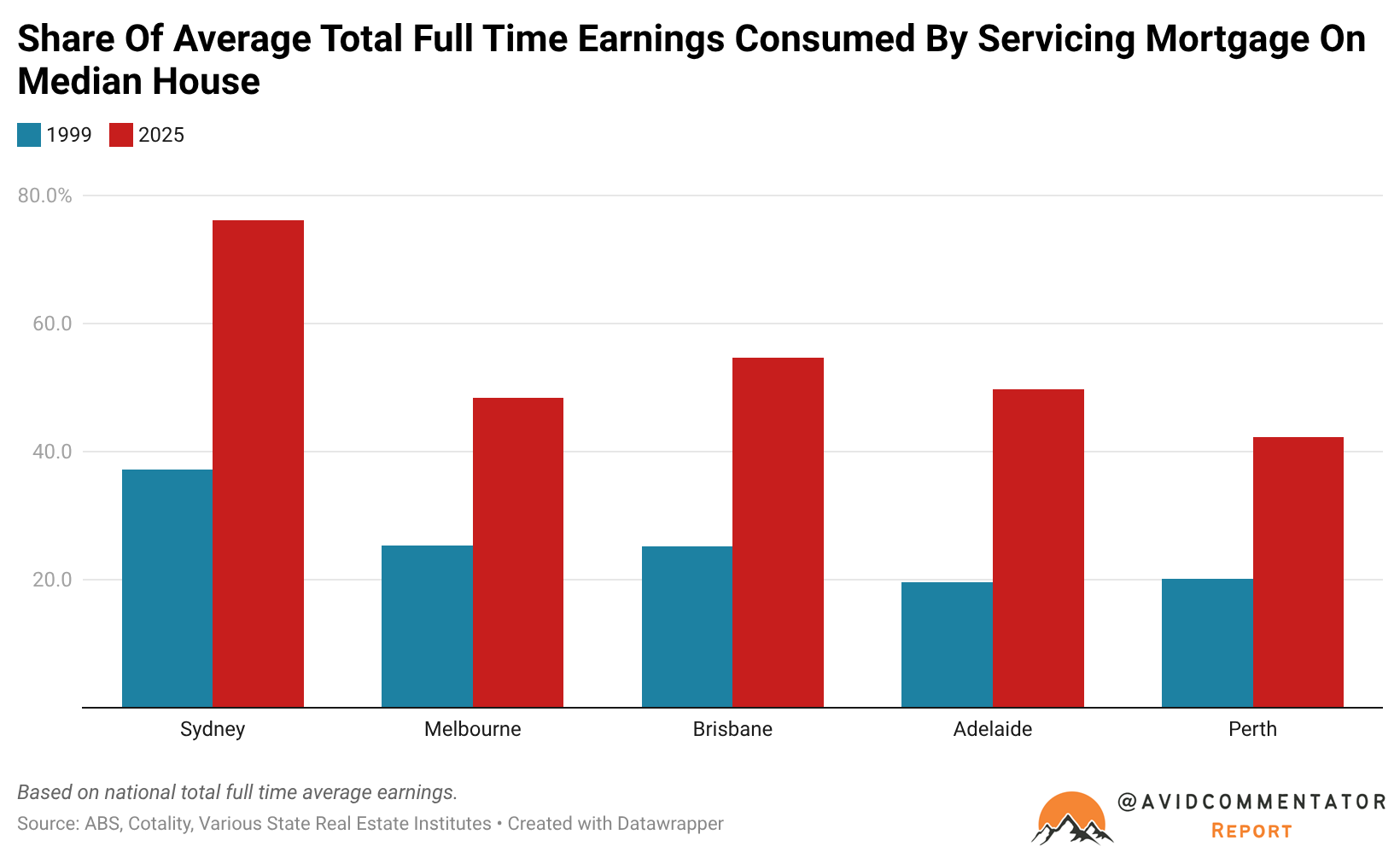
As the nation closed out 1999, the average non-weighted mortgage burden of purchasing the median capital city house was 24.4% of total average full-time earnings, assuming a household had a 20% deposit.
Outside of Sydney, it was entirely possible to comfortably purchase even the median home on a single, average, full-time income.
Even in the nation’s most expensive housing market, Sydney, if a second earner were able to secure part-time employment with even one-third of full-time earnings, it was certainly achievable.
In the nation’s cheapest capital, you could service a mortgage on the median house with just 17.6% of average total full-time earnings.
It’s here that someone often points out, “Aha, but what about the rise in female workforce participation”.
The thing is this is 1999, which is being used as a reference point, not 1965.
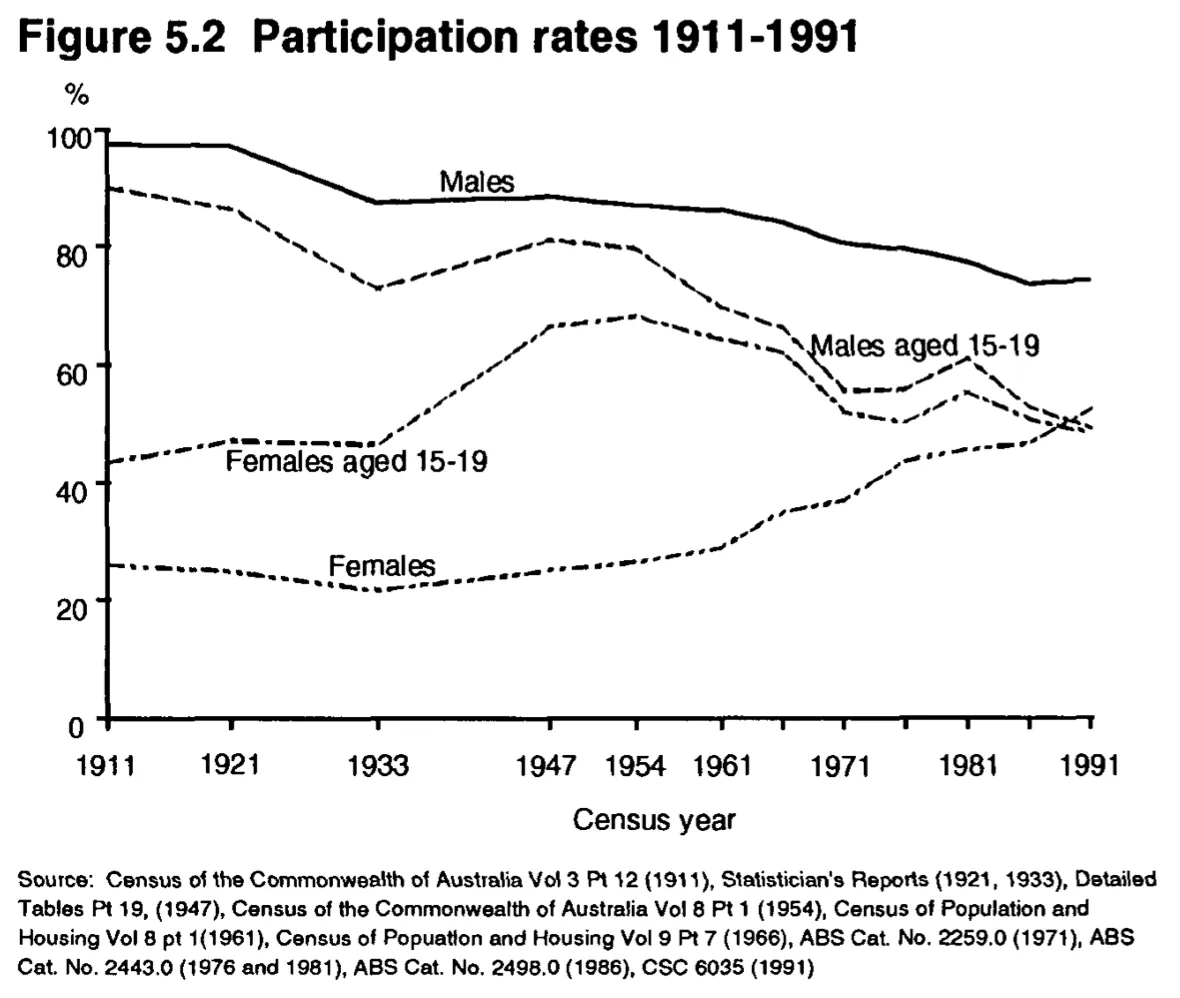
By 1999, the female labour force participation rate was 54.1%, compared with 61.2% before the pandemic and 63.0% today.
As the chart below from the ABS archives reveals, much of the rise in female workforce participation had already occurred.
Thanks to Dr Cameron Murray of Fresh Economic Thinking for sharing this chart and it’s source.
Source: ABS
Back To The Future
If we hop in the proverbial DeLorean and come back to the present, things aren’t nearly as favourable.
Across the combined capital cities, in October last year, an income of $198,800 was required in order to purchase the median capital city house and that was assuming one had the cash for a 20% deposit.
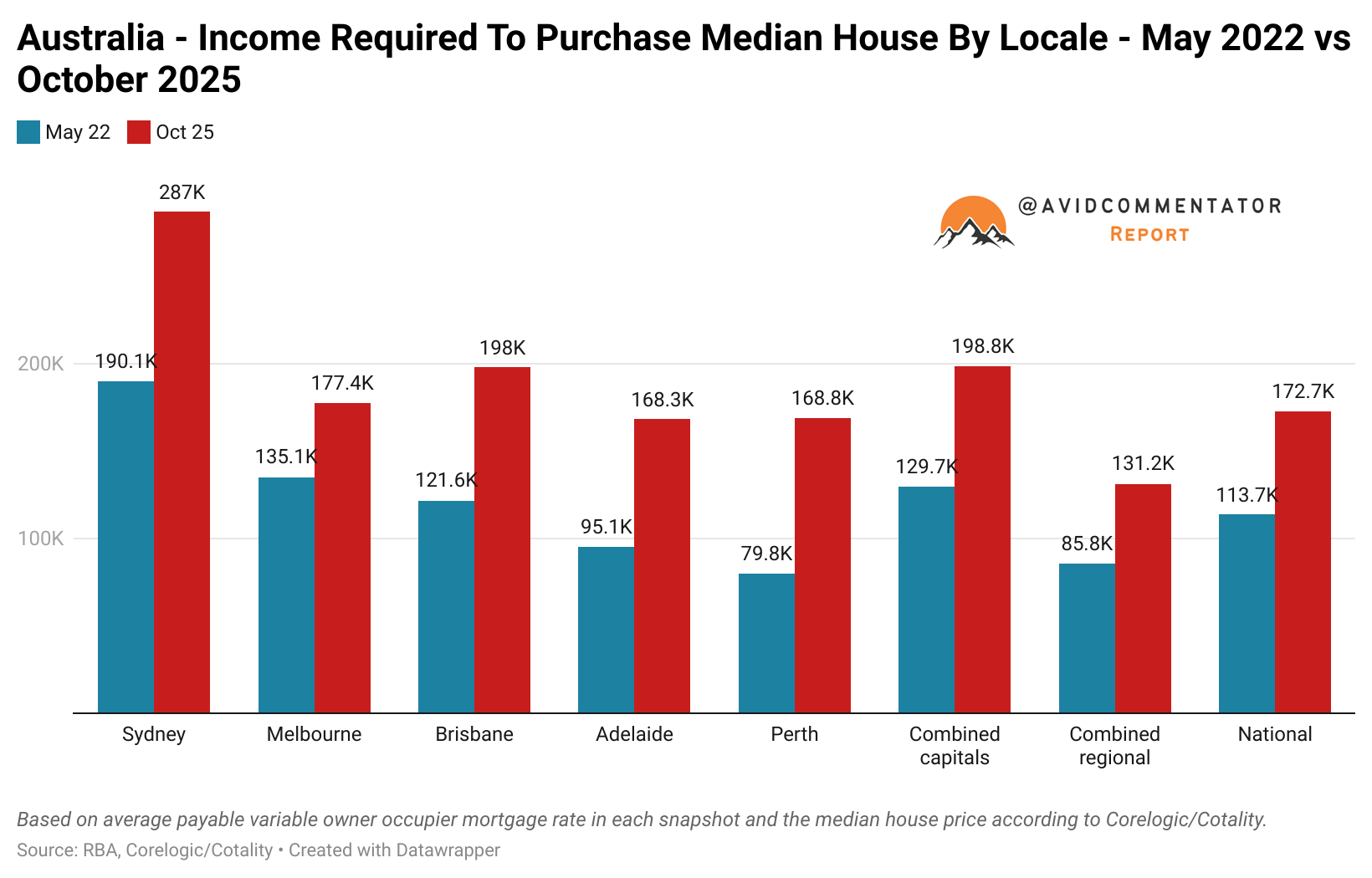
An individual on a single average full-time wage could once afford the median capital city house, but now it nearly requires the median household income of two households in the capitals.
Meanwhile, productivity growth has fallen to the canvas and has been struggling to get back up for years.
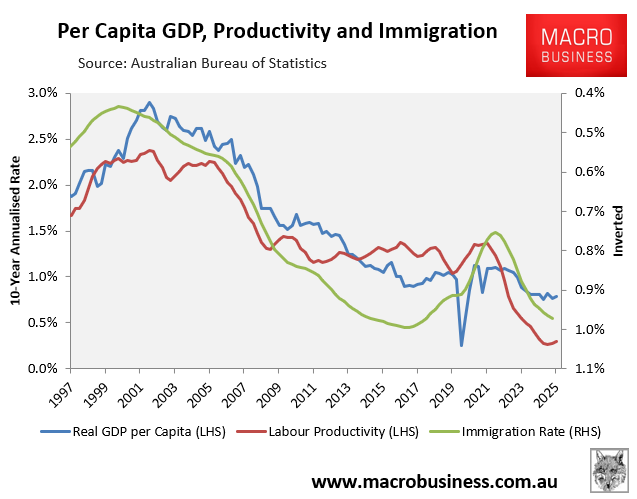
Yet, despite the clear evidence from the data and even admissions from within the Albanese government that some aspects of the economy are broken, the nation continues down the same failed pathway.
The Takeaway
In a time many moons ago, our nation’s leaders worked with the Australian people to achieve their goals of building and owning homes, of growing new private enterprises and of pursuing an economic strategy that helped to lift the quality of life for the overwhelming majority of Australians.
In the present, we have a leadership class that is unable to admit they are no longer actively pursuing some of the most vital elements of the ‘Great Australian Dream’.
The house with a backyard that the overwhelming majority of Australians want, even knowing the financial burden it will place upon them, is no longer the goal of our leaders.
We simply aren’t building enough new homes that meet that criteria to provide the opportunity to own one for everyone who holds that goal.
That is what it ultimately comes down to, simple mathematics.
Not building enough homes.
Not building enough infrastructure and adequately expanding services.
Not pursuing a migration intake that boosts productivity and living standards the way that it did historically.
There is evidence for all of this in the government’s own press releases and policy papers, yet the fantasy narratives persist.
Ultimately, until the Australian electorate wakes up to the reality that policymakers do not share our goals and are not actively pursuing them, our nation will remain on the wrong path, one that a large majority of Australians do not want to be on.
