
For most of the history of modern economies, one of the most vital indicators for economic health was the volume and value of goods moving through a nation.
To quantify this, the Cass Freight Index began producing data on this subject for the U.S. economy way back in 1955.
Perhaps the most useful element of the index as an economic indicator is the ‘Shipments’ subindex, which is simply the number of freight loads being moved across the United States relative to 1990 levels.
It’s important to note that Cass does not seasonally adjust its longest data set.
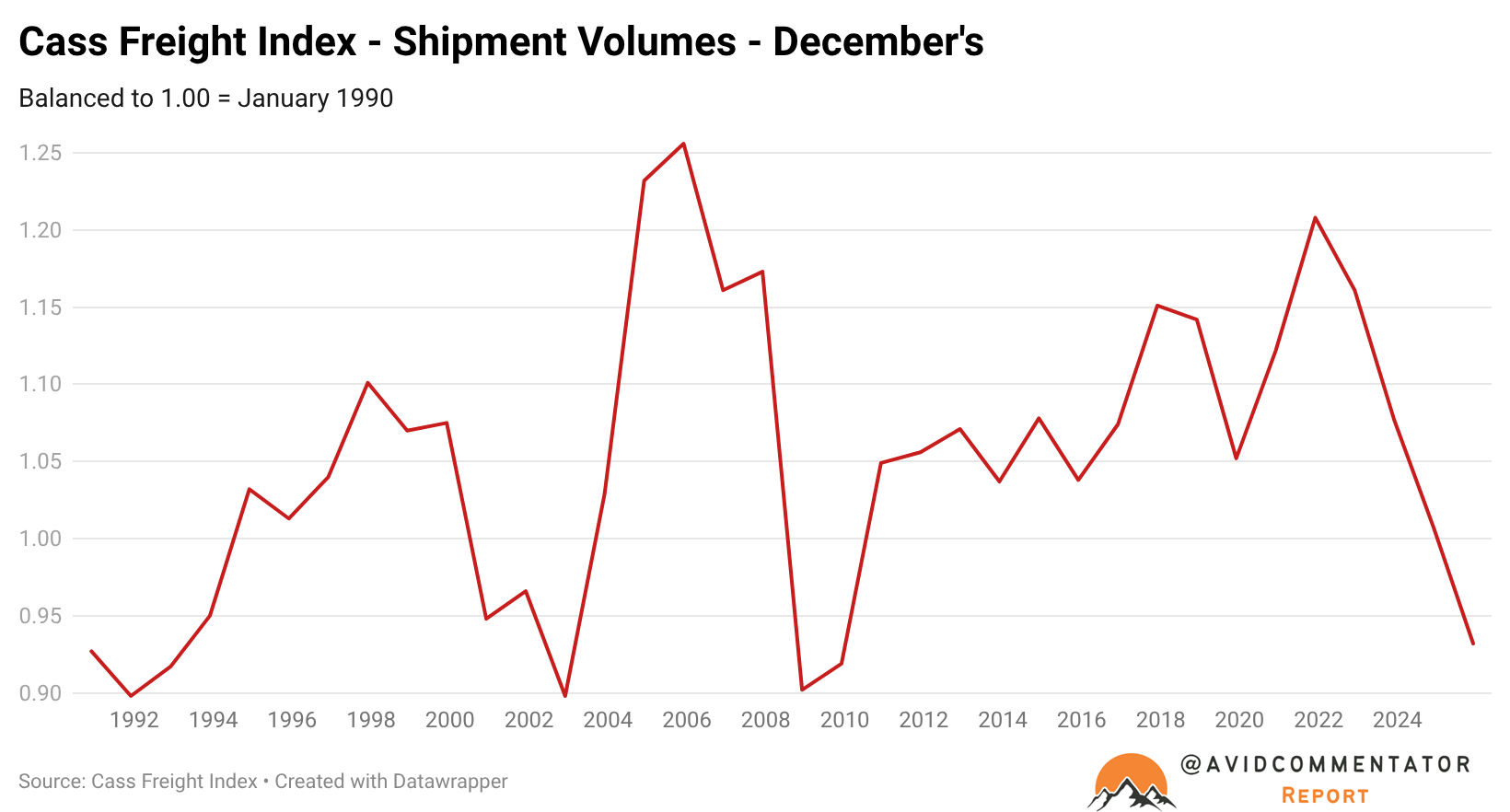
For this reason, we will be focusing on the same month (December) across the 35 years of available data for this subindex.
Looking at the figures through this lens reveals only three weaker Decembers than 2025: December 2002, December 2008, and December 2009.
All three either occurred during a recession or the immediate aftermath.
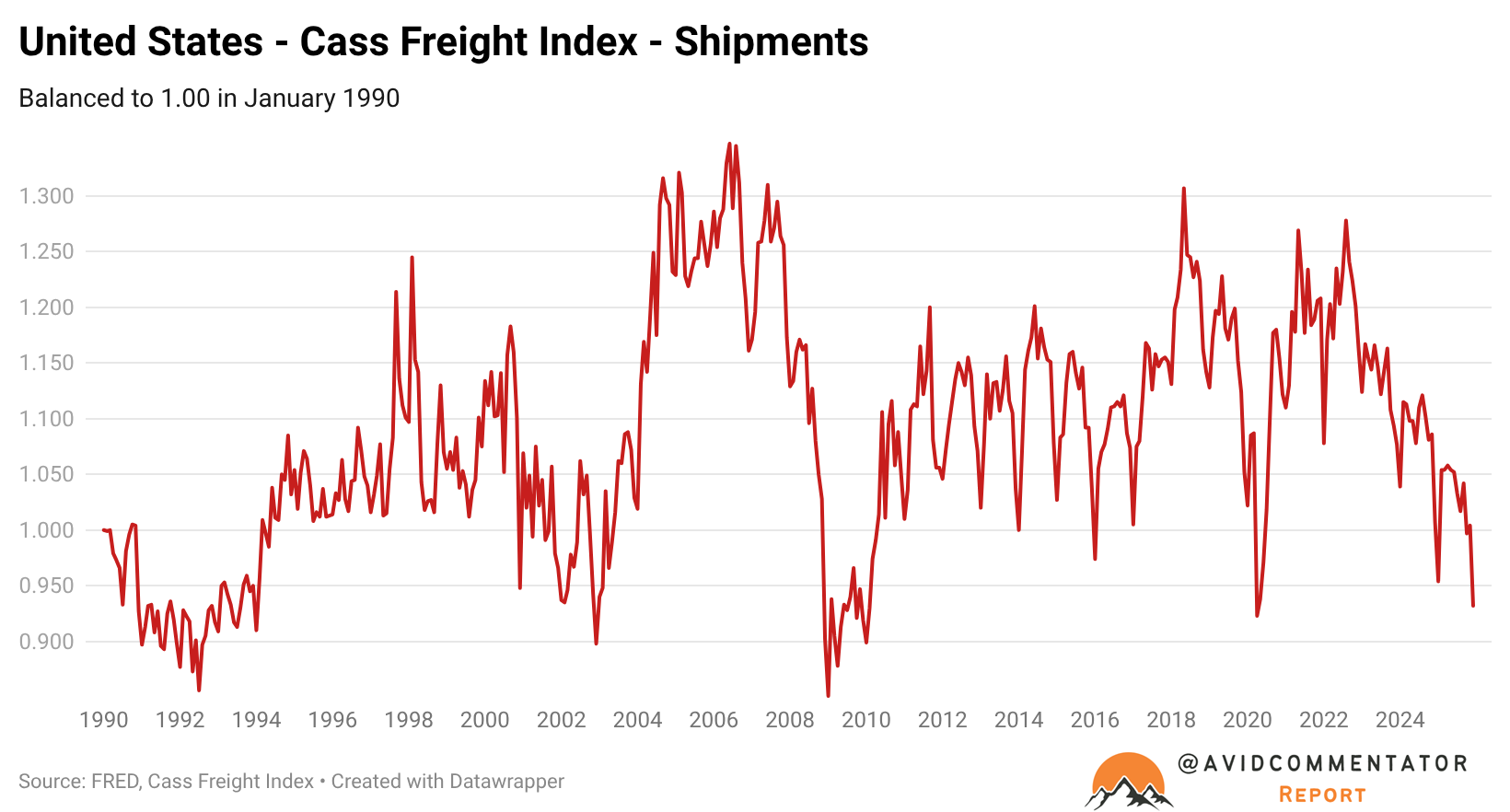
Taking a step back and looking at the index through a longer-term lens, the index has been declining since its cycle peak in August 2022.
The Takeaway
The U.S. transport and logistics sector is pointing to what would in previous eras be recession-like conditions for the broader U.S. economy.
But in 2026 things have changed significantly for the U.S. economy.
Where once a collapse in consumer confidence would have been in time a harbinger of a recession, that is simply no longer the case.
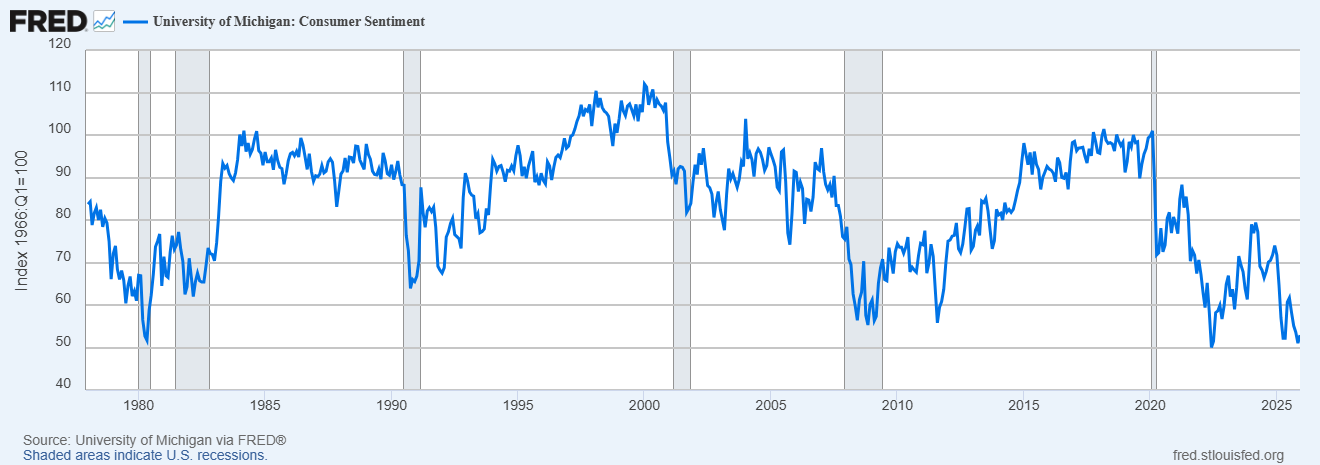
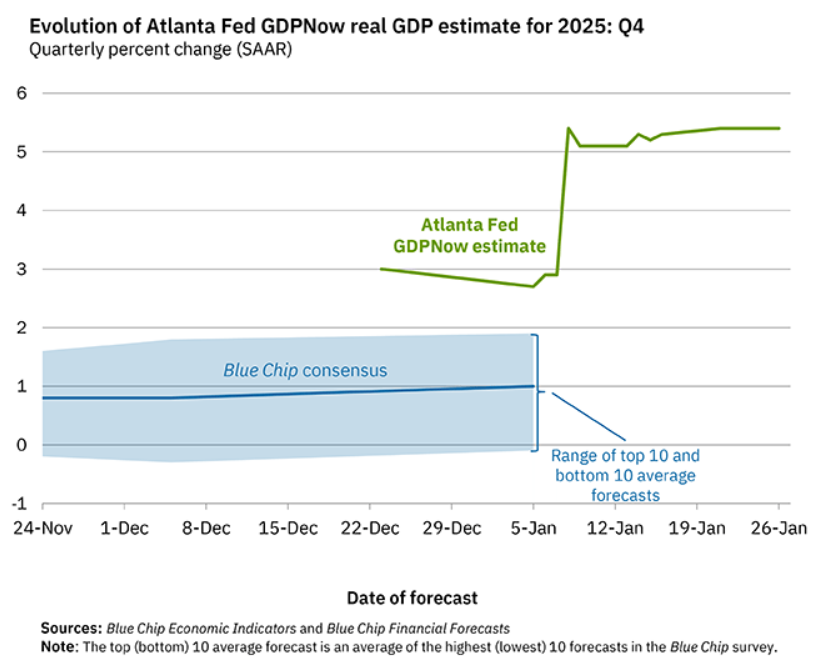
Instead, despite key metrics of consumer confidence such as the University of Michigan Consumer Sentiment Index sitting near all-time record lows, estimates from the Atlanta Fed reveal an expectation of the U.S. economy growing at a rate in excess of 5% on a quarterly annualised basis.
While the goods economy and everything that goes along with it is still defining for the lives of a majority of Americans, in the age of AI and growing inequality, those Americans no longer matter as much to the headline growth figure as they once did.
Instead, the so-called K-shaped economy has delivered the wealthy a greater and greater slice of the pie.
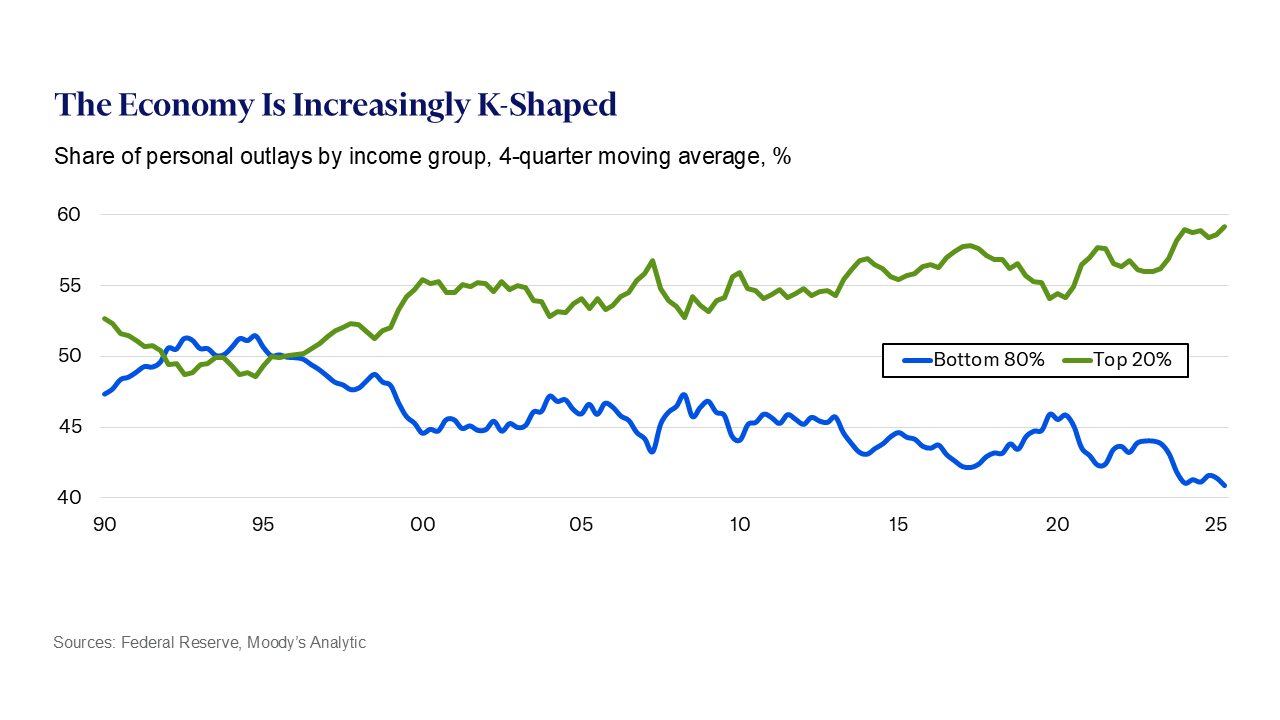
With the midterm elections to come in early November, the challenges faced by middle America from the goods economy enduring conditions akin to a recession may show up first at the ballot box, rather than in a set of national economic accounts where growth is increasingly stemming from a narrow but currently powerful set of drivers.
The big question for economists and everyday Americans alike is how long those drivers will continue to deliver.
