
As late as the final months of October, the Sydney auction market was still riding high, with its 4-week moving average clearance rate still sitting significantly higher than the same time last year.
But in the weeks since, it has fallen back to earth, now sitting just 1.6% higher than at the same point last year.
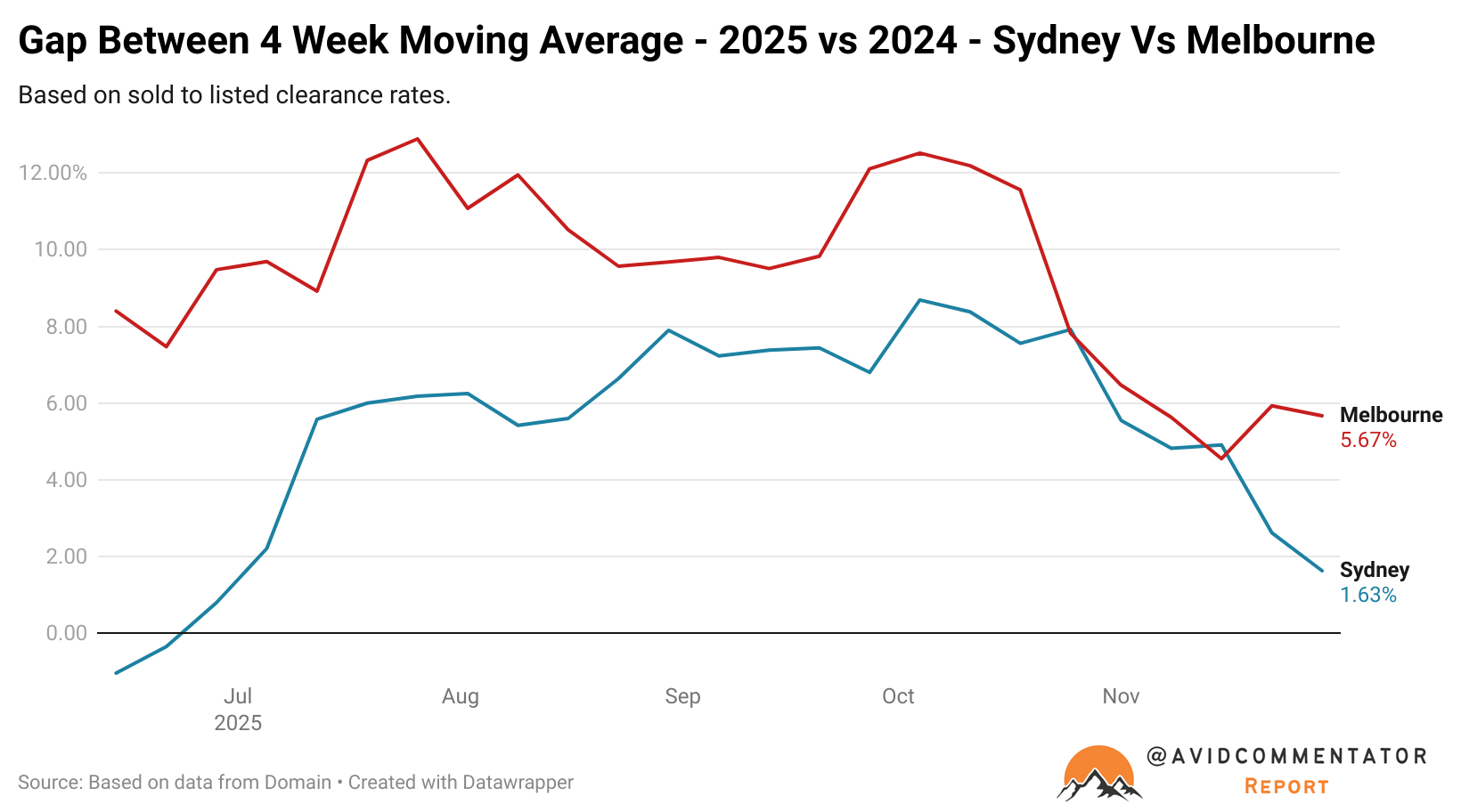
The reason why historic results are used on a moving average basis and for the same time of year is due to seasonality. It is perfectly normal for auction clearance rates to deteriorate toward the end of the year, which is why comparing with the same weekend last year, one can attempt to cut through the seasonal noise.
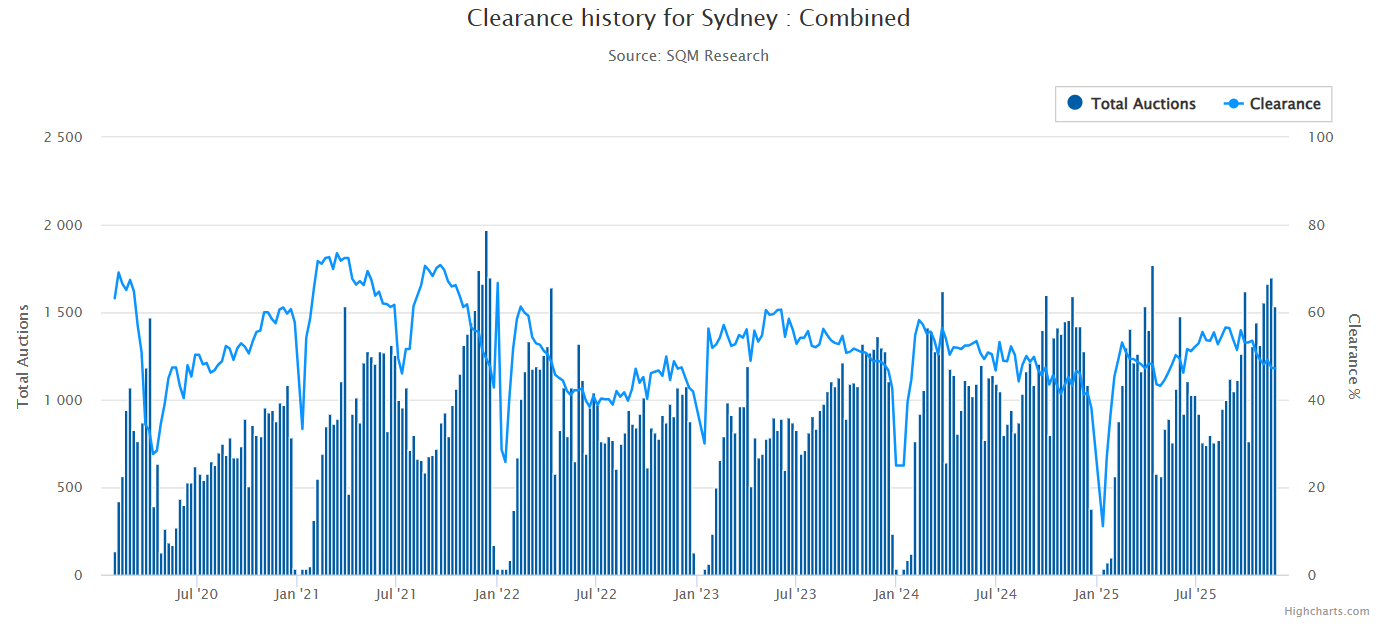
This trend is evident quite clearly in the SQM Research data on auction clearances, which remains the absolute gold standard.
SQM’s data also supports what I have seen in my assessments using Domain’s data set, that the Sydney market is only very marginally stronger than this time last year.
Despite the last few months seeing the rise of the Albanese government’s 5% deposit scheme, it hasn’t had the positive result on Sydney’s auction market that one might have expected.
It has, however, played a more significant role in supporting activity in Melbourne’s auction market due to relative affordability for the first home buyers using the scheme.
In Melbourne, purchasing the median dwelling consumes 38.8% of median household income, assuming that a household has the funds for a 20% deposit and cash for various transaction fees.
Despite once being one of the most challenging housing markets in the country, Melbourne is now the most accessible major capital relative to local household incomes.
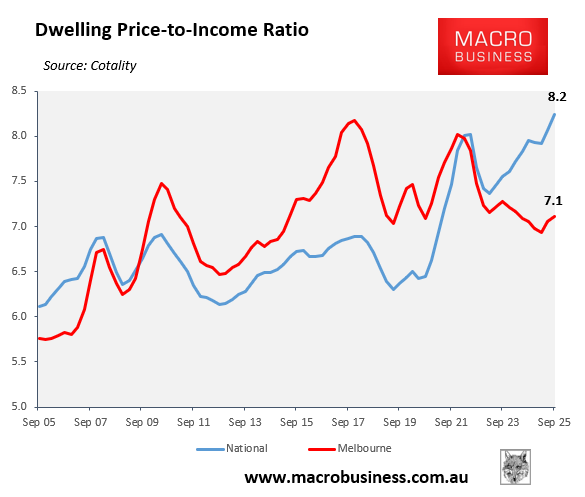
To clarify, it’s significantly more challenging to buy a home in Melbourne today than it has been in most of the last 20 years, but it is less challenging than it is to buy homes in the other major capitals.
In Sydney, purchasing the median dwelling consumes 54.5% of the median household income for the city, making it significantly less accessible than Melbourne in relative terms.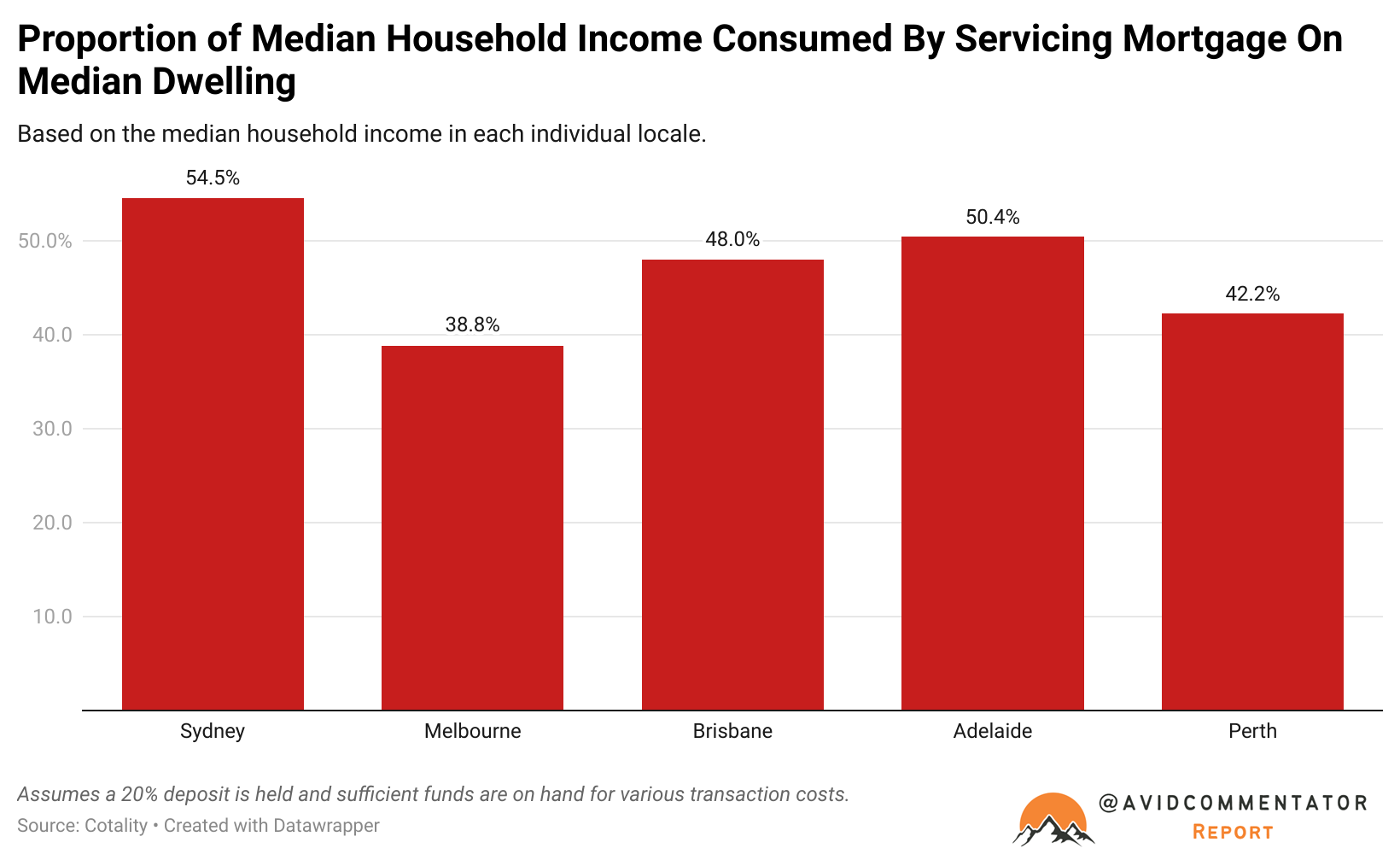
Then there is the relative price properties actually sell for at auction, which is dramatically different in Melbourne versus Sydney.
In Sydney, the median auction price on the most recent weekend was $1.57 million, which is well beyond the financial reach of couples utilizing the 5% deposit scheme at average income levels.
In Melbourne, the median auction price was $1.016 million, still extremely expensive for a first home buyer without existing equity or help with a deposit, but significantly more accessible than Sydney in relative terms.
The Takeaway
Given the relative means of first home buyers, the Melbourne auction market is inherently the greater recipient of the boost provided by the government’s 5% deposit scheme.
Meanwhile, without this boost, the positive status of the Sydney market is increasingly being brought into question.
We are not at the part of the cycle where the conversation turns to price falls, but if results continue to weaken in the new year, then we will soon arrive at a juncture where stagnating prices enter the debate.
Ultimately, there is a big question in the world of Australian property that pretty much no one can fully answer: how much pent-up demand is there actually out there at these prices and under these rate settings?
That could be the decider in determining what direction housing prices go, as the potential reality of higher interest rates dawns in 2026.
