

In the ongoing debate surrounding the Australian economy, there have always been and will continue to be defenders of the current economic strategy, whatever it may be.
Historically, it was one of backing industries, boosting home ownership and strongly targeted migration. This strategy, for the most part, had goals that both sides of the political divide could agree on, albeit generally with quite different strategies in mind.
In 2025, the current status quo of poorly targeted high migration, flatlining productivity, and government-driven economic growth is simply not delivering for the Australian people.
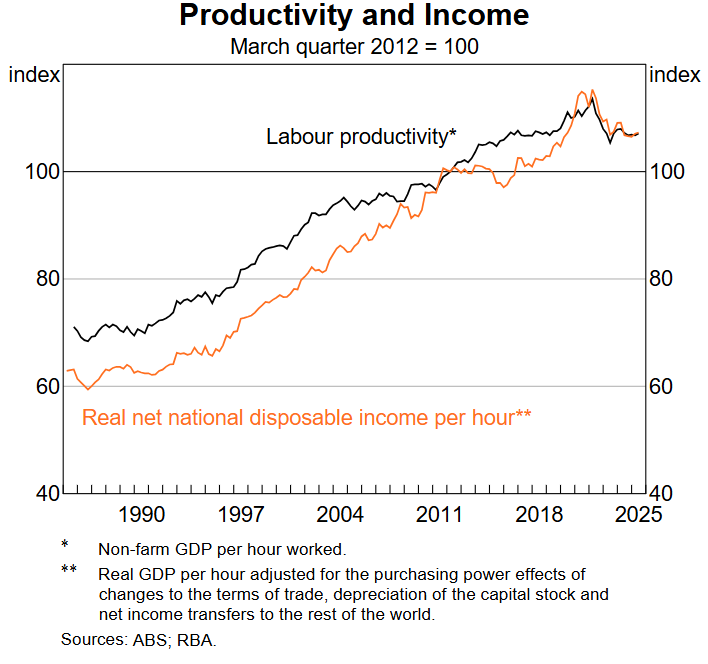
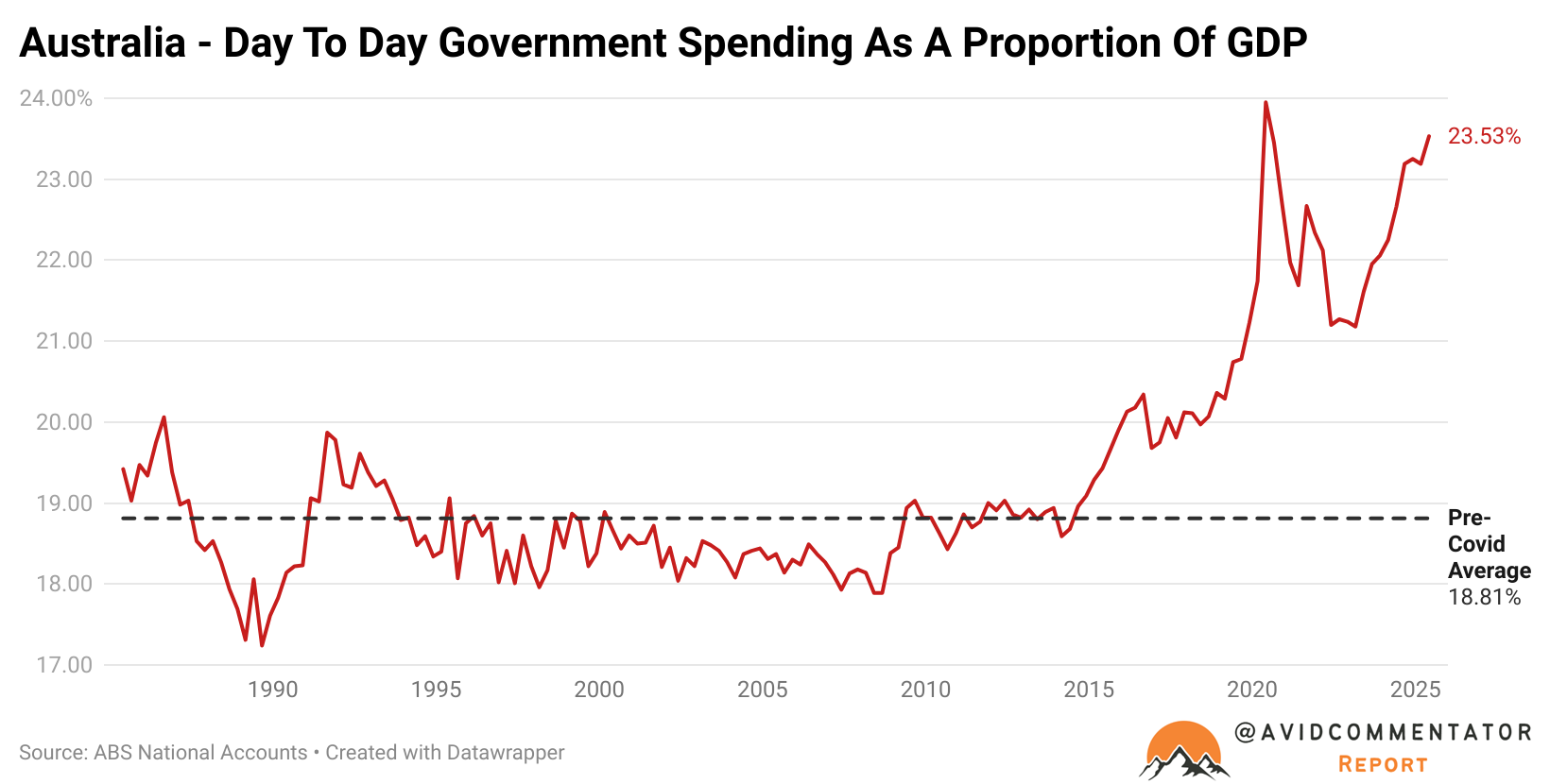
The latter two claims are absolute facts, as is arguably the first. But let’s assess the statement that Australia’s migration system is poorly targeted, using commentary from the Albanese government itself:
“I said upfront that our migration program was unstrategic and unplanned.” – Minister Clare O’Neil
“A once-in-a-generation review into the migration system led by Dr Martin Parkinson found it was a deliberate decision to neglect the system” and that it was “so badly broken” it required a “10-year rebuild”.” – Joint statement of Brendan O’connor MP, Jason Clare MP, Andrew Giles MP, and Clare O’Neil MP
“Today, our system is dominated by a large temporary migration program. And that program is not well designed.” – Minister Clare O’Neil
“Migration has been unresponsive to Australia’s needs; it has provided marginal economic benefit and has not enhanced labour productivity”, – Assistant Minister for Immigration Matt Thistlethwaite
The Numbers
Since employment growth in the market sector (all industries except public administration, education, healthcare, and social assistance) began to stall in Q2 2023, the market sector has added fewer than 0 new hours worked on a quarterly basis.
Despite the two years that have passed since the start of today’s comparison, the economy has 1% fewer hours worked compared to June 2023.
That is a striking fact: the entire market sector delivered zero additional hours worked, despite the sizable growth in demand for many goods and services over that time.
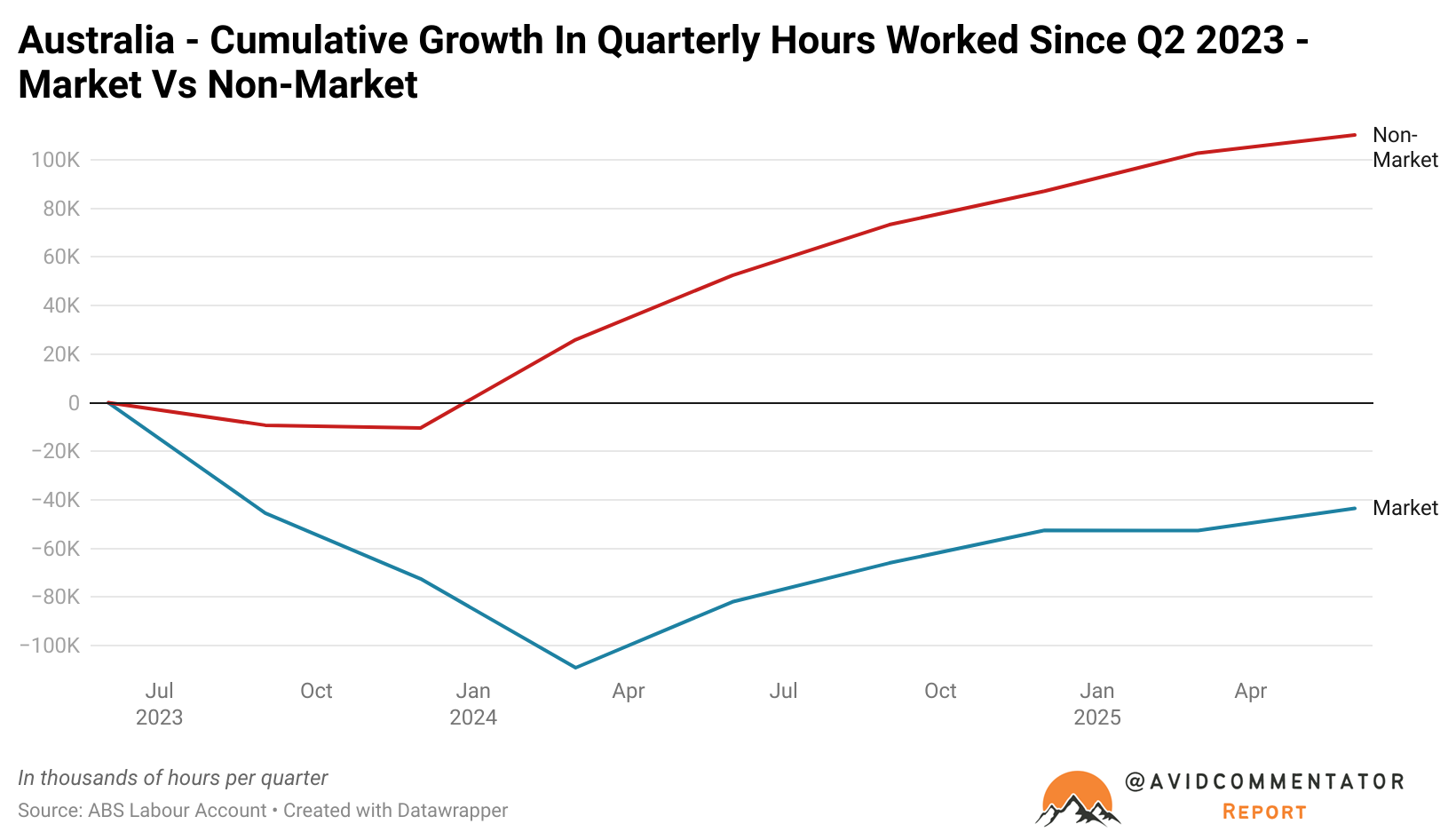
This comes despite the fact that the nation added over 955,000 additional working-age people in net terms during the same time period.
To put it into proportional percentage terms, the market sector of the economy has 1% fewer hours worked, while the working-age population has expanded by 4.4%.
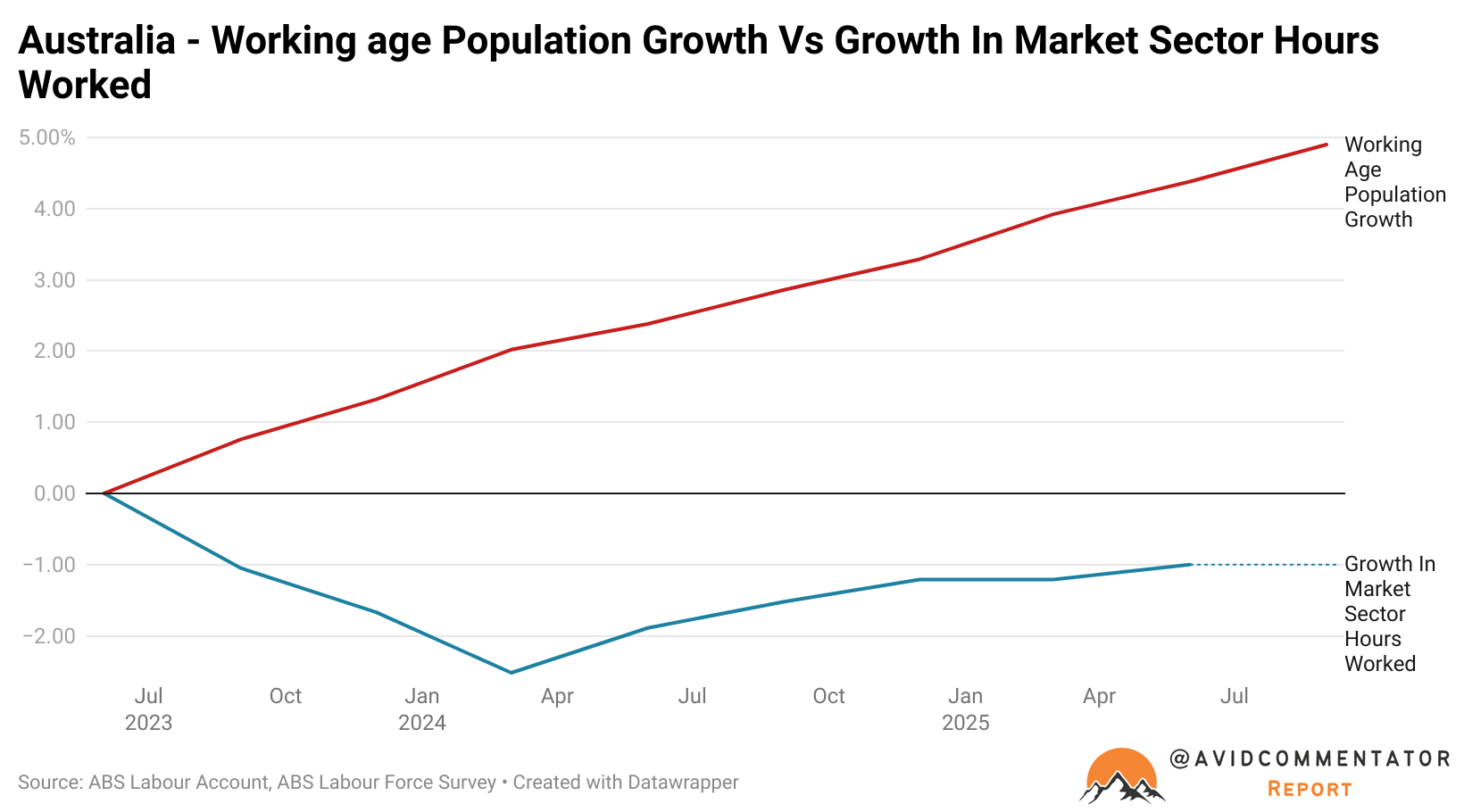
It is fairly clear that the private sector economy is struggling, and the average household is no better off than it was over a decade ago, after adjusting for growth in the working-age population and changes in household participation rates.
Yet the narrative that everything is okay persists, suggesting that the current economic strategy is not only viable but also successful, even when members of the Albanese government have told the press point-blank that key elements, such as the migration intake, are not working properly in the nation’s interest.
Ultimately, in the age of political and ideological tribalism, it appears unlikely in the short term that our leaders will be willing to fully confront the true scale of the problem our economy faces, let alone address it meaningfully.
