Angus Nicholson for Chris Weston, Chief Market Strategist at IG Markets
Australian nominal and real GDP diverges dramatically
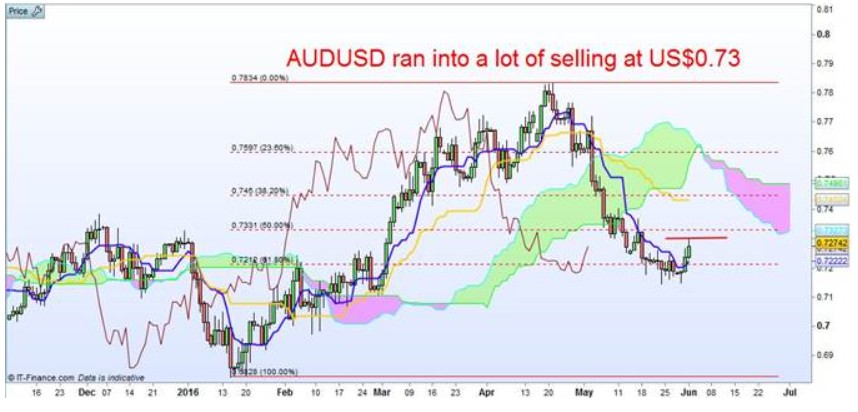
Australian GDP came in far stronger than the market was expecting at 3.1% YoY and 1.1% QoQ against expectations for 2.8% YoY and 0.8% QoQ. Most significantly, this has seen the market implied probability for an August rate cut fall to 45.1% from 54% yesterday. The Aussie dollar has gained 0.6% today and at one point rallied back up to US$0.73, but saw a strong bout of selling at that level.
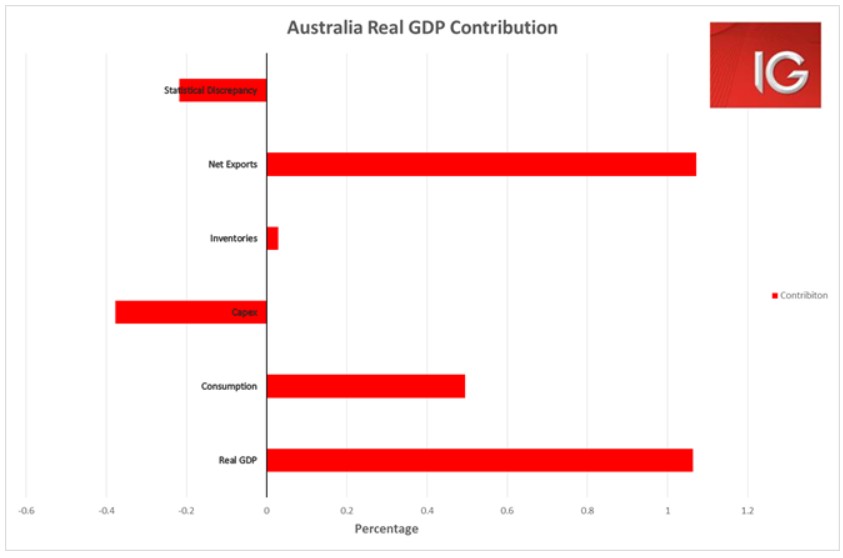
Australia has now seen three very strong quarters of real GDP growth in a row, but the respective drivers of growth in those three quarters have been quite varied. This clouds the picture for which sector of the economy can be counted on to continue to support growth at these levels. The inescapable fact is that net exports did all of the heavy lifting for the first’s quarter 1.1% quarter-on-quarter increase. Net exports added 1.1% itself and consumption added 0.5% as well, helping cancel out the drag from capex and the statistical discrepancy (the difference between GDP and GDI).
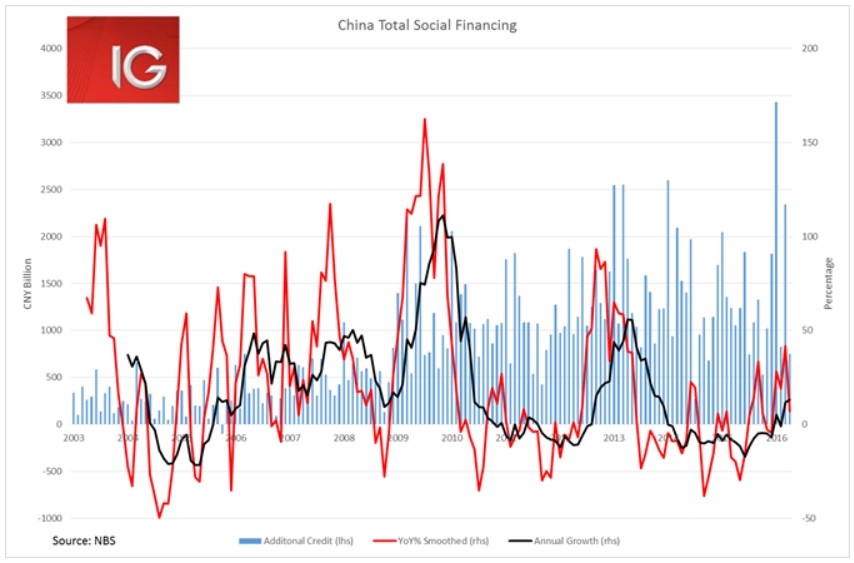
Arguably, the impressive contribution from net exports was primarily driven by China’s massive increase in stimulus in 1Q. China saw the biggest surge in credit growth in the first quarter since the first half of 2013, and much of that credit went into the industrial and real estate sectors – both of whom are key drivers of commodity demand. Correspondingly, markets saw an incredible run up in commodity prices associated with the stimulus, and Australia, as a major commodity exporter, was a huge beneficiary of this.
But early indications of China’s 2Q activity appear to show this stimulus activity slowing noticeably. Alongside this, we have seen the government release an important op-ed from the “Authoritative Person” on 9 May criticising precisely this sort of debt-driven investment activity.
Australian data has been somewhat contradictory with strong GDP growth and very weak inflation. Employment growth has also continued to be robust, but much of it has been contributed by part-time jobs while full-time jobs have continued to decline over the past few months. Nominal GDP is now starting to diverge dramatically with real GDP, underlining the RBA’s concerns over low inflation. The GDP deflator declined 1% year-on-year, its biggest decline since 1Q 2015, and a situation that has rarely boded well for the economy. It also points to the issues for Australian companies trying to grow earnings when nominal GDP is so low.
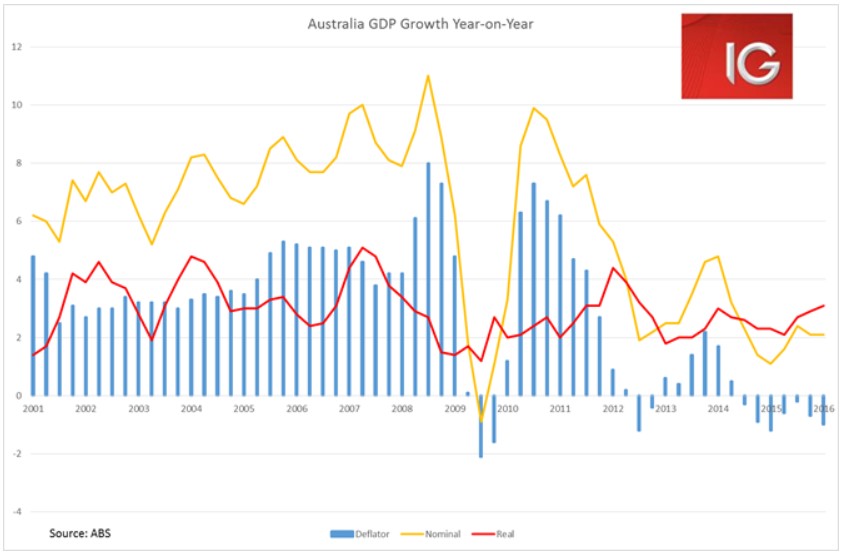
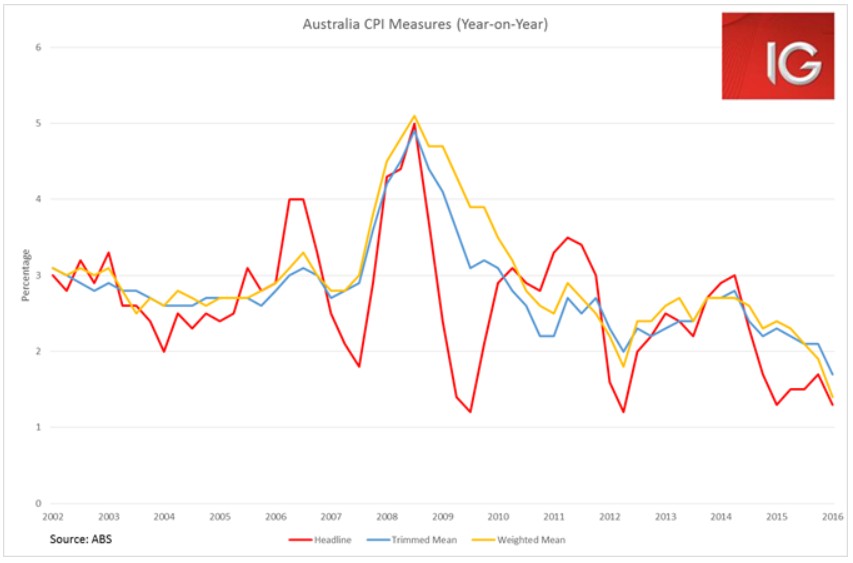
This also highlights the key factor for the RBA, the inflation outlook is still very weak. The RBA runs a strict inflation targeting framework and it was the significant weakening in CPI growth in the first quarter that prompted the rate cut in May. The massive weakness seen in all of the RBA’s core CPI measures in the 1Q bode ill for inflation in the economy going forward. We are quite likely to see another weak 2Q CPI number, and this is why we continue expect the RBA to cut rates at their August meeting and probably follow that rate cut up with another in December. As such, we are expecting the Aussie dollar to decline to US$0.65 in 3Q and drop below this in 4Q.