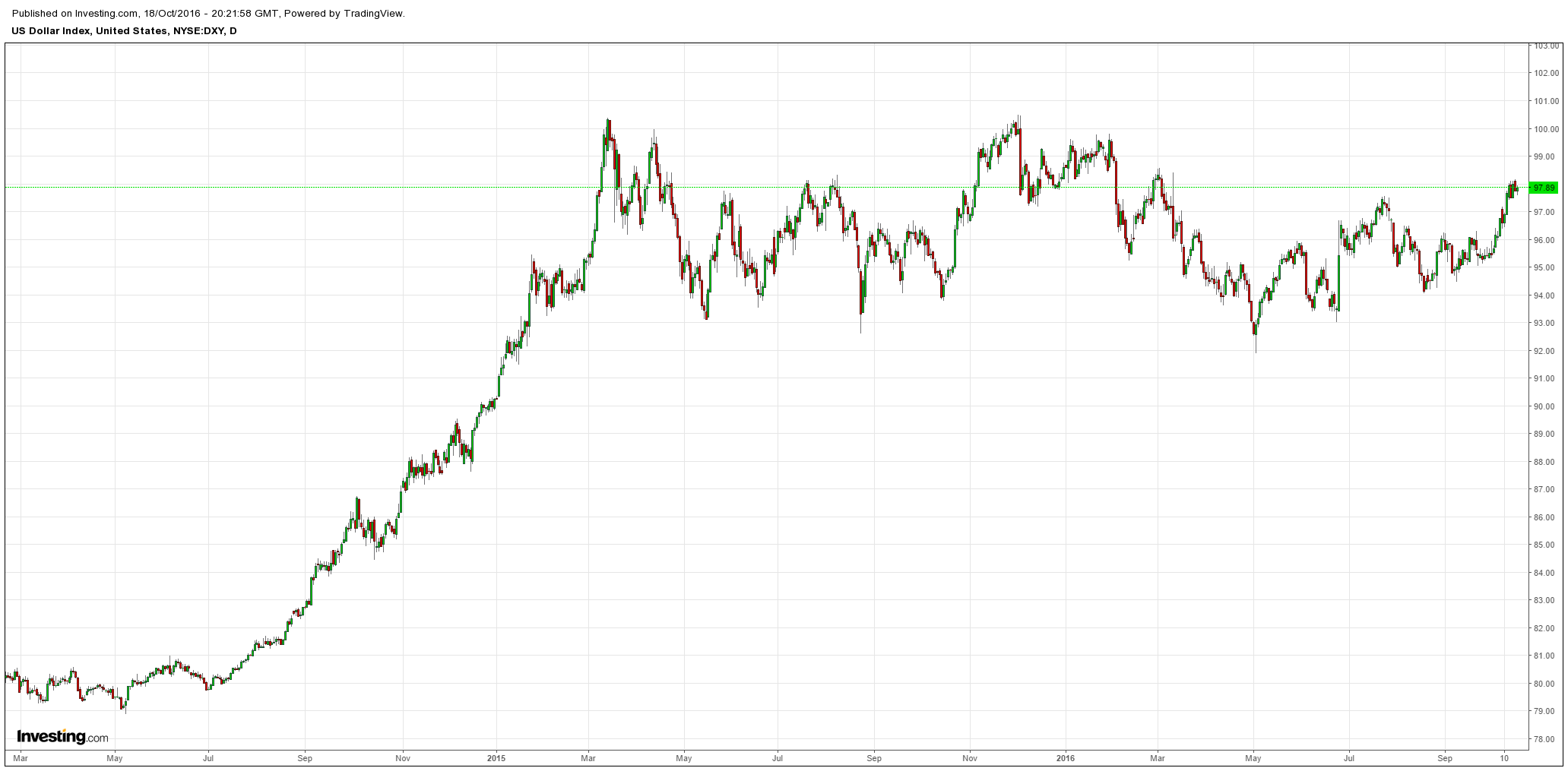
A better evening for markets as the US dollar eased:
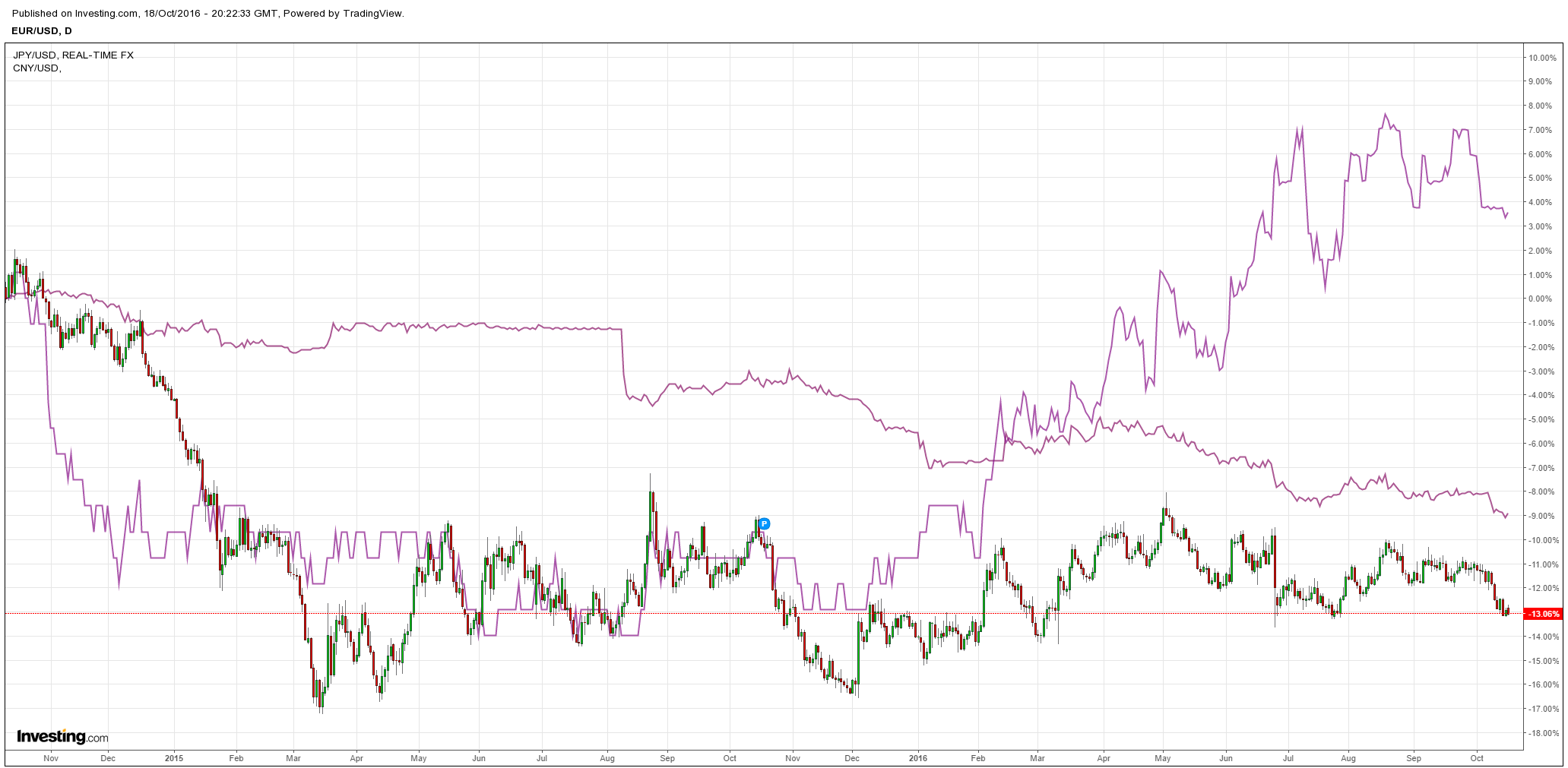
Other majors firmed:
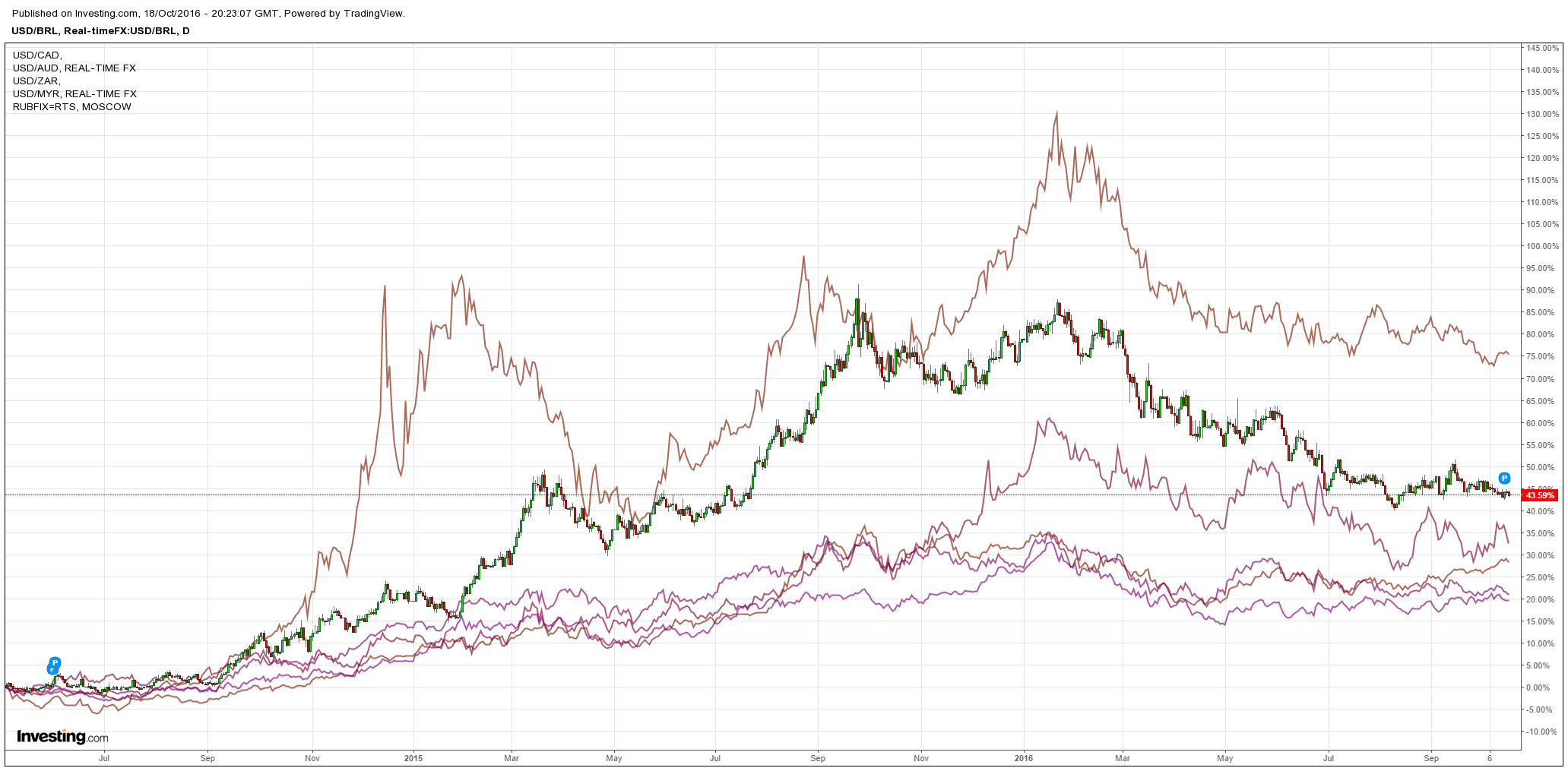
Commodity currencies too, especially Aussie after Captain Phil first blunder:
Advertisement
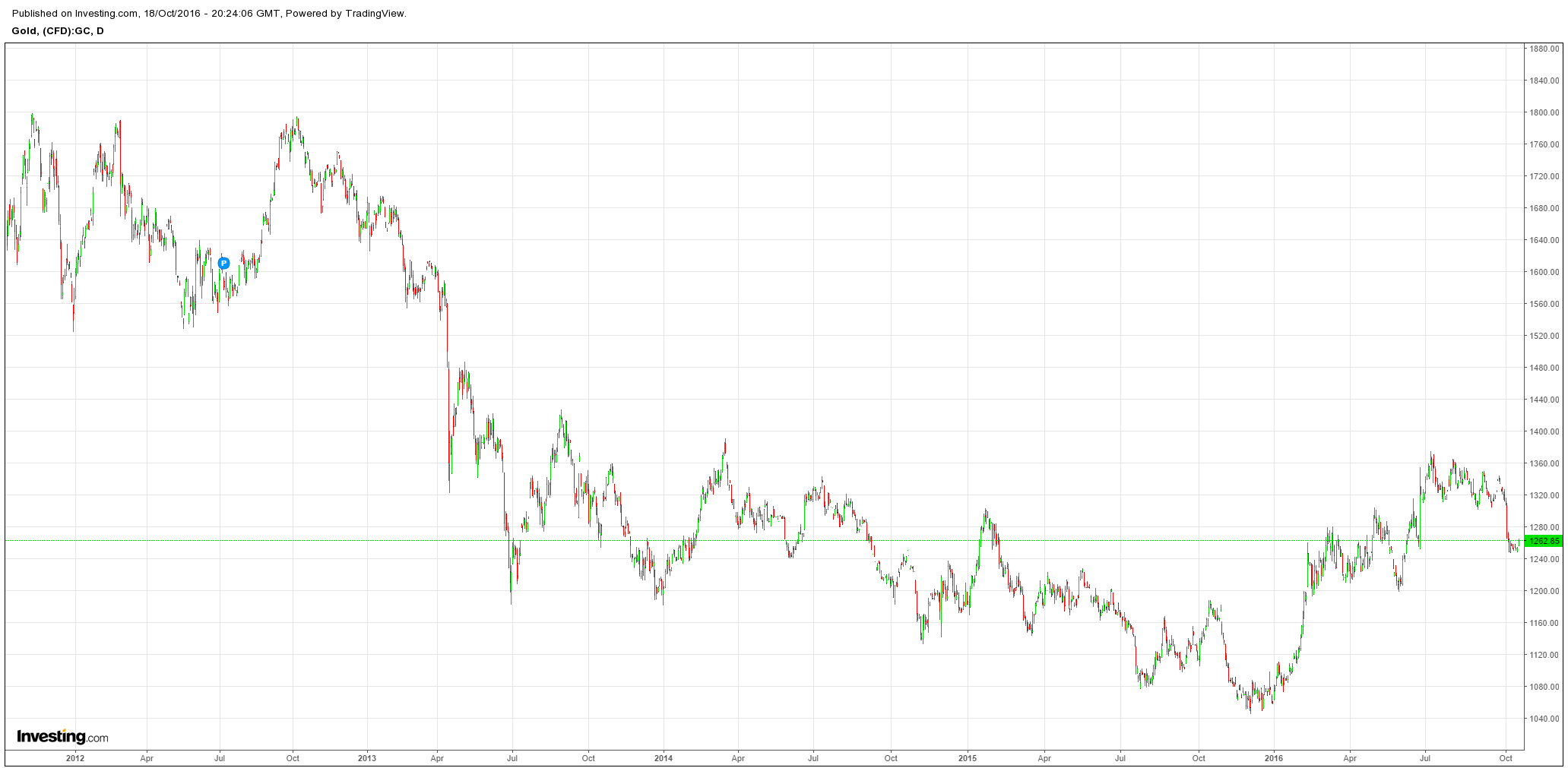
Gold jumped:
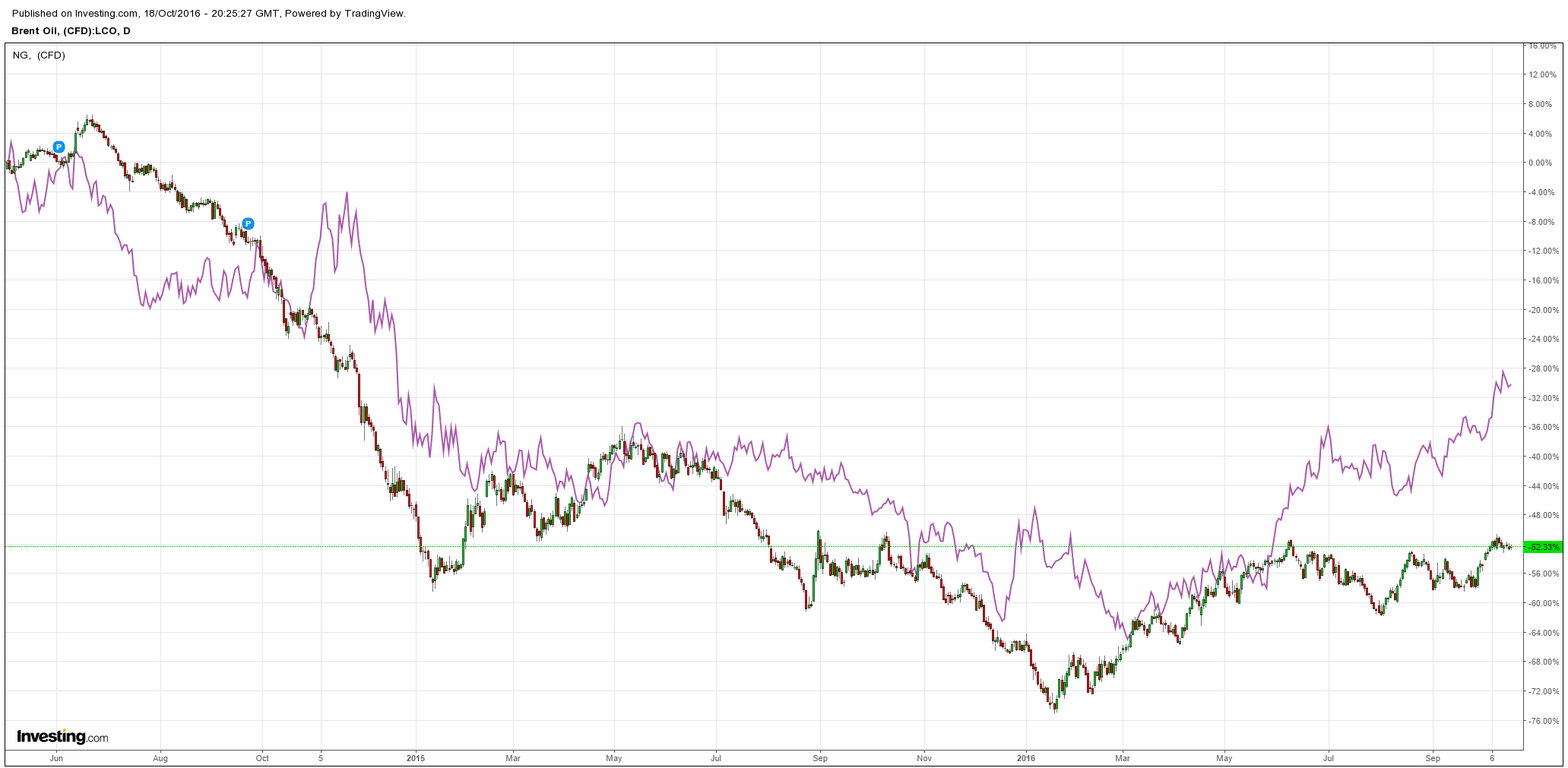
Brent was stable:
Advertisement
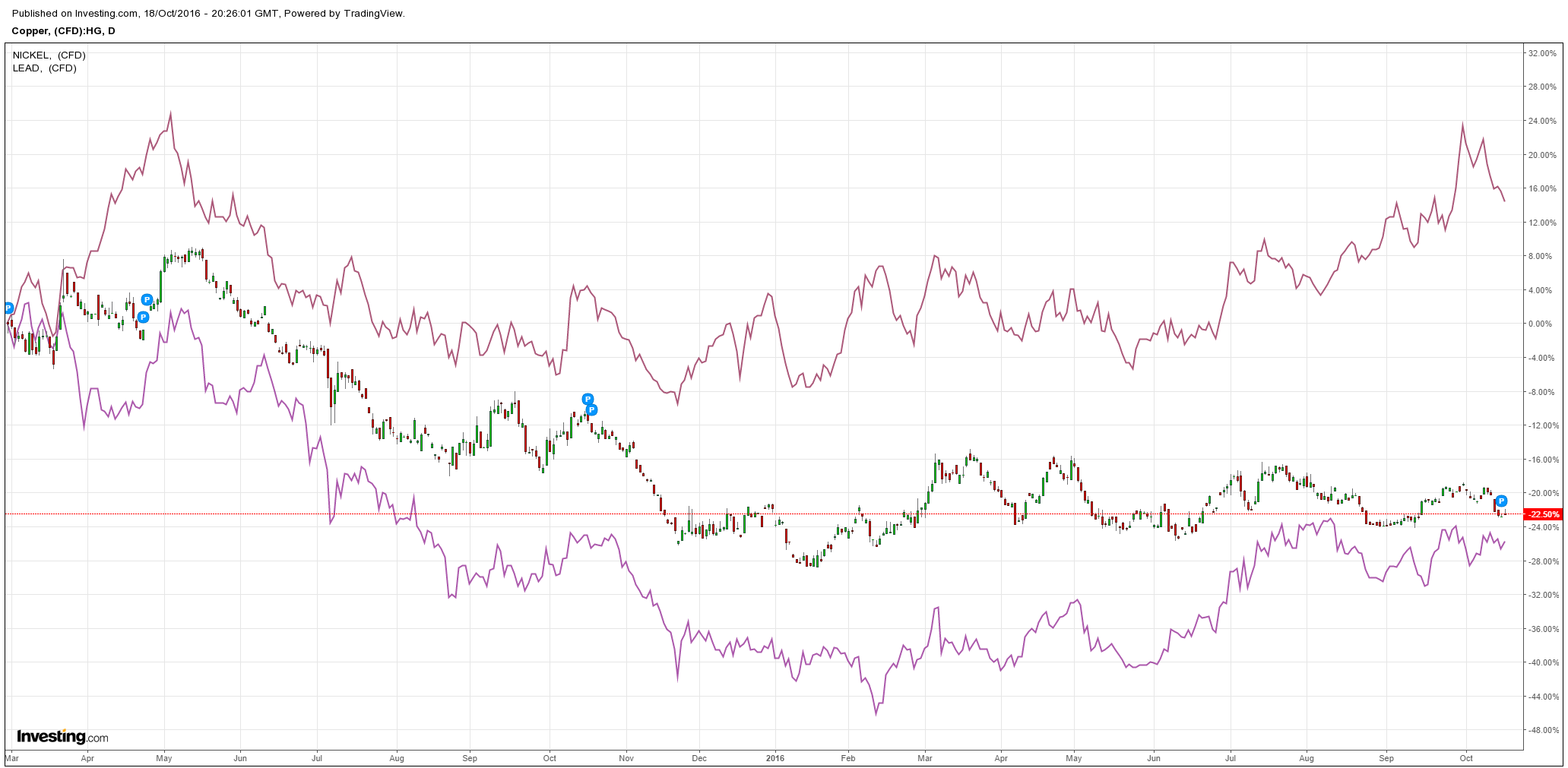
Base metals mixed:
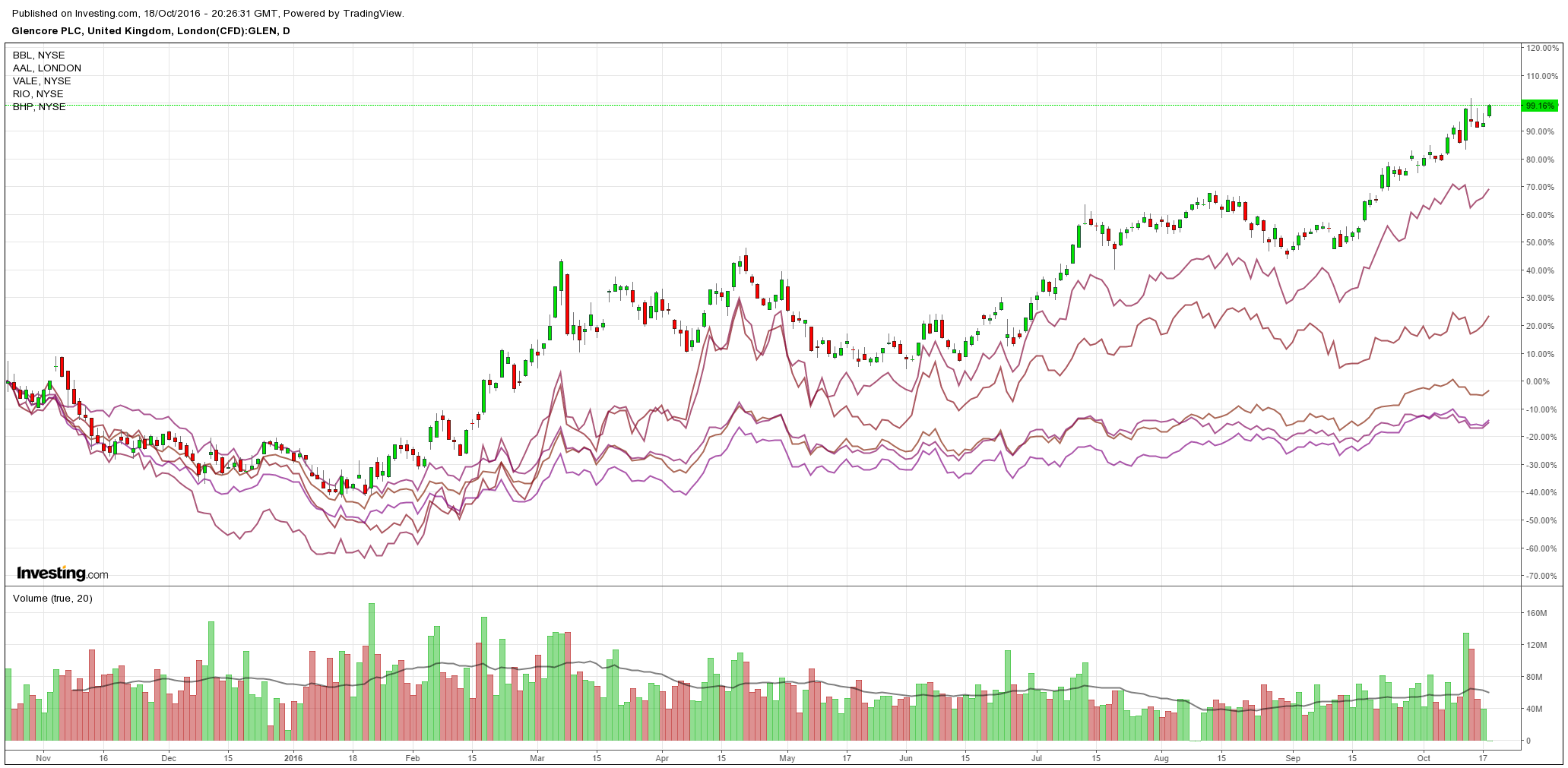
Big miners firm:
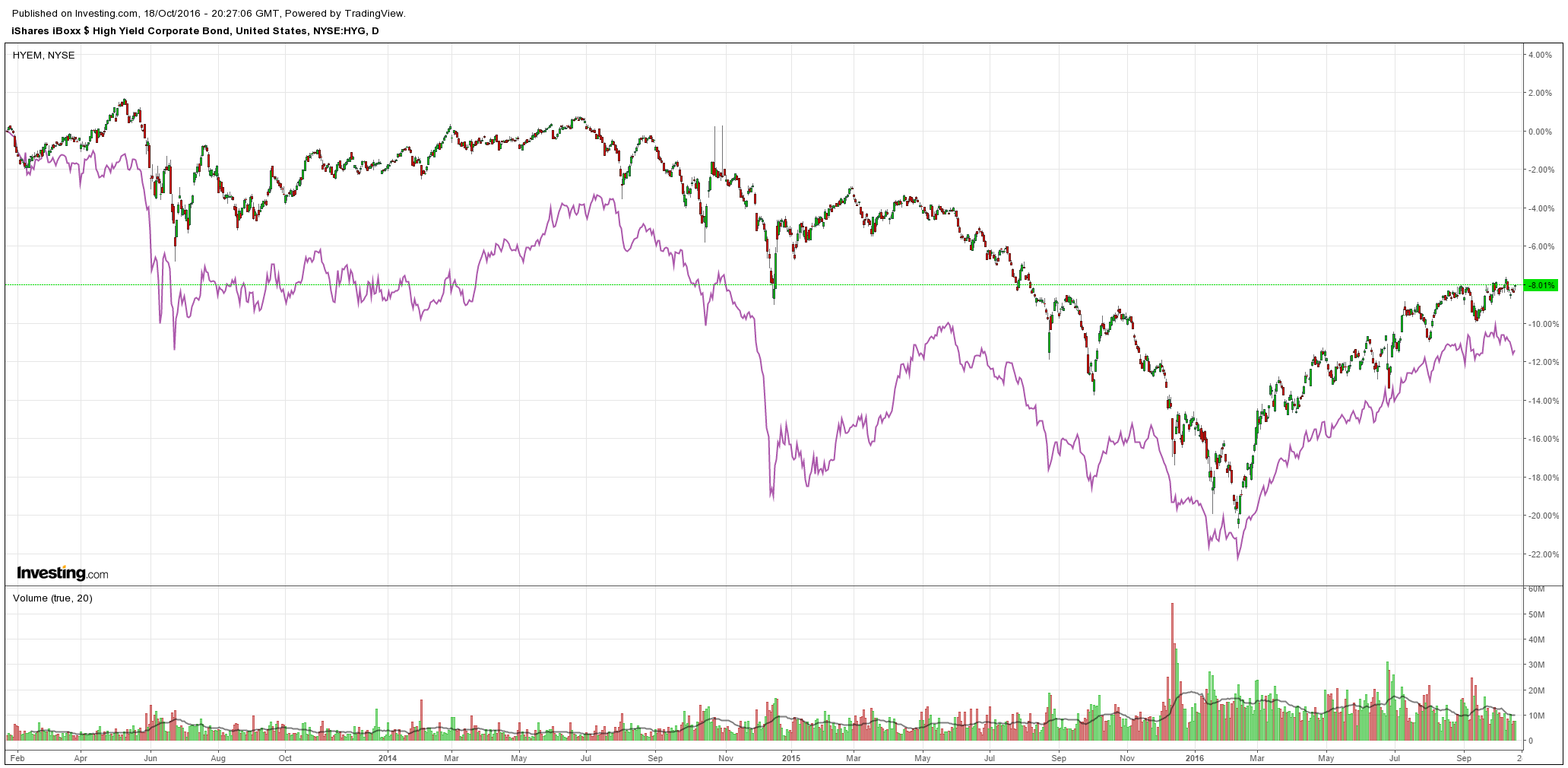
US and EM high yield firm:
Advertisement
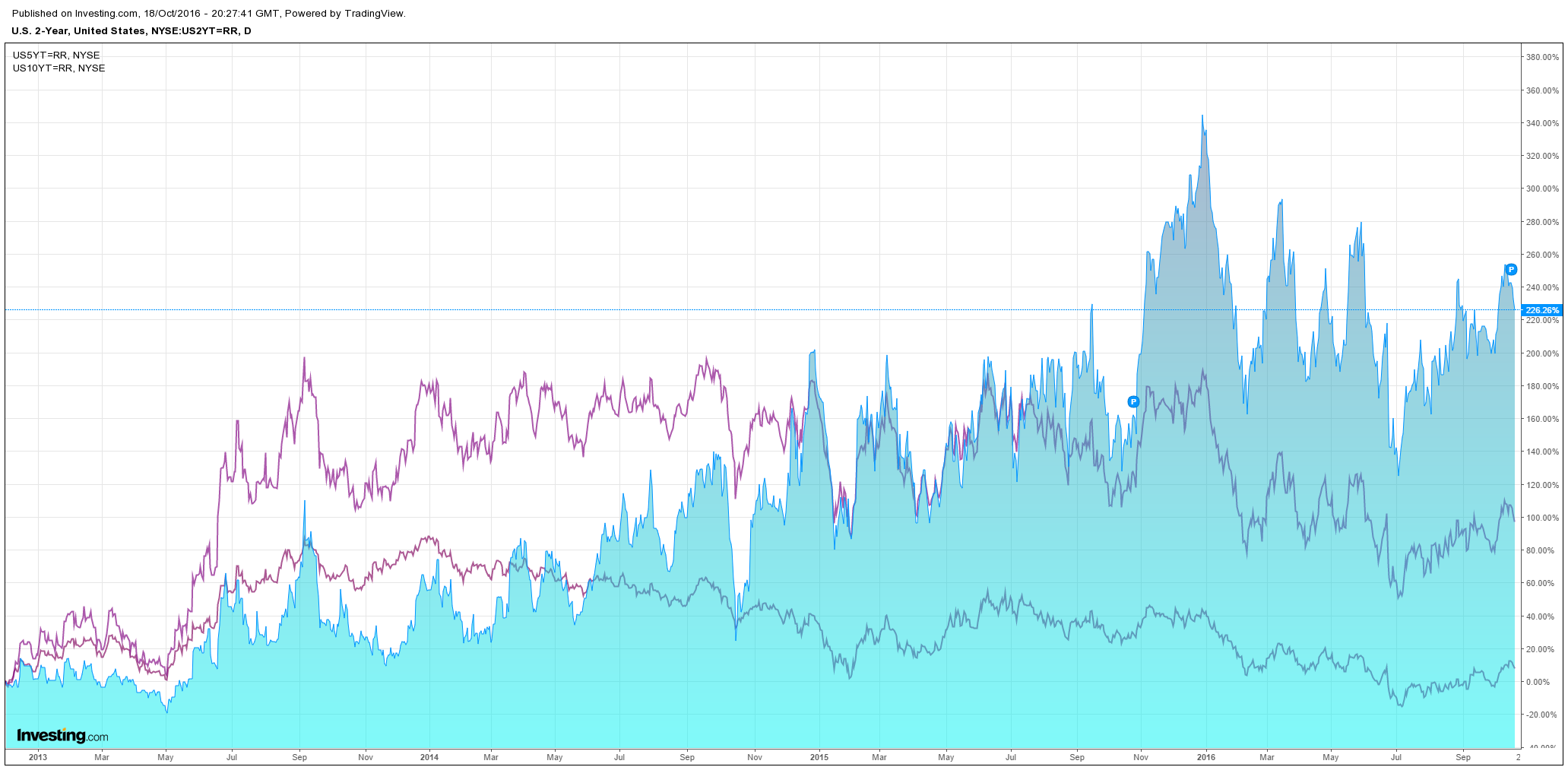
US bonds were strongly bid:
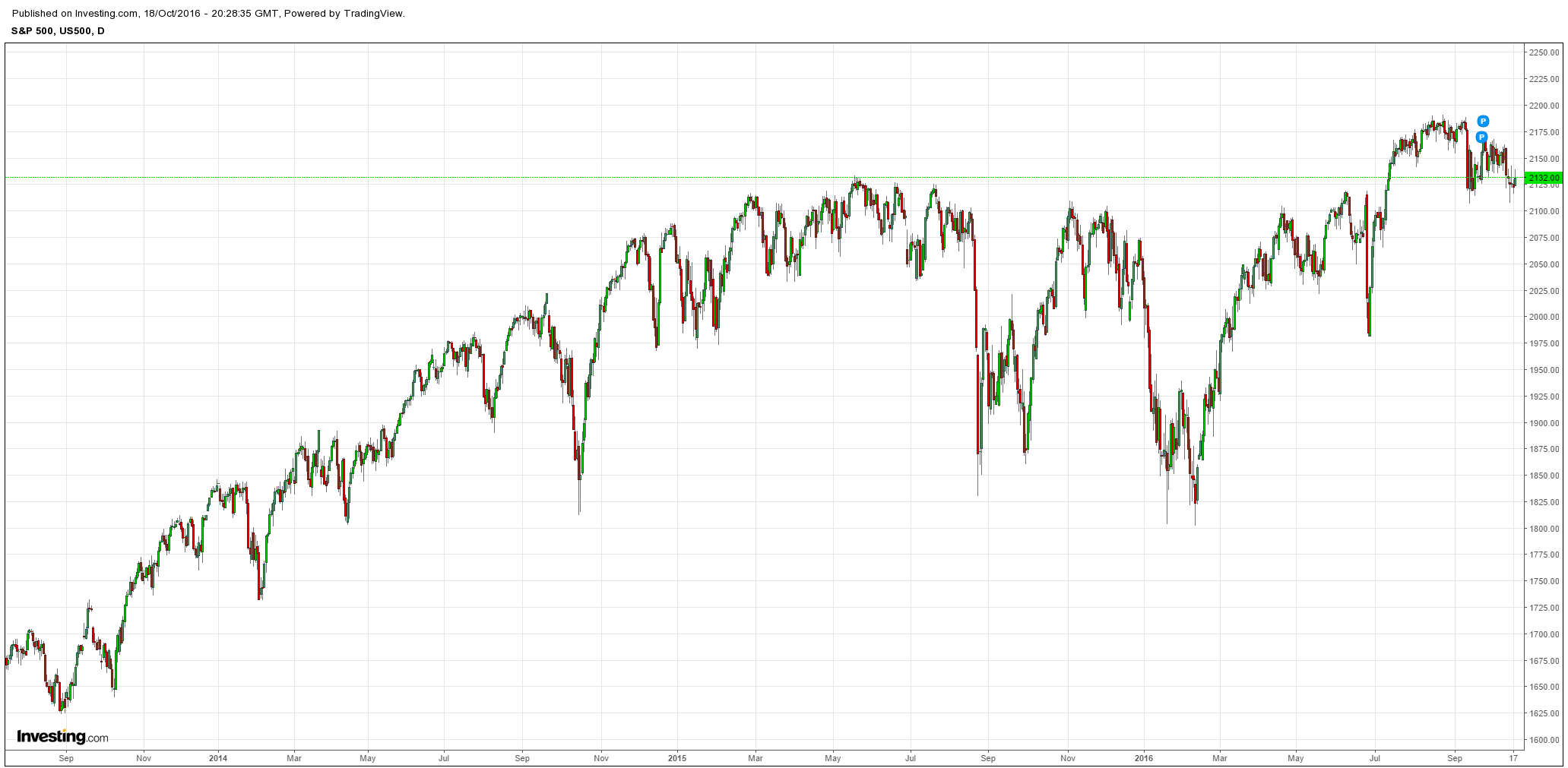
And shares rallied:
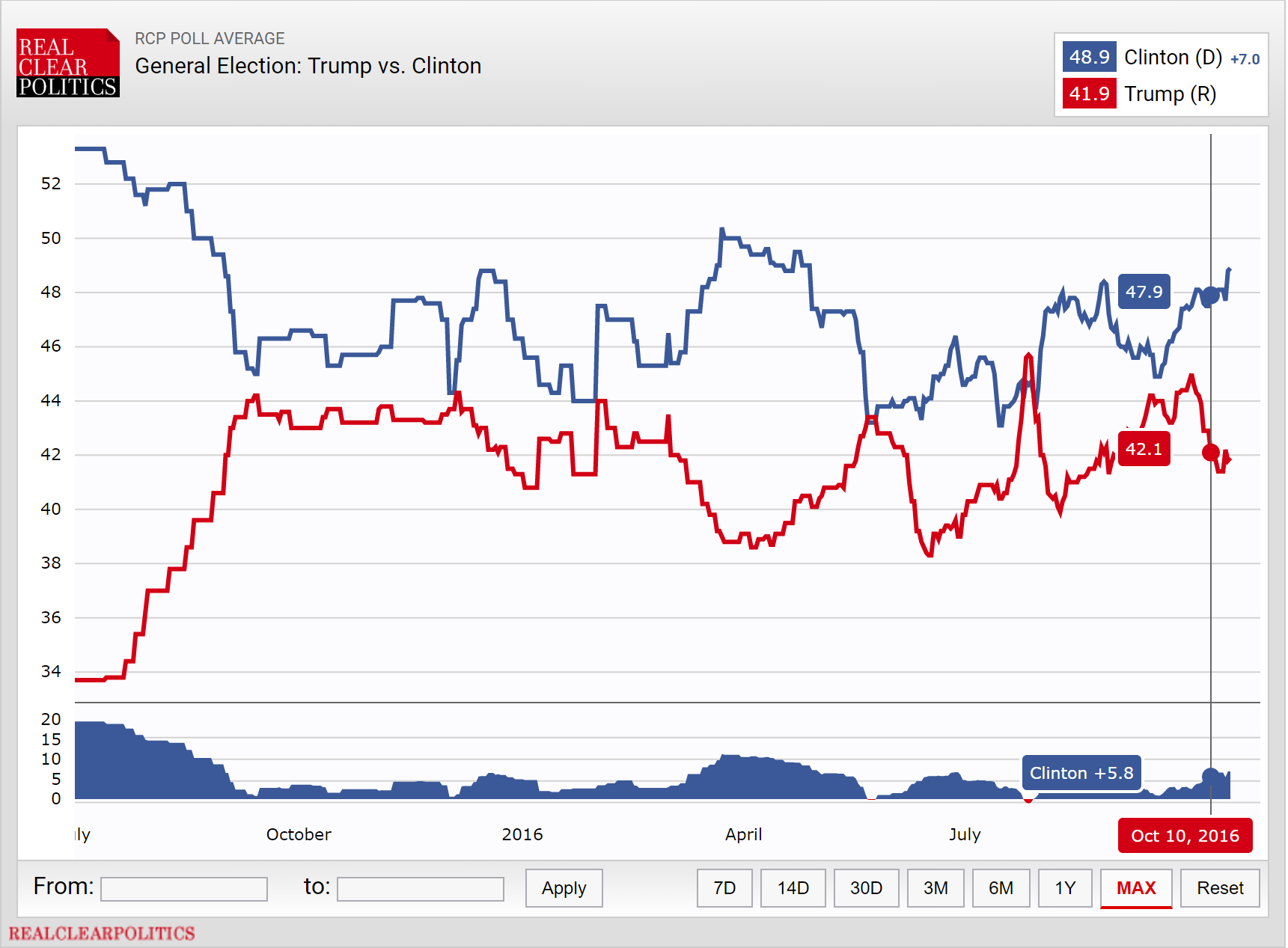
The Q4 risk gauntlet has a very good night. Hillary has it won at a seven point lead:
Advertisement
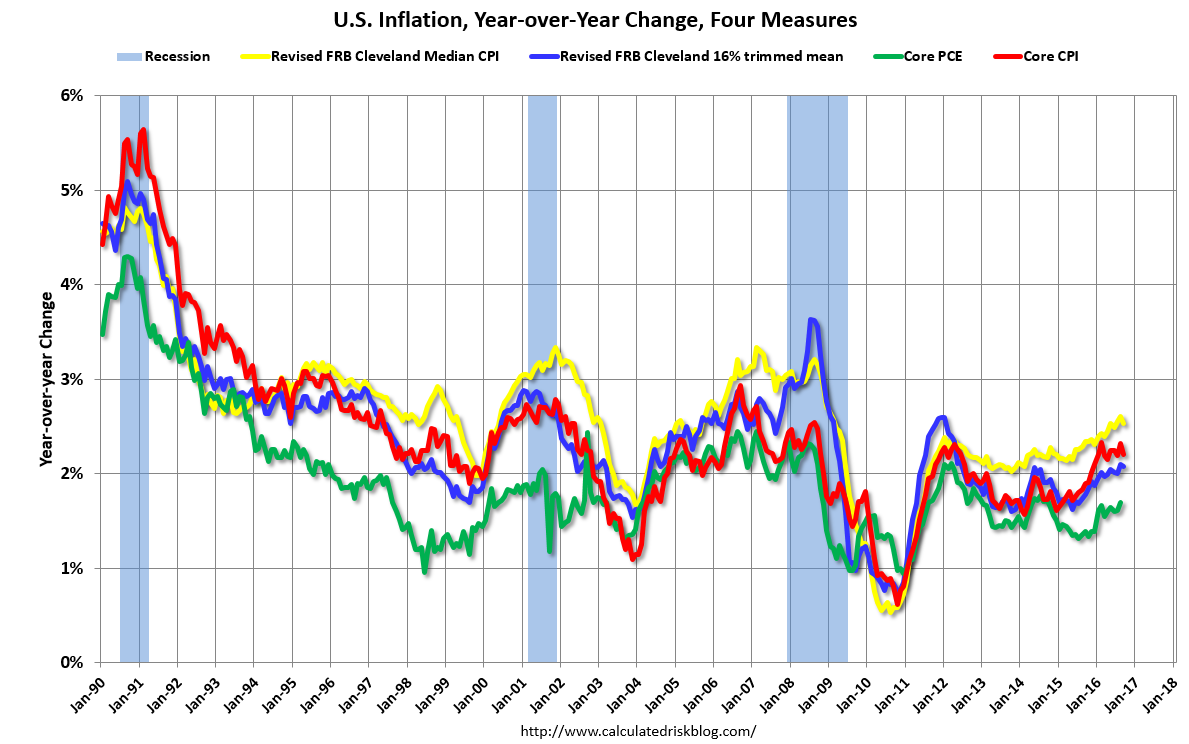
Even better for markets, US inflation was soft (chart from Calculated Risk):
According to the Federal Reserve Bank of Cleveland, the median Consumer Price Index rose 0.2% (2.1% annualized rate) in September. The 16% trimmed-mean Consumer Price Index also rose 0.2% (2.1% annualized rate) during the month. The median CPI and 16% trimmed-mean CPI are measures of core inflation calculated by the Federal Reserve Bank of Cleveland based on data released in the Bureau of Labor Statistics’ (BLS) monthly CPI report.
Earlier today, the BLS reported that the seasonally adjusted CPI for all urban consumers rose 0.3% (3.6% annualized rate) in September. The CPI less food and energy rose 0.1% (1.4% annualized rate) on a seasonally adjusted basis.
Advertisement
Remember that Core PCE is the big one of the Fed. It rose but it’s hardly tearing it up, especially if you want to run your economy “hot”. I continue to think December will be a Fed no-show.
The broader risks in the Q4 risk gantlet also eased with little on Deutsche, Italy’s Renzi hosing down the referendum in the event he loses and Brexit hitting legal delays, from Bloomberg:
A U.K. government attorney fighting a lawsuit trying to limit Prime Minister Theresa May’s ability to trigger the country’s exit from the European Union said any final agreement over Brexit would need to be ratified by Parliament.
It is “very likely” that the House of Commons and the House of Lords would get a vote on any new treaty, even though it’s possible that May could proceed without one, lawyer James Eadie said Tuesday. His comments didn’t address the central question of whether May can trigger Article 50 of the Lisbon Treaty, which begins a two-year countdown to Britain’s exit, without calling a vote in Parliament.
“There’s a very strong argument for the government allowing the approval of a deal reached, but of course it would prefer a vote after Article 50 is triggered,” said Robert Thomas, professor of public law at the University of Manchester. Against the backdrop of a ticking clock, lawmakers would be “pressured to agree” to any deal, he said.
The lawsuit brought by claimants Gina Miller, who runs an investment startup, and Deir Dos Santos, a hairdresser, could undermine May’s plans to invoke Article 50 by the end of March. Any delay would cheer investors concerned that the prime minister is prioritizing immigration controls over safeguards for trade and banking.
Advertisement
It is perhaps a little indicative of how spooked markets are that we didn’t see a bigger lift. Plenty of good news here.
David Llewellyn-Smith is Chief Strategist at the MB Fund and MB Super. David is the founding publisher and editor of MacroBusiness and was the founding publisher and global economy editor of The Diplomat, the Asia Pacific's leading geo-politics and economics portal.
He is also a former gold trader and economic commentator at The Sydney Morning Herald, The Age, the ABC and Business Spectator. He is the co-author of The Great Crash of 2008 with Ross Garnaut and was the editor of the second Garnaut Climate Change Review.