The Australian Greens have urged the Turnbull Government to make the temporary 2% budget repair levy on high-income individuals earning more than $180,000, which was implemented by the Abbott Government in the 2014 Budget and is due to expire next July, permanent. From The Canberra Times:
…the Greens are calling on the Turnbull government to make that 2 per cent loading permanent, and also to introduce a new 50 per cent tax bracket specifically for ultra-high income Australians earning more than a million dollars a year.
Modelling by the Parliamentary Budget Office, obtained by Fairfax Media, and commissioned by the Greens, shows such an initiative would affect a small minority of taxpayers, and raise $4 billion over the next four years.
According to the modelling, which has been signed by Parliamentary Budget Officer Phil Bowen, if the temporary budget repair levy was made permanent it would affect only the top 1.3 per cent of taxpayers, 382,000 people.
My main concern with this policy is that it does not address the crumbling structure of Australia’s taxation system.
As shown in the next chart, which comes from the Australian Treasury, Australia’s tax base is shrinking:
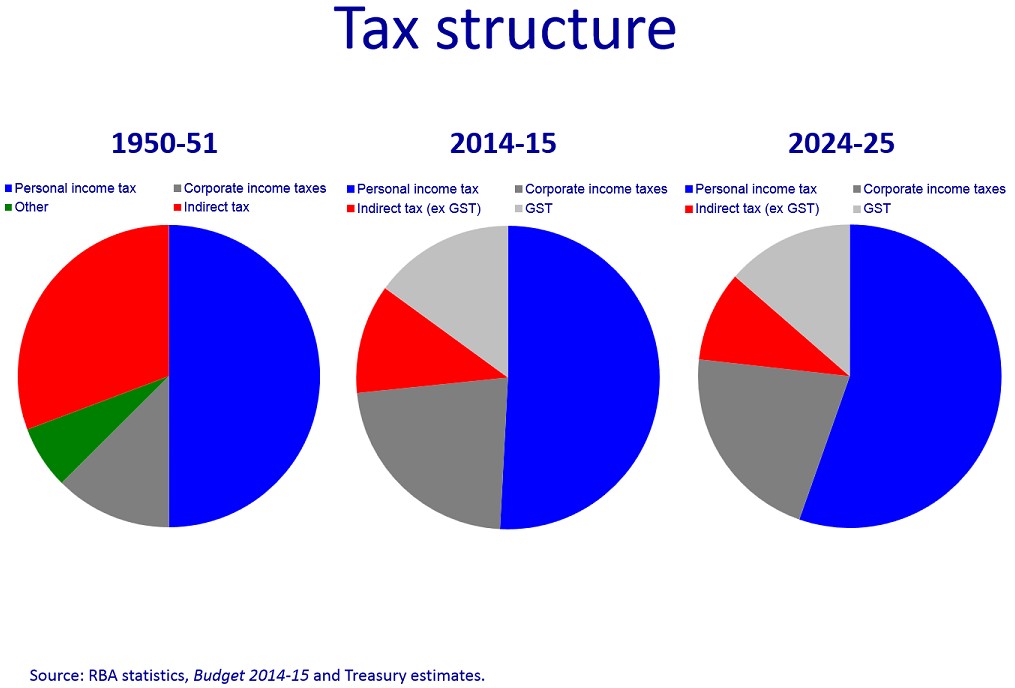
Two of the three main sources of tax revenue – company taxes and indirect taxes (mainly GST and fuel excise) – are either falling or about to fall. Company taxes will fade as the once-in-a-century mining boom unwinds, which will weakening mining company profitability and reduce the corporate tax take. GST revenues are also growing more slowly than the economy (and will continue to do so) as Australians spend a higher proportion of their earnings on GST-exempted items, such as health and education.
This leaves personal income tax as the only prospective source of revenue growth left for the Federal Government, despite its base also shrinking in a relative sense as the population ages. In turn, the tax burden will increasingly be pushed onto the (shrinking) working population.
The Greens proposed locking-in of the Budget debt levy would, therefore, exacerbate these pressures: increasing the burden on personal income taxes, when instead fundamental tax reform is required to spur productivity, broaden the tax base and share the tax burden.
As argued repeatedly, Budget repair should focus on closing the myriad of tax concessions that are bleeding the Budget dry, but serve little social purpose. An obvious solution is to reduce superannuation concessions, which are ginormous, fast growing, and overwhelmingly benefit higher income earners. The Government should also remove the tax-free status of superannuation earnings for people over 60, as well as implementing tighter means testing of the Aged Pension and related programs, so that benefits only flow to those in genuine need, along with limiting property tax concessions.
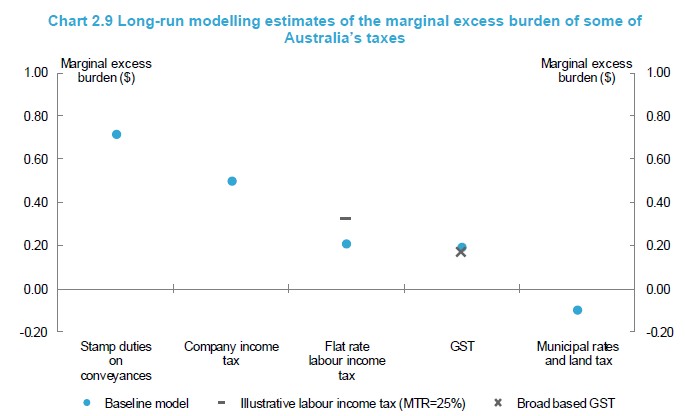
Longer-term, there are also compelling reasons to shift the tax system towards resource rents and broad-based land taxes, which have almost minimal (or negative) marginal excess burdens, since they apply to a tax base that is completely immobile – land. Both taxes are also more equitable than either consumption taxes or income taxes.