

Property recovery weakest in 25 years

By Leith van Onselen

From Property Observer today comes research from ANZ Bank showing that the current housing construction upswing in at least 25 years:
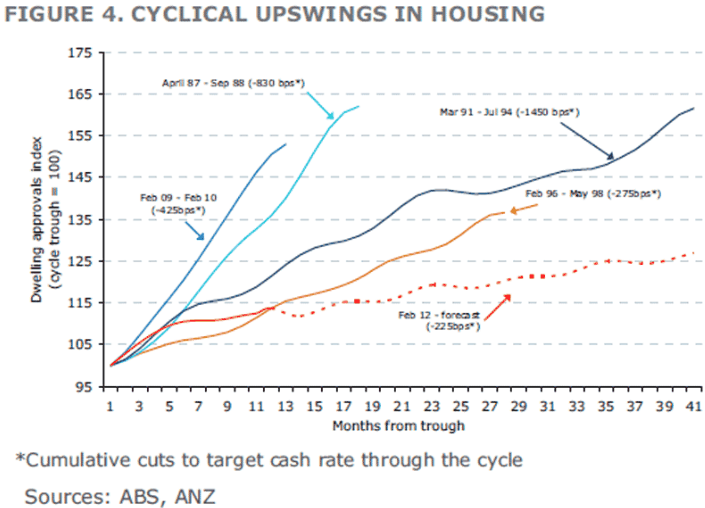
The current modest recovery follows an expected 225 basis points being cut from the cash rate since November 2011. This reflects ANZ’s forecast of a further 50 basis points cut from the cash rate in 2013 on top of the 175 basis points already cut to date.

“If the current cycle were to only have 175 basis points then our starts/dwelling investment forecast would be even softer,” says ANZ’s head of property research Paul Braddick.

ANZ economists Ivan Colhoun and Katie Dean, authors of the Australian portion of the quarterly report, say while there are some moderate signs of improvement in residential building approvals, this sector still faces “serious constraints”.

“Soft house price expectations, poor housing deposit affordability for first-home buyers, relatively tighter credit conditions for developers, difficult approval processes and limited land availability and accessibility all mean that this is prospectively the weakest cyclical recovery of the past five housing upswings,” they say.

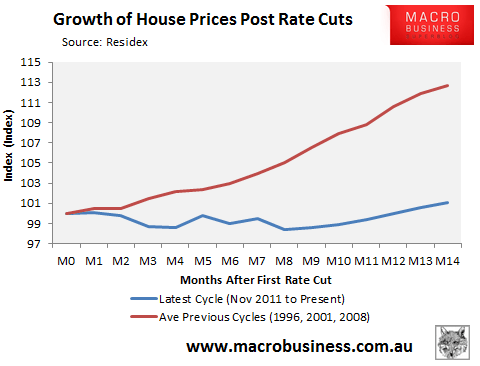
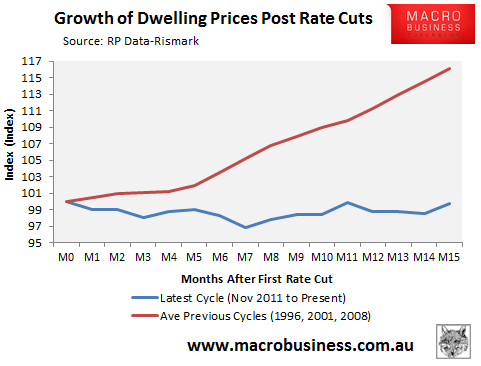
It’s also worth noting that the house price upswing has also been weak compared with previous experience, with prices rising only modestly since interest rates were first cut in November 2011, according to both Residex and RP Data (see below charts).
unconventionaleconomist@hotmail.com

www.twitter.com/Leithvo


14 Responses to “ “Property recovery weakest in 25 years”

  1. bskerr2 says:

    you have interest rates at all time lows yet people have stopped biting, and now you have Cyprus about to implode, I won’t be surprised if everyone starts pulling their offshore cash out and it causes a money supply issue and starts to bring everything else back down in the EU. These things indirectly affect the property market here big time. It’s gonna crash ;-)

  2. willynilly says:

    Please can we stop calling it a ‘property recovery’ and call it what it is, ‘house price inflation’….

    • Phroneo says:

      +100
      How can prices be in recovery when they are one of the most over inflated in the world?

      Headlines should talk about how our bubble is getting bigger and the dangers. Not like this is a good trend towards a healthier situation.

  3. The Patrician says:

    Alternative headline:

    Record low interest rates continue to fuel house price inflation.

    • Gunnamatta says:

      Thats about the sum of it…

      or maybe

      Record low interest rates and copious quantities of bullshido applied through mainstream media continue to fuel house price inflation.

  4. richierm says:

    It obviously varies a lot between markets/suburbs across the country.

    My research (onthehouse.com.au) here on the Gold Coast shows houses for sale at the same or lower prices than in 2007 or so.

    Certainly flat…and if you consider the holding costs, interest, RE selling fees etc…not great.

  5. flawse says:

    richie
    Re GC houses what would be your take on the direction in the last 6 months?

    • richierm says:

      In the section I am looking at, which is bottom end detached houses (not new), overall it seems very flat to falling. Overall impression I get is that anyone who bought at the peak (2007-2009) would be lucky to get that price now, and in a reasonable amount of cases would have to sell for less.

      Obviously it varies from property to property but there seems to be two main types I see when looking in a couple of key suburbs.

      People who bought around the peak of 2007-2009 and people who bought a long time ago 1980-1995 or so..(possibly boomers cashing out!!??)

      The people who are trying to cash out from buying at the peak would not be in a very good position. If you look at the sales history of this type, a basic detached older house in central GC would have sold in 1995 for about $120-140, then been sold in 2007-2009 for about $380-420 and would now be on the market for “offers more than $399,000″ and then probably end up selling for maybe $370 or so if they are lucky.

      The telling sign for this second type is the “offers more than” statement which basically means they cannot bring themselves to see for less than they paid!! Then, depending on how desperate they are…the price will come down a bit and be snapped up by someone like me who is looking to jump in and seemingly pay a “bargain” price….

      Looking at the other group of people who bought a long time ago, I would assume it is boomers cashing out and just setting the property at “market value.” When you look at a basic older house that was bought for $85 in 1985 and now on the market for $420…that seems to be where they are at! Probably a bit more ability to discount back from that high level as it is just a number plucked out of the air.

      I am about 6 months away from being in a position to jump on board and I will be interested to see where things are at by the end of the year.

      Although I would dearly like to see a crash back to what is probably fair/reasonable value (IE $250 for a basic house), with low interest rates, stable employment and generally OK conditions…seemingly won’t drop the big chunk it needs to for affordability to be reasonable.

      Just my thoughts and ramblings….everything still seems very expensive to me!! But that is what I thought when I was 25 and living in Sydney when you could buy an (OLD) terrace house in Surrey Hills for about $400K!

      Freely admit I don’t have much of a handle on where things are going!!!

  6. Explorer says:

    Property normally follows the stock market in the sense that stocks increase first and when they have increased significantly then property prices start to increase.

    The stock market is now about average in its recovery both from 2009 and from 2012 bottoms, although the average gets distorted from here by the really abnormal recovery from 2003 through 2007.