

The S&P500 is rapidly closing in its record high at 1565, set in October 2007. The chart itself is extraordinary with Madonna growing a very unlikely third:
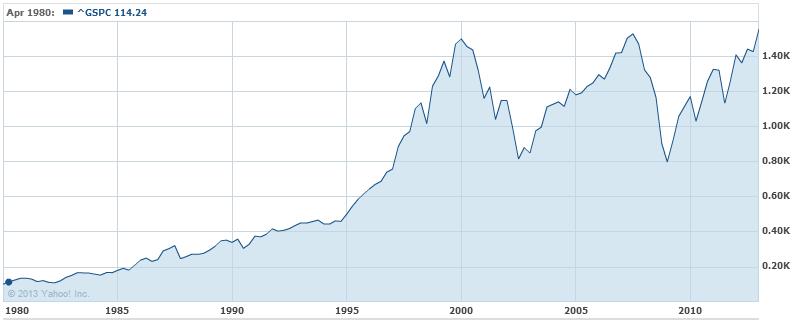
It’s worth asking this morning how high it might go.
To find the answer I don’t think we need look at any valuation metrics. This is not a value driven rally. It is a monetary rally and that’s where we should look for an answer: interest rates, especially mortgage rates.
There is little danger of an imminent exit by the Fed. But that does not mean US interest rates aren’t rising. You probably know already that US mortgage rates work differently to those in Australia. Most loans are fixed rate not floating and are bench-marked to the 3o year bond rate.
What that means is that unlike in Australia where most mortgage rates are floating, the US mortgage market cannot be bailed out as easily because falling interest rates only work for new borrowers not existing borrowers, unless they refinance.
This is why every time there is step down in US interest rates refinancing goes through the roof (refi booms as they known). But it also means refinance activity can be snuffed out fast if the interest rates on the 30 year bond rises quickly. And right now, bond yields are rising:
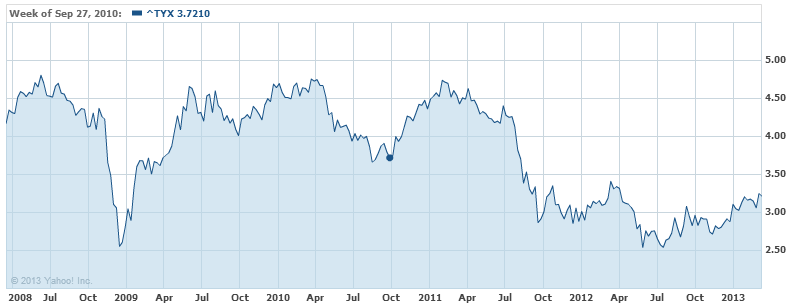
And so are mortgage rates:
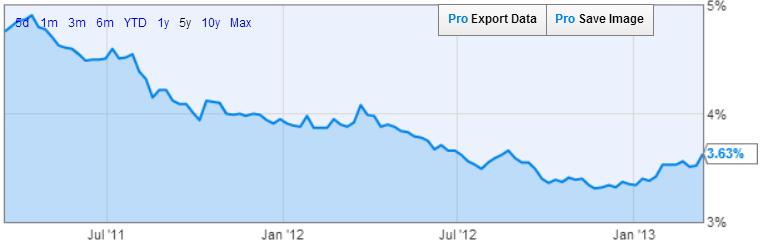
These are not alarming increases. But they have been enough to already knock refinancings into a down trend:

And for some odd reason, refis have a close correlation with US pending home sales:

And pending home sales are also correlated with house prices, as you might expect:

A few points then. This chain of connections leads to an interesting conclusion for the S&P:
- the US recovery is in some large measure reliant upon at least stable housing to continue. And house price growth for acceleration;
- ironically, in the absence of inflationary pressures, the stock market rally is causing the bond sell-off (known around the traps as the Great Rotation) which will, in due course, inhibit house prices;
- anything near 4% on the 30 year mortgage rate looks pretty nasty for stocks. Rates are at 3.63% today, up from 3.35 in early January. At that rate, the head room for stocks is running out quickly.
