

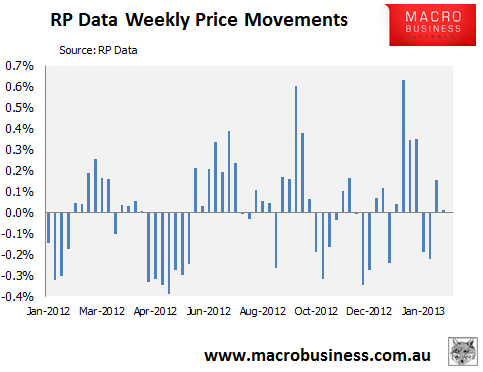
In the week ended 21 February 2013, the RP Data-Rismark 5-city daily dwelling price index, which covers the five major capital city markets, recorded a 0.01% increase, which followed las week’s 0.16% increase (see next chart).
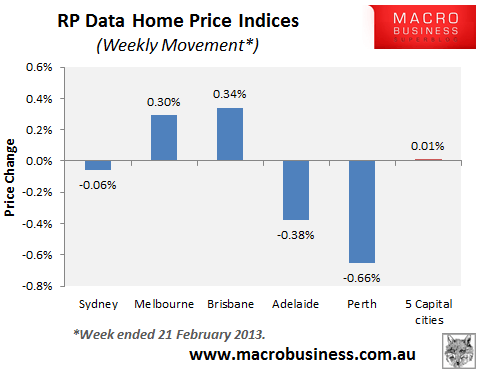
Value gains were driven by Melbourne and Brisbane, which more than offset falls in the other major capitals (see next chart).
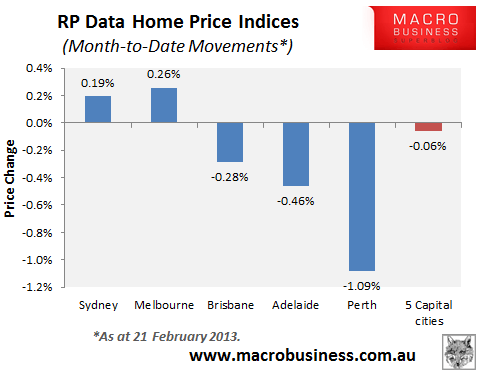
Price are down -0.06% so far in February, with losses in Perth, Adelaide and Brisbane more than offsetting gains in Sydney and Melbourne: (see next chart).
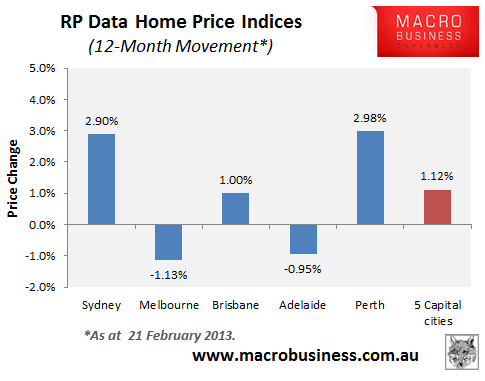
However, over the past 12 months, values have risen by 1.12% at the 5-city level, with all major markets, except Melbourne and Adelaide, experiencing price rises (see next chart).
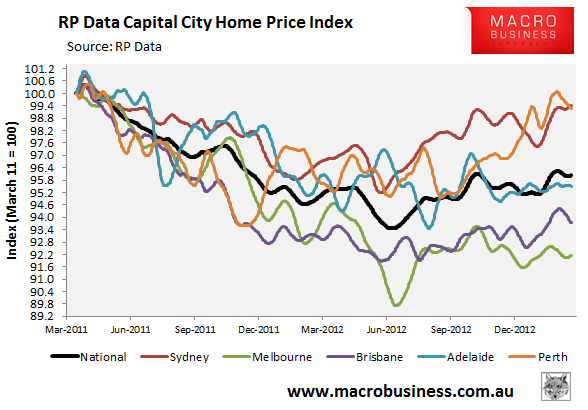
The next chart plots the daily movements on a 14-day moving average, in order to smooth volatility. As you can see, Sydney and Perth values are in an uptrend, and Brisbane looks like it is in the process of breaking-out. By contrast, Adelaide and Melbourne look to be trending sideways (see next chart).
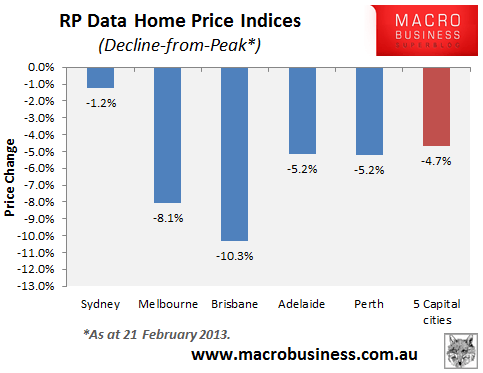
Values are now down -4.7% since peak at the 5-city level, with Sydney almost recovering all of its lost ground, and Brisbane and Melbourne suffering the greatest losses (see next chart).
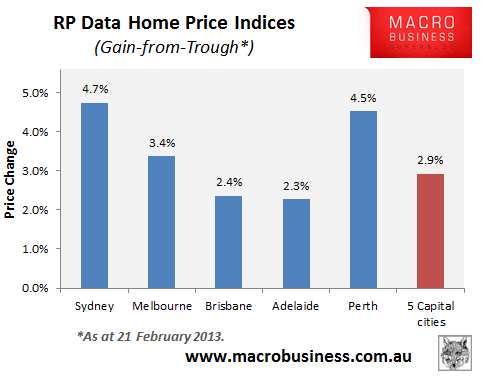
However, values have gained significant ground since bottoming in May 2012, with all capitals experiencing a solid rebound (see next chart).
unconventionaleconomist@hotmail.com


It is absolutely amazing how the indices can rise when almost every company has announced some job cuts and outsourcing. There must be something very wrong about this indices or maybe there are so many Chinese buying our properties at those ridiculous prices that we will never be able to see any adjustment of the property market to the middle class income of FHB.
I suppose that is always the risk with relying on media reports to characterise a market – selective reporting bias. Total employment is up year on year, reported gross household incomes are up, and as noted two days ago (on MB), average weekly earnings grew strongly. It is not implausible that Australians can actually buy a house in Australia – and pay for the debt financing.
On another point, I welcome the inclusion of the “gain-from-trough” chart. Too often there is a focus on the “decline-from-peak”, which makes for a great headline, but is only part of a fuller story.
Plenty of people out there buying.
Prices are lower than two years ago. Interest rates are lower.
Incomes are higher.
I don’t think weekly price updates are frequent enough to truly capture whats going on in the marketplace. I suggest we move to daily or even hourly monitoring.
yes, maybe a live report would be more satisfactory. Stupid, isn’t it
Yay! I finally see some historical time series for this statistic. Seems autocorrelated, is this true? Also, there does seem to be quite a bit of noise (as expected). Just eye-balling it, probably a diffusion of 0.2%/sqrt(week), but doesn’t look homoskedastic. Has anyone run this thing through R?
[Just sick of pundits saying that this thing is a deterministic series.]
looking at the graph on today’s Mortgage Choice post on MB FHBs are disappearing from the market at quite a rate. If you accept they are buying lower priced properties, shouldn’t both the mean and average price have risen by a fair bit more than they have given their absence {FHBS}?
That’s probably why the ABS and APM index showed such a strong result for the December quarter – even though their median calc is stratified, the pullback from first home buyers during that quarter together with a lift in premium end buyers would have pushed the median price higher. RP Data was reporting a more subdued (negative) result for the December quarter.
Thanks for adding the gain since (last) trough chart.
A long term unwind would require the RBA to keep things within a trading range of say 5 to 7% and for a graph of house prices to look like a bit like sine wave.
If any fall gets into more than say 5% it could cause much bigger withdrawal from the market, conversely any bigger rise could trigger speculation and more private debt per capita.